Ignorance is bliss but not necessarily a good OSCE (exam) strategy

My recollections of sitting my RACGP OSCE (Fellowship clinical exam) are rather hazy, and not just because it was over a decade ago. I do have one bit of advice though – a do-as-I-say-not-do-as-I-did tip – try to avoid traumatic brain injuries in the month leading up to your clinical exam.

Here’s the story of how I came to be doing my RACGP OSCE exams with 6 facial fractures and left temporal lobe contusions….

Saturday, 4th October, 2003.

Photos from old computer 115

I couldn’t close my mouth. That wasn’t a good sign. Many a time I’ve been admonished for having my mouth open more than it’s shut, but on this occasion it had nothing to do with being garrulous. My upper and lower jaw no longer occluded. I sat up – gingerly, to discover that I was completely alone in unfamiliar bushland, with no recollection of how I got there. I lay back down and closed my eyes, inappropriately unperturbed.

Like a slowly developing Polaroid picture, the details appeared in my mind’s eye. The colours were increasingly vibrant yet the focus remained blurry. I remembered studying for my OSCE exams that morning before deciding to take one of horses for a ride in the State forest to clear my head. The rest was a blank; my head had been cleared too well.

Living at Pomona0013It was time to play CSI. The skid marks and saddle imprint in the mud clearly showed where Rondo had shied and fallen (probably on seeing a kangaroo – he was terrified of them), and my face had left a lovely impression at its point of impact. Thankfully, Rondo appeared on cue when called – mud-splattered and jittery but unharmed. It took us several hours to find our way out through the maze of interconnected forest trails, what with my disorientation and his being one of those rare horses with no inclination to make a beeline for home. Unlike many males I’ve known, he was excellent at taking direction but hopeless at finding it.

I remember only one thing clearly about that long ride home: laughter. My laughter – laughter which bubbled up from deep inside, slipping between my maloccluded teeth and spilling out of my bruised mouth. In my concussive haze my situation somehow seemed side-splittingly humorous. The funny side was the only side I could see.

I laughed more in that next month than I’d done in the preceding three years. Although my personal predicament lost its comedic edge fairly quickly (temporal lobe contusions and six facial fractures requiring two maxillofacial surgeries and a six-week liquid diet do tend to be dampeners), the world around me tickled my funny bone in completely new and outrageous ways. I laughed at the news. I laughed when I got stuck in traffic. I laughed over spilt milk. And most surprising of all, I laughed at corny American sitcoms. You know the ones: weak, predictable story lines, groan-worthy one-liners and canned audience laughter. I found them not only funny, but hilarious. I’d laugh so hard that I’d double up on the floor in stitches with tears streaming down my cheeks. I kid you not.

Despite my looming exams, my neurologist prescribed “brain rest” and instructed me not to study. Nothing I read seemed to be retained anyway, so I put my books aside and indulged in my new-found penchant for mindless entertainment. I laughed the days away without a care in the world.

Living at Pomona0020Three weeks after my accident, less than a fortnight after two reconstructive surgeries, and against medical advice, I sat my OSCE exam. In my brain damaged state, I was not at all worried about whether I’d pass or fail, happy to turn up and just “have a go”. I don’t remember much of it, other than wondering why my fellow candidates all looked so worried, receiving stern glances from an exam supervisor as I giggled to myself in a rest station, and having to ask one of the role players about her presenting complaint at least three times (my brain simply refused to retain the information).

I miraculously passed (although it was far from an outstanding performance!). Somewhat unfortunately, over the following weeks my ability to laugh outrageously at the banal also passed, and my sense of humour crept back to the dry and satirical side of the fence. The news of the world was again depressing, traffic congestion got my goat and split milk, although not inducing tears, no longer triggered a giggle.

I’m not sure if my laughter was the illness or the medicine, but it was definitely an integral part of the healing process. Having a traumatic brain injury was for me a far from unpleasant experience. In fact, it seemed to suggest that life is not only more painless for the brainless, but it is also much funnier.

While sitting a major exam in such a state was entirely without stress at the time, I do not recommend it as a technique to reduce performance anxiety. In all seriousness, I was very lucky to have passed, and believe that the only reason I did was that I had spent the previous 18 months preparing. Not by going home and studying every night, but by engaging in deliberate practice each and every day when seeing patients. Good communication skills and examination techniques were so ingrained that they did not require the concentration and higher level thinking that the knock on my head had temporarily disabled. These semi-automated skills alone are not enough to be a safe and competent doctor in the real world of course, but, together with a big helping of luck, were enough to carry me through the OSCE exam on the day, as I smiled and laughed my way through the stations, completely unfazed.

The Last Word on GP Matchmaking

First published in Australian Doctor on 28th September, 2012: On GP Matchmaking

http://www.australiandoctor.com.au/opinions/the-last-word/the-last-word-on-gp-matchmaking

The Last Word on GP Matchmaking

by Genevieve Yates

When a playwright friend heard I was writing a musical about general practice, his first comment was: “It must include a love story — audiences expect romance!”

At the time I pooh-poohed the idea, thinking that medicine and love don’t sit well together, even in musical theatre. I certainly wasn’t prepared to write a stage musical version of Grey’s Anatomy with a Dr McDreamy GP character making use of the examination couch after hours.

However, as GP the Musical came to life, my co-writer, Dr Gerard Ingham, and I discovered we had indeed written a love story — about doctors and patients. Not the kind of love story that will have AHPRA knocking at the door, mind you, but one about matchmaking patients and GPs.

In Act 1, Dr White, a whiz at dermatology and care plans, is happy to treat Rebecca’s rash, but not so eager to address her psychological distress.

Dr White: “I see here that you are on antidepressant tablets ¬ Wow, that’s a high dose. Look, counselling isn’t my thing. We all have things we are good at. For example, I’m good at cycling and running but rubbish at swimming. So I do better at triathlon if I team up with a good swimmer. Play as a team, win as a team. Do you know what I mean?”

Rebecca: “Not a clue.”

Dr White: “Well, you see although we’re both GPs, Dr Anderson is better at the psychological and women’s stuff — the tears and smears. So I think it’s best if you come back later this week and see Dr Anderson to talk about your sad feelings.”

Meanwhile, Dr Anderson is struggling with Mr Black, an ex-accountant who loves nothing more than creating Excel spreadsheets documenting his bodily functions, and whose thinking is as concrete as his bowel motions.

Dr Anderson: “Mr Black, what’s really going on?”

Mr Black: “Pardon?”

Dr Anderson: “What’s bothering you, deep down?”

Mr Black: “My bowels aren’t working properly, that’s what’s bothering me.”

Dr Anderson: “I’m not talking about your bowels, I’m talking about your feelings. Are you unhappy?”

Mr Black: “I’m unhappy when I can’t pass my motions, obviously.”

The exchange continues:

Dr Anderson: “Mr Black, you come and see me nearly every week with your bodily function charts. You want me to prescribe you pills but you’re terrified of side effects. I think there are other issues going on.”

Mr Black: “Of course there are other issues. Haven’t you been listening? There are my blood pressure variations, my dizziness, my low blood sugars after meals ¬”

In Act 2, the patients swap doctors. Mr Black is introduced to the Bristol Stool Chart and gets his thrice-daily home BP readings uploaded into his medical record by Dr White. He thinks this is “maaarvelous!” Rebecca finally finds her doctor match in Dr Anderson — someone who’ll explore why she’s scratching herself incessantly and who listens to what she has to say. Both love stories resolve happily.

In true musical theatre style, the storyline is simplistic and the characters are stereotypical, but it seems to have hit the mark with doctors and non-doctors alike. Judging from the standing ovation received at GP the Musical‘s premiere in Melbourne earlier this month, it seems audiences really do love a love story — albeit one involving the improved documentation of stool consistency!

(Since this column was first published, GP the Musical has enjoyed a sell-out season at the Melbourne International Comedy Festival in April 2013 and is heading to Darwin for GP13 on October 17)

Referral Letter Etiquette


I received a letter from a thoracic surgeon that was signed off, “With love and truth”. This caught me off guard.

The letter was on a normal-looking letterhead. It started with the conventional “Thank you for referring Mrs X for an opinion regarding…”, and went on to describe the patient’s presenting problem and comorbidities. It described the investigations undertaken, the treatments recommended and the plan for follow-up.

All stock-standard stuff, until the valediction: “With love and truth, Dr Y.”

This started me thinking about the evolution of the complimentary close. When I was at high school (which wasn’t that long ago), valediction etiquette was drilled into us. We were taught that correspondence other than personal letters should be signed off ‘Yours faithfully’ to those with whom one is not personally acquainted, and ‘Yours sincerely’ to whom one is. Clear, simple rules.

Then email came along and blurred the boundaries. ‘Regards’ and ‘Warm regards’ seemed to me to be a pleasant mix of the formal and the familiar. I used to think ‘Cheers’ was a little informal for use in business emails but it’s grown on me. However, a medical specialist’s letter signed off “With love and truth” is a different kettle of valedictorial fish.

To me, using the word “love” in a valediction has certain connotations. The trouble is that there are no clear rules of etiquette here. Most would agree that the word love does not belong in formal business correspondence, Dr Y being an obvious exception.

When it comes to personal emails and letters, though, it can be a case of “everyone’s playing the game but no one’s rules are the same”. I sign off “Love, Genevieve” frequently when communicating with friends and family by email. I mean ‘love’ as a term of endearment rather than ‘love’ in a romantic sense, and I write it almost subconsciously … except if I’m attracted to someone.

Now here is where it gets complicated. If I really like someone, but am not in love with him, I will think very carefully about how I sign my emails and usually will not use the word ‘love’ in case he gets the wrong impression. So, family members and platonic friends, male or female, will get “Love, Genevieve”. If I like someone romantically, he may or may not, depending on my depth of feeling.

Now how can anyone be expected to interpret that? I have male friends who sign some of their emails to me with ‘love’ and some who don’t. Does that mean anything? Almost certainly not, but if I applied my own process to them it might … which almost certainly would be wrong. An ex-boyfriend once told me that he signs his emails with ‘luv’ for close friends and family, and with ‘love’ when he’s ‘in love’ romantically.

His e-mail valedictions changed from ‘luv’ to ‘love’ at an apparently significant moment in our relationship. He was waiting for me to comment, giving him an opening to tell me that he loved me, but I didn’t even notice. If I had, I would have interpreted the change as his having learnt how to spell.

I can be fairly sure that my “With love and truth” thoracic surgeon harbours no such romantic feelings towards me. After all, I’ve never even met the man.

According to my patient, his quirkiness does not end with his letter endings, but overall, she is delighted with the care she’s received and the thoracic surgery has been a resounding success. That has to be worth a little love and truth.

First published in Australian Doctor on 19th April, 2012 On Referral Letter Etiquette

http://www.australiandoctor.com.au/opinions/the-last-word/the-last-word–on-referral-letter-etiquette

“I want you to be my friend, not my patient” – social dilemmas for rural GPs.

I’ve just read a brilliant column by Dr Mel Clothier in this month’s Rural Doctor

Making friends is hard to do | Rural Doctor
http://www.ruraldr.com.au/opinion/last-yarn/making-friends-is-hard-to-do

She talks about how hard it is for rural doctors to separate their professional and social lives. This is such an important, difficult and often under-appreciated problem for rural doctors, especially when they’re starting out and trying to get established in a rural area. Although such dual relationships are challenging for everyone, I get the impression that the friendship/ patient dilemma is often hardest for young single females (would be happy to hear any opinions to the contrary!).

I know that I found it really hard as a registrar. This aspect of rural practice contributed significantly to my being almost burned out by the end of my training. Overworked and socially isolated, I thought that I may have made a big mistake in becoming a rural GP.

Trying to make social connections for the purposes of friendship are problematic enough, but add the desire for an intimate relationship into the mix, and you have a whole other layer of messy. For very good reasons, the separation has to be absolute, which cuts down one’s dating options in a small country town drastically.

When I’d first moved to a rural area, two years out of med school, romance was the last thing on my mind. My boyfriend had died during my intern year – of testicular cancer – and it took me a long time to be ready to move on. When I finally was ready to consider a new relationship and hopefully, in time, a family of my own, I was working 60hrs a week in a small country town. A good breeding ground for horses and cattle, perhaps, but not ideal for a young, single female GP.

And so, I chose the obvious solution – did what any overworked, lonely, newly Fellowed country GP would have done – I took four months off work – to do a reality TV show. It was the ABC’s Outback House, not A Farmer wants a wife, although in retrospect, the latter may have been more useful.

It was a life changing and meaningful experience – one that I would never ever do again, even if paid large sums of money– and certainly not a solution I would suggest to you. 😉

There are no easy answers, I’m afraid, but putting the effort into maintaining relationships and supports outside your local community (including online ones) is really important. As hard as it can be to do, I try to decide (together with the other person involved) whether they are going to be a (close) friend or a patient. I spend a good deal of time explaining why it isn’t beneficial to either of us to be both.

It does get easier!

20130927-222931.jpg

“Get off your buttocks”: the baby steps approach to role modelling in general practice

As GPs we really should be setting a good example to our patients regarding our health.  GPs know all too well what we should be doing – we preach it every day to our patients. We sometimes get frustrated when patients don’t follow our advice, perhaps not reflecting on whether we always take our own advice regarding our lifestyle choices.

Having said all that, I know as well as anyone that we are imperfect creatures. I’m not holding myself up as a poster child for good GP behaviour.  It would be hypocritical of me to preach to others about being hypocritical when preaching to patients about lifestyle modification.

Just like for our patients, contemplating adopting an “ideal for health” lifestyle (regarding exercise, diet, alcohol, sleep, stress etc.) may be overwhelming for some GPs and as a result, lathered with a plethora of excuses and tossed in the too hard basket.

But don’t despair… every little bit counts.  Baby steps.

If you are someone who is not following every preventative health recommendation and living a completely indulgent-free life, whether GP or non-GP, and wish to start with something relatively easy-to-do but with huge health benefits, read on…

But first, stand up.  Get off your buttocks and have a good stretch.

Done? Good.

No, don’t sit down again, stay standing while you watch this…

Of course, we’ve known that a sedentary lifestyle is bad for your health for decades but the thing that gets me going is the increasing body of evidence which suggests that the adverse health effects /risks of prolonged sitting are not ameliorated by daily exercise.

6.5 – 8 hrs a day of sitting will increase your risk of  things like heart disease, diabetes, obesity and even things like distal colon cancer (100% increased risk) even if you exercise before and after work every day.

I’m not suggesting we routinely conduct GP consultations standing up.  But I’m sure there are lots of opportunities during your day to spend more time on your feet and less time on your buttocks.   For the past six months or so I have been doing about half my computer work at home standing up and I feel so much better for it physically.  There are some great sit-stand workstations available – they adjust so that you can work at them either sitting or standing. My “standing” set up home at home is much more crude – an external screen and keyboard on top of my  3 drawer filing cabinet, raised with old phone books!  Works just fine, but is not the most professional look.

I’d love to hear from anyone who has adopted more standing / walking into their daily lives – how they’ve managed the process and whether they feel better for it. Please feel free to comment below.

And if you need some motivation…..

For people who sit most of the day, their risk of heart attack is about the same as smoking” ~ Martha Grogan, cardiologist, Mayo Clinic

Today, our bodies are breaking down from obesity, high blood pressure, diabetes, cancer, depression, and the cascade of health ills and everyday malaise that come from what scientists have named sitting disease … Every two hours spent just sitting reduces blood flow and lowers blood sugar, increasing the risk of obesity, diabetes and heart disease.”~ James A. Levine, MD, PhD

Prolonged sitting should be considered within occupational health and safety policies and practices just like other elements of posture.”~ British Journal of Sports Medicine

We’ve become so sedentary that 30 minutes a day at the gym may not counteract the detrimental effects of 8, 9 or 10 hours of sitting. ~ Genevieve Healy, PhD

OK, I’m off to get some sleep… I should have been in bed 2 hours ago. What was I saying about not always practising what I preach?  I have written this entire blog standing up, so it’s not all bad!

Genevieve’s RACGP Fellowship and Awards Ceremony Speech – “You can do it all, just not all at once!”

On Saturday 21st September, 2013,  I was honoured to be the guest speaker at the 2013 RACGP Fellowship and Awards Ceremony. It was held at the Queensland Conservatorium of Music, Southbank, Brisbane, for the new Fellows of the RACGP, their family members, RACGP staff and members, and dignitaries.

My brief was to enthuse, inspire and entertain the 500 odd attendees with my personal journey – not an easy task. I thought long and hard about what to say – how to frame my narrative in a way that was truthful but interesting, different but relatable, somewhat humourous but inoffensive, and inspiring but not totally immodest.

I’m not sure that I succeeded in these aims, particularly in humbleness department, but I did my very best and had an awful lot of fun writing and delivering it.  I’m very grateful to the RACGP for the invitation.

If you have a spare 20 minutes and want to judge for yourself whether it is appropriate to talk about sanitary products while dressed in an academic gown and delivering a formal address, here it is….

RACGP Fellowship Ceremony Speech, 2013 (Powerpoint with audio)

or if you prefer Windows media player 

Fellowship ceremony speech in wmv format

or in .avi …

Fellowship ceremony speech in avi format

Genevieve with Linda Landreth (RACGP) at Fellowship Ceremony

Genevieve with Linda Landreth (RACGP) at Fellowship Ceremony

Mid-air consulting… Aussie GP style

It’s an early morning flight. You’re tired, grumpy and regretting not grabbing a coffee before boarding. The seatbelt sign is turned off and the mouth of the person sitting next to you is turned on.

She starts yapping away, trying to engage you in small talk. Not wanting to appear rude, you reply, all the while wishing she would just shut up. The situation turns from grim to dire as she moves from the trivial to the personal.

I was en route to present at an international medical humanities conference in the US, and, I have to confess, I was that annoying talker. Why? I noticed a mole I didn’t like on my fellow passenger’s forearm.

Now, I’m certainly not in the habit of giving strangers unsolicited medical advice, but I was sitting there confronted by this highly suspicious naevus, my fingers itching for a dermatoscope, and just couldn’t stay silent. The young American told me that it had been looked at “a couple of years ago” but admitted that he’d noticed recent change. He hadn’t been concerned about it before boarding, but I made darn sure he was before disembarking. I gave him my business card (to demonstrate that I did indeed have a medical degree), and two weeks later received a very grateful email. The lesion turned out to be an invasive melanoma with a Breslow thickness of 1.3mm

On the very next leg of my journey, I again had cause to advertise my profession. Regular readers may recall that the last time I heard “Is there a doctor on board?”, I slid down in my seat and waited for someone else to respond. This time I attempted to redeem myself by volunteering immediately when the call came over the PA system. Two minutes later, faced with an unconscious young woman, my good-deed buzz was replaced by alarm bells chiming “panic”.

According to the nearby passengers, she had been acting “weirdly” before “passing out”. I wondered if this inappropriate behaviour included asking strangers about their moles. She became responsive after some oxygen, but was confused. Later, she started complaining of severe chest, abdominal and back pain. To cut a long story short, the combination of hypoxia, methamphetamine and dehydration had precipitated a sickle cell crisis. The next three hours were not much fun for either of us.

Half an hour in, the drinks trolley came around. Unlike on many of our Australian carriers, a free beverage is offered by this American airline, although the tiny pretzel packets have been banished along with the term “air hostess”. With my patient stable at the time, I requested a tomato juice. The attendant opened a can and half-filled a tiny cup. When I politely requested the remainder of the can as well, he looked at me as if I’d asked for pretzels and called him an air hostess.

“Passengers are only eligible for one free drink,” he pronounced.tomato juice on a plane

“I only want one — a can of tomato juice.”

“But that’s two serves.”

“Hey, I’m saving a life here. Surely that’s worth the extra half can.”

“We are not allowed to give any kind of gratuity to doctors who volunteer their time to assist in an emergency.”

While I appreciate that this situation presents a legal quagmire, the fact is that in the US, this crazy country, I’m expected to tip a waiter in a bar for pouring me a glass of tomato juice, but I can’t even get an extra half-can of unpoured stuff for delivering three hours of after-hours emergency care. I know I’m from Down Under, but it all seems a bit upside down to me.

First published in Australian Doctor on 17th May, 2012 On Unsolicited Advice


The Last Word on being GAY

First published in Australian Doctor, 22nd March, 2012 On being GAY

http://www.australiandoctor.com.au/opinions/the-last-word/the-last-word–on-being-gay

The Last Word on being GAY

by Genevieve Yates

I’m GAY, and have been since birth. I’m not referring to sexual orientation or to my propensity for being optimistic and cheerful in the face of adversity. I was named G.A.Y — Genevieve Anne Yates.

At primary school, I got the occasional taunt: “You’re gay! (snigger, snigger)”, to which I’d hotly reply, “Yes, I am — happy and bright. That’s its real meaning, you know.” All very sophisticated of me, it was. Since those playground exchanges, however, my initials have not given me any particular grief.

Until now.

And why would a mid-career professional woman suddenly have hassles with the trivial matter of her initials? The answer is PracSoft. As you are no doubt aware, medical software typically uses doctors’ initials as identifiers. In my previous practice I was ‘GY’ in PracSoft, but my new one uses three initials for each of its practitioners, making me ‘GAY’.

No big deal in itself. I can be whatever I want in my private life. Who cares if I’m GAY at work?
As it turns out, no one seems concerned that I’m GAY, but think I’m trying to label them GAY. Confused? Let me explain.

The billing procedure at my new practice involves the treating doctor handing each patient a printed billing slip at the end of a consultation. On this slip, the doctor writes the patient’s name, and circles both the appropriate item number and his/her initials, so that the receptionist knows what to bill and under whom to bill it. Somewhat surprisingly, this system has proven a little problematic for me.

It has become apparent that a not insignificant proportion of my male patients don’t appreciate having their names written beside a circled ‘GAY’. Oversensitive and ridiculous as this may seem to some, the fact is that I’ve been receiving an indignant comment from at least one patient a day.

I’m baffled as to why patients would think that I had the need to announce their sexuality to the reception staff via a billing slip in the first place. Do they perhaps think gay people receive a discount? Are they charged an extra fee? Have their details put in a little black book? I mean, really guys, think about it.

The complaints have not been generated just by homophobic males insecure about their sexuality. One flamboyant, larger-than-life patient, who happens to be HIV positive, gave me a little lecture about making assumptions based on HIV status.

“Worldwide, more heterosexuals than homosexuals have HIV!” he stated with authority.

I was tempted to reply that the assumptions I made about his sexuality were based not on his HIV status but on other politically incorrect reasons. We had a good chuckle when I explained that in fact I was the GAY one, and his pique was quickly diffused.

Brief explanations have been all that have been required to alleviate the concerns of most of these disgruntled patients, but in this time-poor business of ours, every extra second counts. The new print run of billing slips have the A taken out of GAY, which should give me an extra few precious minutes in my working week, and provide relief to the super-sensitive males who find themselves in my consulting room.

It has been an interesting lesson in human psychology.

Perhaps it is one you’d like to keep in mind, just in case you ever have a Dr Gary Andrew Young or a Dr Gwendolyn Amelia Yarwood come to work in your practice.

“Are you going to be a specialist? Or just a GP?”

The “Are you just a GP?” question and its variants are so frustrating. You can read my rather unusual response to that question in this column:
https://genevieveyates.com/slice-of-life/miscellaneous/swamp-gardening/
(First published RACGP’s Good Practice magazine, Jan/Feb 2013)

or to quote from the song  “The One to See is Your GP” from GP the Musical:

“Specialists aren’t that special after all

Narrow, limited, not general

The one to see is your GP

Chorus:

With a little science and a lot of care

In times of trouble your GP will be there

Nobody can fix you faster

With a few words, pills or plaster

The one to see is your GP”

Penny Wilson's avatarNomadic GP

“Are you going to be a specialist? Or just a GP?”

As a medical student and junior doctor in my hospital training years, I was often asked this question by friends, senior doctors and well meaning patients.  It really grated on me, that one little word: “just”.

I always thought I’d become a GP. As a teenager, I was inspired to study medicine by my own GP who had always looked after my family with such care and compassion.  As I went through my training I dabbled with the idea of other specialties; I was fascinating by the life stories of my geriatric patients, I loved the cute-factor of paediatrics, I was hooked on the emotional highs and lows of obstetrics, I enjoyed the team atmosphere of the emergency department. But I think, deep down, that I always knew I liked ALL of medicine too much and that above all I…

View original post 1,306 more words

Clock-watching during consultations – is it always a bad thing?

“What can I do for you today, Cheryl?”

“I want a full check-up, and I’ve got a few niggly problems.”

“Sure. How about you list them for me?”

“The first thing is I’ve been having trouble sleeping and I’m snoring a lot.  Second thing is that I’ve been getting pins and needles in both feet and my left arm goes numb. I also have this bladder weakness that’s getting worse.  My heart races at times and I feel dizzy. Oh and sometimes I get pains in my chest.  And in my head, especially behind my eyes.  Also pains in my groin area, as well as a rash which comes and goes.  And while you’re looking at the rash, I’ve got a heap if skin tags I want removed.”

“Hmm… anything else?”

“Umm… well I think I’m going through the change of life – I want to be tested for that. I also want you to find out why I keep putting on weight.  I haven’t had a PAP smear for 4 years – so I want one of those – and I’m heading off to do an African safari next week and they said I’ll need some needles.”

“We’re not going to have time to address all of your concerns in a 15 minute appointment, Cheryl.”

“But I don’t come to the doctor’s much – I like to save the little things up and deal with them all in one go.  And, I’ve been waiting to see you for 45 minutes. I haven’t got time to come back and wait again.”

Over my Weetbix that morning, I’d read about a recent US study* that looked at both doctors’ and patients’ perceptions of non-verbal cues during consultations. It concluded that although many doctors were highly aware of their body language, patients, in general, primarily focussed on those cues indicating that the doctor was running short of time, and that they were acutely sensitive to signs of time pressure. The implied message seems to be that patients know when their doctor is clock-watching and that they don’t like feeling rushed.

Clock

In an ideal world, GPs could spend as long as is needed with each patient, whether that be six minutes or sixty minutes, without having waiting-room backlogs and mutinous reception  staff.  Patients would never feel rushed, doctors wouldn’t feel any time pressures, and the working day would flow smoothly.  If only…

There are many scheduling systems which lead to substantial improvements in patient flow, but the fact remains, because of the very nature of what we do, it’s impossible to get it right all the time.  Forest Gump’s momma’s gem of wisdom,  “…like a box of chocolates, you never know what you’re gonna get,” springs to mind.

The cold hard truth is that on busy days, general practitioners need to clock watch to have even a remote chance of running to time. Managing consult length without having patients feeling like they’re being rushed or fobbed off is about the best we can do.

I don’t always reach this goal, much as I try.

After dealing with the urgent issues, organising tests and negotiating for Cheryl to come back to see me at least twice more, she turned to me and said, “In the time you spent explaining why you couldn’t do everything today, I reckon we could’ve knocked off at least half my list.   Oh, and I expect that you’ll bulk bill me for the other appointments – it’s not my fault that you were too busy to deal with me properly today!”

*Journal of Evaluation in Clinical Practice 2011; 17:933-939.

Published in Australian Doctor on 9th November, 2011: On Clock Watching

http://www.australiandoctor.com.au/opinions/the-last-word/the-last-word—8211;-on-clock-watching

Email gone astray

email pictureAn email gone astray can provide fascinating insights for an unintended recipient. Written correspondence has undoubtedly fallen into the wrong hands since homo sapiens first put pigment on bark, but never before has it been so easy to have a personal message go awry.

No longer is it a matter of surreptitiously steaming open sealed letters or snooping around in wastepaper baskets. Finding out another’s personal business is now just a click away. Even more conveniently, candid opinions can sometimes make an unscheduled landing in your inbox, making for intriguing reading — as I recently discovered.

I’m soon leaving the idyllic place I’ve called home for the past decade and moving to an equally idyllic part of regional Australia. Months ago, I’d sent out feelers regarding possible GP jobs and had emailed a particular practice principal a couple of times, expressing my interest. When it looked likely that I was going to pursue a different path, I sent a polite email explaining the situation and telling him I wouldn’t be seeking an interview for a job at his practice at present. An email bounced back saying that my not wanting to work for him may be “a relief” as I “sounded a bit intense”. It was sans salutation but, based on the rest of the content, was obviously intended for one of his work colleagues. It had no doubt been a simple error of his pressing ‘reply’ rather than ‘forward’.

I was chuffed: I’ve never been called “intense” before, at least, not to my knowledge. Perhaps there are several references to my intensity bouncing around cyberspace but this is the only one my inbox has ever captured.

I’ve never considered myself an intense person. To me, the term conjured up the image of a passionate yet very serious type, often committed to worthy causes.

Perhaps I had the definition wrong. I looked it up. The Oxford Dictionary gave me: “having or showing strong feelings or opinions; extremely earnest or serious”. Unfortunately, I couldn’t reconcile my almost pathologically Pollyanna-ish outlook, enthusiasm, irreverence and light-heartedness to this description — nor my somewhat ambivalent approach to politics, religion, sport, the environment and other “serious” issues.

At least the slip-up was minor. Several years ago, I unintentionally managed to proposition one of my young, shy GP registrars by way of a wayward text message. He had the same first name as my then-husband.

Scrolling through my phone contacts late one night, alone in a hotel room at an interstate medical conference, I pressed one button too many. Hence this innocent fellow received not only declarations of love but a risqué suggestion to go with it. Not the usual information imparted from medical educator to registrar!

It took me several days to realise my error, but despite my profuse apologies, the poor guy couldn’t look me in the eye for the rest of the term.

If I was “intense”, I would conclude on a ponderous note — with a moral message that would resonate with the intellectually elite. Alas, I’m a far less serious kind of girl and, as a result, the best I can up with is: Senders of emails and texts beware — you are but one click away from being bitten on the bum.

Published in Australian Doctor on 13th October, 2011: On Being Intense

http://www.australiandoctor.com.au/articles/4F/0C07324F.asp

PGPPP – Sending junior doctors out into the big bad world

Aust GovtAbout seven or eight years ago, some smart cookies came up with a grand plan, called the PGPPP. They had managed a trifecta.

First, they’d come up with a solution for the escalating problem of there being too many medical graduates for too few hospital jobs: namely, send the junior docs into general practice.

Second, the program would create new and challenging jobs for administrators. Trying to get private GPs, public hospitals, Medicare and GP training organisations to communicate and work effectively together would require not only a magic wand, but would also generate more administrative hours than one could poke a stick at, and enough hot air and paperwork to significantly increase Australia’s collective carbon footprint.

Third, and most importantly, they had an alliterative name. Prevocational General Practice Placements Program — P, G, triple P. With such a rollicking, rhythmical ring, the program was surely guaranteed to be a hit.

AGPT

Yes, there is nothing that health authorities like better than a catchy initialism. The lettering was new but the concept of sending underprepared junior doctors out into the big bad world of Medicare-controlled private general practice was not. Public hospitals have been doing it for years.

I was a junior doctor at the turn of the century. Keen on rural general practice, I volunteered for two five-week rural relieving terms, and at only 14 months out of medical school, was sent to run the hospital and the general practice in a one-doctor town in country Queensland. There was no pharmacy, no radiology and no handover.

The practice medication cupboard had been locked and the key hidden, as the doctor’s dispensing rights didn’t extend to me. The trouble was that items such as aspirin, Maxolon, Ventolin and adrenaline had also been locked away. The only medication available was methadone: I found a half-full bottle in the doctor’s top desk drawer. Hmm.

A particularly nasty gastroenteritis epidemic swept through the town during my stay, depleting the hospital’s meagre supplies of IV fluid and anti-emetics. One memorable Sunday, sick as a dog myself with gastro, I’d dealt with a farmer’s compound fractured leg, a child with severe facial lacerations and an inebriated fellow with haematemesis, when a teenager presented with symptoms of meningitis. It took five hours for the retrieval team to collect her. As I sat waiting, dehydrated and nauseated, watching her Glasgow Coma Scale drop steadily, I had an epiphany: this is not particularly enjoyable.

My second term was not much better. On the upside, a particularly traumatic sequence of events gave me the impetus to take up writing to debrief. I later penned a story loosely based on the incidents, What Would the Coroner Think?, which earned me an OzDoc award in 2008. I subsequently translated it into a short film that is used in medical education throughout Australia.

Wondai pharmacy

I’ll always be grateful to Queensland Health for throwing me in the deep end before teaching me to swim. It might have turned me off rural general practice but it sure gave me great writing material.

Thank goodness the creators of PGPPP didn’t adopt that sink-or-swim approach. Bureaucracy notwithstanding, its heavily supervised and structured general practice attachments are educationally sound and proving beneficial all-round. Not so good for dinner-party horror stories, though.

Published in Australian Doctor on 15th Sept, 2011:  On Placement Programs

http://www.australiandoctor.com.au/articles/b3/0c0725b3.asp

Surprises – in life and in medicine

Last night I attended a surprise 30th birthday party for my friend Caroline. I had been somewhat reluctant to go. My disinclination had nothing to do with Caroline, who’s a lovely lass; it was because I have a strong aversion to such ambushes, in both concept and execution.

birthday_present

Why? Like many of our favourite patients do, let me present you with a list.

First, as much as beloved partner/parent/sibling/friend thinks they know who to invite, friendship nuances often elude them. This can make organising the guest list a treacherous business, akin to playing leapfrog with a rhino. Oh, and a word of advice to the social-network-naïve: Facebook “friends” are not actual friends. Accepting a Facebook friend invitation from an old schoolyard tormentor may be a sign of maturity and forgiveness, but it doesn’t mean you want to see him or her in your living room.

Second, most members of the fairer sex like to spend a considerable time preparing their external surfaces pre-party. To arrive, as poor Caroline did, in sweaty gym clothes, with dirty hair and not a scrap of make-up, at a room full of primped and preened women in party dresses, can be rather disconcerting, to say the least.

Third, for those of us who enjoy the lead-up to social gatherings as much as, if not more, than the event, being cheated out of the anticipatory excitement substantially decreases the overall enjoyment quotient.

Finally, unsurprisingly, courtesy of an inadvertent (or advertent) slip, the surprisee often finds out about the party, and then the dilemma arises — does one drop the “surprise” and just go with “party” or does the surprisee feign astonishment when friends jump up from behind couches?

There was no pretence on Caroline’s face when she stepped, tired and smelly, through her front door last Friday night. It crept in later, as she tried to be a gracious host to her guests. I suspect that she felt more like a hostage, doing her best to make people feel at home, while wishing that they were all at theirs instead. “All I wanted to do tonight was eat pizza, watch crappy TV and sprawl on the couch in my PJs,” she confessed.

I’ve never been fond of fabricated surprises of any sort. I like to know the who, how, what, when, where and why in advance, whenever possible. Some may say this indicates that I’m a control freak, but I choose to think of it in Boy Scout terms: I like to “be prepared”.

Luckily, I have a much more open attitude towards unplanned surprises — the type we encounter in general practice on a near-daily basis. The discovery of a suspiciously hard breast lump in a routine health check; the BSL reading of 24mmol/L in an unwell four-year-old; the well-dressed, articulate 50-year-old woman speaking of a 20-year history of domestic violence; the vasculopath giving up cigarettes, alcohol and fatty food after years of seemingly pointless encouragement … these surprises make our work the interesting, challenging and unpredictable beast that it is, and I relish them.

Surprises in general practice go both ways. Patients throw us curve-balls but we give as good as we get. In general, I like to prepare my patients the best I can, minimising the surprise element, especially when it comes to delivering bad news.

However, I must confess that at times I deliberately surprise my patients. I’m in favour of springing a smear on a Pap-avoider or an overdue immunisation on a needle phobic, for example … as long as no one tries such trickery on me!

Published in Australian Doctor on 18th August, 2011:  On Surpises

http://www.australiandoctor.com.au/articles/6f/0c07206f.asp

How I became a better whore

“You’re a boring whore! Fix it.” The barked criticism came like a slap in the face. The director of Les Miserables was right, though. I was a boring whore.

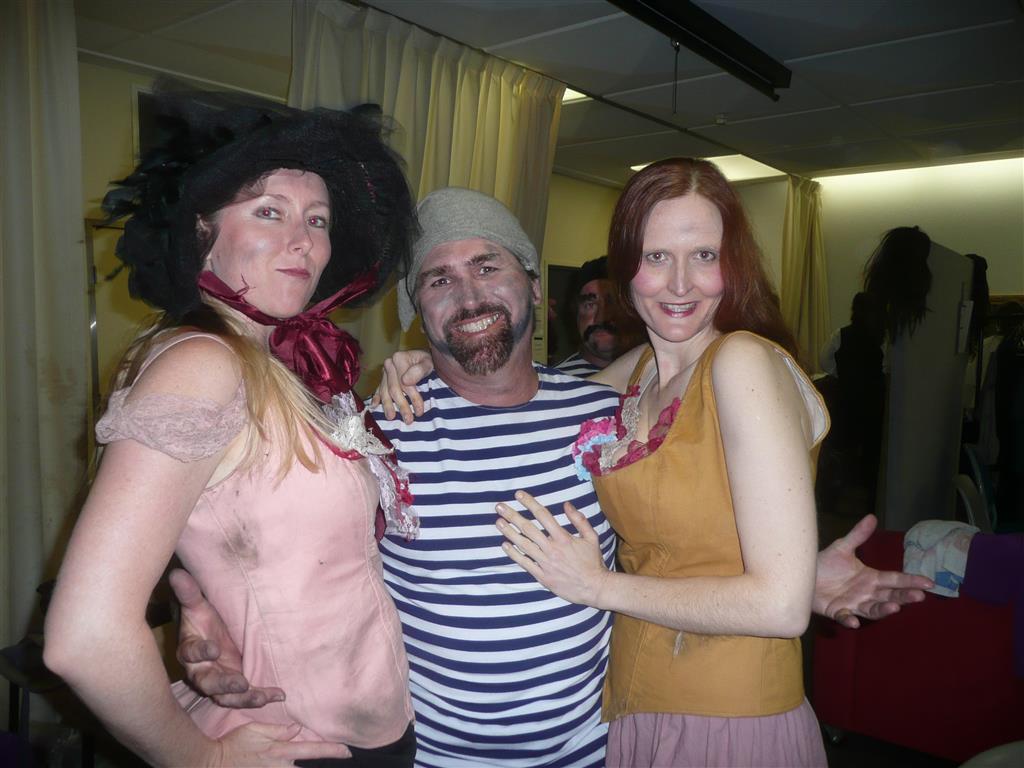
Two whores and a sailor

Two whores and a sailor

Actors need to immerse themselves in their roles, shed inhibitions and squelch embarrassment. I was not managing to do this while rehearsing the Lovely Ladies prostitute scene. My performance was overly self-conscious and restrained.

Three days later I found myself at a medical education conference, attending a session discussing learning plans. A popular tool in adult education generally, and a training requirement for all GP registrars, learning plans are actively disliked by many. Done purposely and thoughtfully, they can be of great benefit; completed hastily or reluctantly because they are compulsory, they are next to useless.

I have to confess that, as a registrar, my own learning plans were dashed off with little thought, submitted and then promptly forgotten. I’d never thought this technique would work for me.

At the conference, the attending educators were instructed to each write a learning plan that addressed an aspect of their non-medical lives. We were asked to choose something that we genuinely wanted to improve. I instantly knew what I’d write about, and completed the task with seriousness and sincerity.

The facilitator randomly picked a few participants to read out their learning plans. The topics were predictable: “I want to exercise each morning”, “I want to get at least seven hours of sleep a night” and the like. Yes, you can see where this is leading …

I should have anticipated being called upon, but when the “We have time for one more, how about you?” came, along with direct eye contact and a kindly smile, I momentarily panicked. Surveying the room of mostly middle-aged, male faces, many of whom I didn’t know, I considered making something up on the spot. Instead, I stood up, took a deep breath and read out: “I want to be a more exciting whore.”

I then outlined my proposed methods for achieving this objective and how I intended to measure my progress. Without explanation, I then sat down.

Silence. Not a sound. Most eyes were glued to me, the others looking anywhere but. The atmosphere was thick with shock, amusement, confusion, suspense and fascination.

I didn’t leave them hanging for too long. After my disclosure as to why I chose the topic and the context in which I was “whoring”, there were audible sighs of relief and a sprinkling of laughter throughout the room.

It was memorable for those present. Four years later, I still get the occasional question about my “whoring” when I run into certain educators at conferences.

I am pleased to report that my learning plan well and truly achieved its aim. I enacted my plan exactly as written and practised diligently. I knew I had been successful when the director instructed me to “Tone it down a bit. This is a family show, you know!”

Not high-class hookers!

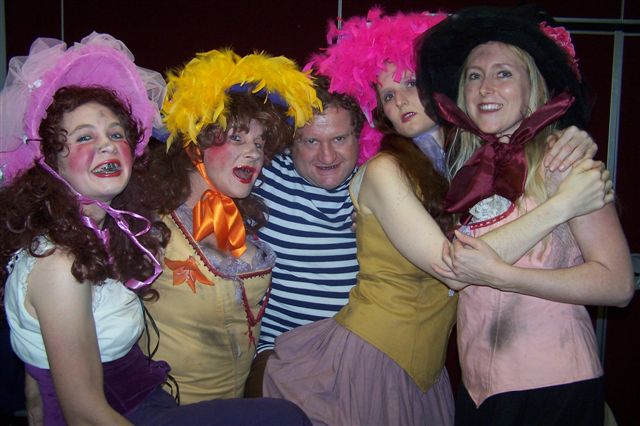
Not high-class hookers!

I now feel a lot more comfortable extolling the benefits of learning plans to unconvinced registrars. I tell them: “I used to think that I wasn’t a learning plan-type person either but I’ve discovered that if you choose a relevant and important objective and spend time and effort working out how to achieve it, the technique can really work.”

I tend to leave out: “It didn’t do much for my medicine, but it turned me into a fabulous whore.”

First Published in Australian Doctor on 21st July, 2011: On Becoming a Better Whore

http://www.australiandoctor.com.au/articles/10/0c071810.asp

Money-back Guarantees

A few years ago, a package holiday company advertised guaranteed sunny holidays in Queensland. The deal went something like this: if it rained on a certain percentage of your holiday days, you received a trip refund. An attractive drawcard indeed, but what the company failed to grasp was that the “Sunshine State” is very often anything but sunny.

This is especially so where I live, on the somewhat ironically named Sunshine Coast. We had 200 rainy days last year and well over 2 metres  of rain, and that was before the big floods of January 2011. Unsurprisingly, the guaranteed sunny holiday offer was short-lived.

There are some things that really shouldn’t come with guarantees. The weather is one, health is another. Or so I thought…

“Those capsules you started me on last month for my nerve pain didn’t work. I tried them for a couple of weeks, but they didn’t do squat.”

prescription-plain

“Perhaps you’d do better on a higher dose.”

“Nah, they made me feel kinda dizzy. I’d prefer to get my money back on these ones an’ try somethin’ different.”

“I can try you on something else, but there are no refunds available on the ones you’ve already used, I’m afraid.”

“But they cost me over 80 bucks!”

“Yes, I explained at the time that they are not subsidised by the government.”

“But they didn’t work! If I bought a toaster that didn’t work, I’d take it back and get me money back, no problem.”

“Medications are not appliances. They don’t work every time, but that doesn’t mean they’re faulty.”

“But what about natural products? I order herbs for me prostate and me heart every month and they come with a 100% satisfaction guarantee. You doctors say those things don’t really work so how come the sellers are willing to put their money where their mouths are?”

He decided to try a “natural” treatment next, confident of its likely effectiveness thanks to the satisfaction guarantee offered.

Last week I had a 38-year-old female requesting a medical certificate stating that her back pain was no better. The reason? She planned to take it to her physiotherapist and request a refund because the treatment hadn’t helped. Like the afflicted patient above, she didn’t accept that health-related products and services weren’t “cure guaranteed”.

“My thigh sculptor machine promised visible results in 60 days or my money back. Why aren’t physios held accountable too?”

Upon a quick Google search, I found that many “natural health” companies offer money-back guarantees, as do companies peddling skin products and gimmicky home exercise equipment. I even found a site offering guaranteed homeopathic immunisation. Hmmm…

In an information-rich, high-tech world, we are becoming less and less tolerant of uncertainty. Society wants perfect, predictable results — now! For all its advances, modern medicine cannot provide this and we don’t pretend otherwise. Ironically, it seems the health products with the least evidence are coming with the greatest assurances. A clever marketing ploy that patients seem to be buying into — literally and figuratively.

I think we all need to be reminded of Benjamin Franklin’s famous words: “In this world, nothing can be said to be certain except death and taxes.” We can’t really put guarantees on whether it will rain down on our holidays or on our health, and should retain a healthy scepticism towards those who attempt to do so.

Published in Australian Doctor on 26th May, 2011:  On Money-back Guarantees

http://www.australiandoctor.com.au/articles/11/0c070a11.asp