Male Postnatal Depression – a sign of equality or a load of nonsense?

Storylines on popular TV dramas are a great way of raising the public’s awareness of a disease. They’re almost as effective as a celebrity contracting an illness.

For example, when Wiggles member Greg Page quit the group because of postural orthostatic tachycardia syndrome, I had a spate of patients, mostly young and female, coming in with self-diagnosed “Wiggles Disease”. A 30% increase in the number of mammograms in the under-40s was attributed to Kylie Minogue’s breast cancer diagnosis. The list goes on.

Cast of Desperate Housewives

Cast of Desperate Housewives

Thanks to a storyline on the current season of the TV drama Desperate Housewives, I’ve recently received questions about male postnatal depression from local housewives desperate for information:

“Does it really exist?”

“I thought postnatal depression was to do with hormones, so how can males get it?”

“First it’s male menopause, now it’s male postnatal depression. Why can’t they keep their grubby mitts off our conditions?”

“It’s like that politically correct crap about a ‘couple’ being pregnant. ‘We’ weren’t pregnant, ‘I’ was. His contribution was five seconds of ecstasy and I was landed with nine months of morning sickness, tiredness, stretch marks and sore boobs!”

One of my patients, a retired hospital matron now in her 90s, had quite a few words to say on the subject.

“Male postnatal depression — what rot! The women’s liberation movement started insisting on equality and now the men are getting their revenge. You know, dear, it all began going downhill for women when they started letting fathers into the labour wards. How can a man look at his wife in the same way if he has seen a blood-and-muck-covered baby come out of her … you know? Men don’t really want to be there. They just think they should — it’s a modern expectation. Poor things have no real choice.”

Before I had the chance to express my paucity of empathy she continued to pontificate.

“Modern women just don’t understand men. They are going about it the wrong way. Take young couples who live with each other out of wedlock and share all kind of intimacies. I’m not talking about sex; no, things more intimate than that, like bathroom activities, make-up removal, shaving, and so on.”

Her voice dropped to a horrified whisper. “And I’m told that some young women don’t even shut the door when they’re toileting. No wonder they can’t get their de facto boyfriends to marry them. Foolish girls.

“Men need some mystery. Even when you’re married, toileting should definitely be kept private.”

I have mixed feelings about male postnatal depression. I have no doubt that males can develop depression after the arrival of a newborn into the household; however, labelling it “postnatal depression” doesn’t sit all that comfortably with me. I’m all for equality, but the simple fact of the matter is that males and females are biologically different, especially in the reproductive arena, and no amount of political correctness or male sharing-and-caring can alter that. Depressed fathers need to be identified, supported and treated, that goes without saying, but how about we leave the “postnatal” tag to the ladies?

As one of my female patients said: “We are the ones who go through the ‘natal’. When the boys start giving birth, then they can be prenatal, postnatal or any kind of natal they want!”

Published in Australian Doctor on 28th April, 2011:  On Male Postnatal Depression
http://www.australiandoctor.com.au/articles/77/0c070477.asp

Is there a doctor on board?

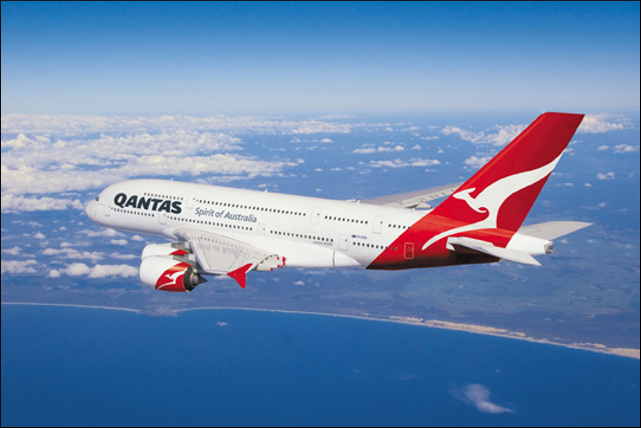
Qantas plane“Is there a doctor on board?” I used to wish a call like this would go out while I was flying. I had this romantic idea of saving the day, being showered with praise and upgrades, the cabin bursting into spontaneous applause; joining the medical equivalent of the mile-high club.

On a return trip from Canada, my dream was put to the test: LA to Brisbane, 13 hours of economy-class hell, barely a spare seat on the plane and surrounded by more energy reserves than needed to sustain an African village for a year. Yep, morbidly obese Americans — in front, beside and behind me.

The three seated behind me took the cake (actually I suspect they’d taken many a cake in their time). Dad was as loud as he was wide, and his demands and complaints kept the poor flight attendants on their toes.

“I’ve heard this called ‘cattle class’, but I own a big ranch in Texas and, let me tell ya, my cows have more room when they travel than we do here.”

I wanted to point out that most humans were smaller than bovines, and require less room, but I resisted.

“My wife is pregnant and these here cramped conditions are dangerous for the baby. Never flown ‘coach’ before.”

Why did he start doing so now — on a long-haul, trans-Pacific flight with a pregnant wife and, more importantly, me in the next row?

“But now that I’ve been jammed into this damn midget seat, I intend to take up the matter with the airlines — and my lawyer! It shouldn’t be legal!”

Mom’s mouth was mostly occupied with chewing, but in between mouthfuls she let forth a lungful or two. Their four-year-old butterball rhythmically kicked the back of my seat but I didn’t feel I should admonish him — after all, he was exercising!

In the end, I could take no more. I can count the number of times I’ve ever taken a sedative on one hand, but these were desperate times, and a Stillnox allowed me to sleep.

The word ‘doctor’ penetrated my groggy haze.

“She’s got a lotta pain in her belly. We need a doctor — now! It could be the baby! I told you these tiny seats were dangerous!”

Soon enough, the call for medical assistance came over the PA.

“How pregnant?” I wondered. It was impossible to tell from her body habitus — as in the song from Oklahoma, she was “as round above as she was round below”. I had visions of trying to deliver the premmie baby of an obese, litigious American on a crowded plane and half-asleep, I decided discretion would be the better part of valour. I lay in wait, fervently hoping I’d be beaten to the punch.

Luckily, three altruistic medicos swooped in as I watched from my seat. The ophthalmologist and psychiatrist from business class weren’t particularly useful, but the third-year resident from the rear of the plane was marvellous. How he examined her in the space confines I have no idea, but efficiently and professionally he was able to reassure her that her burning epigastric pain was unrelated to her seven-week pregnancy. An antacid was produced from somewhere and the pain settled rapidly.

He was proclaimed a hero and upgraded to business class for the remaining nine hours of the flight. Meanwhile, now wide awake, I was left in the company of my still-whining neighbours, to pay the penance for my inaction.

First published in Australian Doctor 31st March, 2011: On Airline Anguish

http://www.australiandoctor.com.au/articles/8b/0c06f98b.asp

I hate being on-call – I’m just not good at sleeping on the job

BOXING Day, 2010, 1.30am. “Are you the doctor on call?” I wrenched my reluctant brain from its REM state. “Yes.”

“I’m worried about my wife. She’s 16 weeks pregnant and very gassy.”

“Gassy?”

“Burping and farting. Smells terrible! It’s keeping us both awake. I’m worried it could be serious.”

By the time I ascertained that there were no sinister symptoms and that the likely culprit was the custard served with Christmas pudding (the patient was lactose intolerant), I was wide awake. My brain refused to power down for hours, as if out of spite for being so rudely aroused.

I have a confession to make. When the Federal Government announced last year that it was planning to abolish after-hours practice incentive payments, I was delighted. I know, I know, I should have been outraged along with the rest of you. After all, the RACGP predicted that after-hours care would be decimated if incentives were removed. Comparisons were made with the revamp of the UK system in 2004, which led to 90% of the profession opting out of after-hours work. Much as I sympathised, I was secretly rubbing my hands together with selfish glee. Surely this would mean that our semi-rural practice would stop doing all of our own on-call and free me from my after-hours responsibilities?

I detest being on call. I loathe it with a passion completely out of proportion to the imposition it actually causes. I’m on call for the practice and our local hospital only once a week and the workload isn’t onerous. Middle-of-the-night calls aren’t all that frequent, but my sleep can be disturbed by their mere possibility, leaving me tired and cranky. If I’m forced suddenly into “brain on, work mode” by a phone call, I can kiss hours of precious slumber goodbye.

I love to sleep, but, as with drawing and tennis, I’m not very good at it. I gaze with envy at those lucky devils who nap on public transport and fight malicious urges to disturb their peaceful repose. If I’m not supine, in a quiet, warm room, with loose-fitting clothing, a firm mattress and a pillow shaped just-so, I can forget any chance of sleep. Let’s just say I can relate to the Princess and the Pea story. I bet she wouldn’t have coped well with being phoned in the middle of the night either.

If these nocturnal calls were all bona fide emergencies, I wouldn’t mind so much. It’s the crap that really riles me. I’ve received middle-of-the-night phone calls from patients who are constipated, patients with impacted cerumen (“Me ear’s blocked, Doc. I can’t sleep”) and patients with insomnia who want to know if it’s safe to take a second sedative. The call that took the on-call cake for me, though, was from a couple who woke me at 11.30 one night to settle an argument.

“My husband says that bacteria are more dangerous than viruses but I reckon viruses are worse. After all, AIDS is a virus. Can you settle it for us so we can get some sleep? It would really help us out.”

I kid you not. In what’s rapidly becoming its modus operandi, the government has performed a policy back-flip and is now planning to delay any changes until 2013. I’ve got a long wait ahead.

Published in Australian Doctor on 3rd February, 2011: On Being On Call

http://www.australiandoctor.com.au/articles/d4/0c06e7d4.asp