“So you are practising at being a doctor, generally?”

I had such fun on the phone tonight… with a cold calling scammer of all things… just had to write it down…

8:30pm, Friday 17th January. Phone rings

Me: Hello, Genevieve speaking

There is a 3 second delay, a slight crackle and then a heavily accented voice greets me.

Him: Hello madam, I am calling from Microsoft Customer Care.

I laugh loudly.

Him: Madam?  I said I was from Microsoft Customer Care

Me: (cheery) I know, I heard you.  So what are going to tell me is wrong with my computer this time?

Him:  Not your computer, madam, my computer. I have a problem and I was hoping that you could help me.

This is a new one to me, I thought.  Let’s see where this goes.  I’m intrigued.

Me: Your computer?  I thought you said you were from Microsoft Customer Care.

Him: That’s right madam.

Me: And you’re ringing about a problem with your computer?

Him: Yes madam. My computer won’t let me log on. It keeps asking me for a password and then says my password is wrong.  Can you help me with this?

Me: Why?

Him: I don’t know why, that’s why I need your help.

Me: No.  Why are you asking me to fix it?

Him: I’ve heard you’re very good at fixing computers.

Me: From whom?

Him: Pardon?

Me: Who told you I was good at fixing computers?

Him: My colleague did.  He said you were the one to go to.

Me: Your colleague from Microsoft Customer Care?

Him: Yes madam.

Me: And where are you calling from?

Him: Umm…  from nearby to your home.

Me:  Nearby where exactly?

Him: Just one moment madam  (sound of frantic typing) … I’m in Ball-Leena

I presume he was mispronouncing “Ballina”, the town in which I live, in northern NSW

Me:  Oh, from the big Microsoft headquarters in Tamar St?

Which of course does not exist.

Him: (relief in voice)  Yes madam, that’s right

Me: And you’re calling from there now?

Him: Yes, madam.

Me: (as if making pleasant conversation) So how are you finding this weather we’re having?

Him: The weather is… umm…  very… nice?

Me: Nice?  You call sub –zero temperatures and blizzards nice?

It has been hot and sunny – we are in the middle of an Australian summer.  It has never snowed in Ballina – at least since the last Ice Age.

Him: (uncertain) Umm… yes.

Me: You must like the snow, then. You a skier?

Him: (with relief) Yes, yes, I like the snow on the ground because I like to ski, but I would like you to help me with my computer now.  I heard you were very clever to fix computers.

Me: So you said… from your colleague at Microsoft Customer Care.

Him: That’s right, madam.  My computer won’t accept my password and I…

Me: Sorry to interrupt you but I’m a little confused.  You work for Microsoft, right?

Him: Yes, madam.

Me: And the colleague you mentioned works for Microsoft?

Him: Yes madam

Me: And yet he recommended me to fix your Microsoft Windows problem. How interesting.

Him: (getting desperate) Please will you help me?  I really need to use my computer. It is very important for my work.

Me: Have you spoken with the IT support person at your workplace?

I idly wonder whether Microsoft have IT support staff for their own office computers.

Him: Umm… I’m working from home today and I need to get onto my computer to do work right away. That is why I’m calling you.  I’ve heard you are the best at computer problems.

Me: So you said. What are you typing on?

Him: Pardon?

Me: I can hear you typing.  If you can’t log on to your computer, what are you typing on?

Him: Umm… my laptop, madam. It is working very well.  My desktop is my problem.

This is just too much fun.

Me: OK, I’ll see what I can do to help.

Him: (with huge relief) Really?  Oh thank you madam.  If you would just go to your computer and…

Me: We don’t need my computer.  We can use yours.

Him: My computer is not working.  If you just…

Me: Not your desktop, your laptop.

Him: My laptop is fine. I need…

Me: Great.  Bring up Internet Explorer or Google Chrome

Him: (frustrated) But they are search engines for websites. I can get to any website I want. That’s not…

Me: Type in “Microsoft password problem” into your search engine of choice.

Him: (becoming increasingly frustrated but trying not to show it) They can’t help me. I’ve heard that you are the best computer expert, madam.

I thought it was time to cut him a break.

Me: I think you have the wrong “madam”. I’m only a doctor.

Him: (voice brightens) A doctor?  A person doctor?

Me: Yes, a person doctor. Not a computer doctor. We deal with different viruses.

Him: What kind of person doctor? A bone doctor? A nerve doctor?

Me: I’m in general practice.

Him: (in all seriousness) So you are practising at being a doctor, generally?

Me: No, I’m… never mind.  Sorry I can’t help you with your computer.  Good bye.

Him: Wait! Do you know about knees?

Me: Only those belonging to bees.

Him: I don’t understand madam.

Me: Forget it.  Have a nice…

Him: Wait!  I have a problem with my knee.

Me: I thought you had a problem with your computer.

Him: I do. And my knee.  It clicks when I bend it and hurts a lot when I…

Me: And you would like my advice?  As a doctor?

Him:  (eagerly) Yes please madam doctor. That would be very kind of you.

Me: No worries.   Go to your laptop.

Him: My laptop?

Me: Uh huh.  Bring up Internet Explorer or Google Chrome.  Type in “knee clicks when I bend” into your search engine of choice and then…. Hello?  Hello?  Anyone there?

……

Most fun I’ve had in ages… which probably suggests I should get out more. 

An ECT visit with a twist

The GP registrar, Dr S, took a big breath before bringing in her first patient from the waiting room. It was her first ECT (External Clinical Teacher) visit and she was probably wishing she’d been booked in for the other kind of ECT instead.

“I’ve got another doctor sitting in with me today as part of my training. Is that okay, Jacquie?”

“Sure, no problem. I’m just here for my results and a quick script,” replied the 50-something Jacquie as she walked with Dr S down the corridor.

In contrast to Dr S’ obvious discomfort, Jacquie seemed perfectly at ease — until she saw me sitting in the corner. Her eyes widened and then carefully avoided any further contact with mine. She twisted and untwisted the strap of her handbag.

“Are you okay?” Dr S asked. “You seem kind of jumpy.”

The response came through gritted teeth: “I’m fine.”

“Good news about your results. They are all normal. I’ll go through each one with you now. The arsenic level was undetectable”

“No need to go through them. Can I just get a printout please? I’m in a bit of a hurry.”

“Well, okay. You wanted a copy for your naturopath, didn’t you?”

“Umm, no. Just for me.”

Dr S looked confused.

“But didn’t your naturopath give you the list of the blood tests she wanted you to have done?”

“Umm, oh, that’s right. I forgot.”

Dr S shook her head almost imperceptibly as she printed out the results. She turned back to Jacquie.

“And your script?”

“What script?”

“You mentioned you wanted a script. Was that for temazepam?”

“No, I don’t need a script. I have a spare one at home. I forgot.”

Dr S was struck with the possibility of an interesting diagnosis. Her face lit up momentarily before settling into a caring but concerned expression.

“You seem to be having some memory problems, Jacquie. I’d like to ask you a few more questions if that’s okay?”

“Not today, I’ve got to go. Thanks.”

Jacquie flew out of the room, clutching her pathology results.

Dr S turned to me, her brow creased with concern.

“Well, I stuffed that up. Should I have handled the memory issue differently? She seemed really scatty today — she’s never been like that before. Do you think early onset dementia is a possibility?”

“Just take a deep breath. You didn’t do anything wrong. Sometimes there are other things going on.”

I smiled and explained that Jacquie was a regular patient of my practice, 50km away. She’d been in to see me only a week earlier when she’d asked for a range of unusual blood tests as requested by her naturopath. I had not ordered them. I had, however, given her a script for temazepam, which she insisted she used only occasionally.

As is the case with most registrars, Dr S soon relaxed into the ECT visit and found the experience valuable educationally.

It was valuable for me too. And for Jacquie. Somewhat to my surprise, she came back to see me, contrite, and we had a frank and open discussion about what had happened.

Her memory is just fine, although she wishes she could forget that embarrassing day.

(Names have been changed and permission has been obtained from the involved parties for this account to be published).

First published in Australian Doctor on 9th August, 2012 On an ECT visit about an encounter I had a few years back, but memorable even now…

http://www.australiandoctor.com.au/opinions/the-last-word/the-last-word-on-an-ect-visit

The importance of examining patients

Medicine is both a science and an art, and while knowing the causes of chronic renal failure is important (or so I’m told ;-)), there is so much more to being a good doctor.

Most start their medical training full of noble ideals and altruism (at least, that’s what they claim in their entrance interviews) but it is all too easy for medical students and registrars to quickly get overwhelmed by the enormous amount of stuff to learn.  Experienced doctors too, can get stuck in work mode and lose sight of the big picture.

I believe one of the fundamental responsibilities of a medical educator is to help our learners see the wood, the trees and the forest of medicine, preferably simultaneously.   Also important to remind ourselves!

I have started recommending this utterly inspiring talk from Dr Abraham Verghese about the importance of examining patients to my registrars.  He encapsulates the essence of our role and influence much more eloquently than I can…

Recapping memorable moments of 2013 – the “Prostate and Fingers” gaff

I love this time of year.  The water is warm, the days are long and the whole world seems to slow down.

The change of year provides a perfect excuse to reflect and plan, with or without making accompanying resolutions. I’m one of those people who likes to take a good hard look at the used year before tossing it out and opening a brand new one.

While sentimentality occasionally creeps in, I refuse to let it linger. I certainly don’t subscribe to the “a year is like your virginity” school of thought (you only miss it when it’s gone).

My very favourite things in the media (online, TV and newspaper) at this of year are the “year in review” compilations. All the big events in an acoustically and/or aesthetically pleasing five minute clip or five page spread.

Several of the Australian 2013 recaps included Tim Mathieson’s remark about Asian women doing prostate examinations at a reception at the lodge for the members of the West Indian cricket team in late January.  http://www.abc.net.au/lateline/content/2013/s3678150.htm

I wrote this column in the wake of the uproar and thought now would be a good time to share it, in the “reflecting on the year that’s been” tradition…

The Last Words on Prostate and Fingers

So our First Bloke got his fingers burned recently. For those who missed it, during a reception at The Lodge he told the West Indian cricket team: “We can get a blood test for it but the digital examination is the only true way to get a correct reading on your prostate so make sure you go and do that, and perhaps look for a small Asian female doctor is probably the best way.”

The story spread faster than the then-still-burning southern bushfires and flooding northern rivers. It dislodged natural disaster stories from their month-long prime spots and displaced the displaced-person interviews.

Cries such as “discriminatory”, “poor taste” and “potentially prosecutable if Gillard’s anti-discrimination bill were already law” were broadcast far and wide.

It shouldn’t have come as a shock to Tim that his light-hearted comment was given the finger. Surely he could have worked out that a sentence incorporating suggestions of sexism, racism and penetration of that particular orifice, delivered at an official function with the PM at his side, would have been better left unsaid.

Then again, I doubt it was scripted or intentional. Ill-conceived attempts at black humour are par for the course when people find themselves in uncomfortable situations, and for most blokes, talking about rectal examinations would definitely qualify as uncomfortable.

Add public speaking, TV cameras and famous international sport stars to the mix, and it’s no surprise that our First Bloke was all fingers and thumbs.

I don’t want to enter into a debate on DRE/PSA testing of asymptomatic men and I’m not going to criticise his ungrammatical sentence construction.

However, I do have a bone to pick with him: his premise. I think Tim has got his facts wrong regarding finger length and rectal examination.

Many female doctors have told me that small hands make digital rectal examinations very difficult. They complain of having insufficient length to reach the superior pole of the prostate.

Many will gallantly try to push as far in as they can, but I expect this process is not a particularly comfortable one for the patient.

I believe long, slender fingers are best suited to prostate examinations. Narrow width for comfort. Long length for maximum reach.

As I have been heard to say on more than one occasion (but never near a cameraman or a prime minister): “Long, thin fingers — good for piano; good for prostates.”

I imagine The Lodge was a rather tense place on the evening of 28 January. If Julia is anything like any other woman whose partner has embarrassed her at a dinner party, Tim would have had to weather quite a storm once the guests left.

In a way, the timing was almost as unfortunate as the comment. Unlike Julia’s, Mother Nature’s fury was finally dissipating. If Tim had made his faux pas a week earlier, the Queensland floods would have washed the story away in minutes. As it was, PM Gillard was forced to go into damage control.

No doubt inspired by the recent sandbagging, back-burning and other efforts by emergency services to save the endangered, Julia knew she would need to reach deeply into her bag of tricks to combat this unnatural disaster.

She did, and in just over 24 hours, pulled out an election. Or at least, an election date.

While she may deny that the two events are linked, I have a sneaking suspicion that Australia’s launch into the longest ever election campaign may have had more than a little to do with an inaccurate espousing of the shortest digits.

First published in Australian Doctor on 15th February, 2013: On prostates and fingers

The Big C at Christmas

Cancer. The Big C. No one wants it as a Christmas gift.

Maybe it’s just coincidence, but in the lead-up to Christmas I seem to be delivering this bad news more frequently than usual.

Intriguingly, as with children’s toys, each year there seems to be a particular type that is all the rage. Three years ago, I diagnosed two leukaemias in the week before Christmas. Two years ago it was three breast cancers and, in 2012, it was two invasive melanomas.

Unlike my breast cancer and leukaemia patients, my melanoma patients took the news calmly. Too calmly. They were both unusually blasé, even for middle-aged country blokes.

The first wanted to postpone the treatment of his aggressive desmoplastic melanoma until February, as he wanted to have a knee arthroscopy first.

The second didn’t even want an excisional biopsy until the new year. I had diagnosed his melanoma, with its textbook dermoscopic appearance, clinically.

Understandably, I was keen to remove the little blighter before it got up to more mischief, but the patient had plans to swim at the beach and didn’t want an open wound.

I usually employ a softly-softly approach when breaking bad news, trying to not unduly scare my patients. Wrapped in comforting padding, the “this is serious” message was obviously not being absorbed through either of their thickened, sun-damaged skins.

I was pretty sure neither was in a state of terrified denial; they both seemed genuinely unconcerned.

With the first patient, I worked my way up the scary-statements ladder until he “got it”. It was quite a climb; I even needed to use the word “death”.

With the second, I took an easier route, bringing in his wife from the waiting room and re-explaining the situation. He didn’t stand a chance! The melanoma was excised the following day.

When I saw him after Christmas to do his wider excision, he told me: “You’re too touchy-feely, Doc. You should’ve just said first-up, ‘This mole is deadly. I don’t care what plans you have — it’s coming off right away’. I wouldn’t have argued if you’d put it like that.”

Minutes later, as I sat wondering whether I should be more like Dr House at times, I received a phone call from a very worried daughter of another patient.

“Mum has been beside herself all Christmas. She’s convinced she won’t live to see another one. Getting the cancer diagnosis has completely knocked her for six.”

Puzzled, I reviewed my notes. I’d seen her mother as a new patient a week before Christmas and found a small solid pigmented BCC on the skin overlying L2/3.

I told her that a biopsy would be a waste of time and recommended excision, briefly going through the risks of skin surgery. She didn’t have any questions and the procedure was booked for early January.

I like to think I’m particularly good at reading people but in this case I failed miserably. I had no inkling that what she’d heard was: “CANCER!! On the SPINE! Too urgent to biopsy! Risky surgery!”

I apologised profusely, feeling terrible that I’d wrecked their family Christmas with my careless tossing around of the C word.

The daughter replied, “Oh it wasn’t all bad. Mum finally made amends with her sister after 20 years of fighting, and decided to work through her bucket list, starting with learning how to surf. She loves it!”

So while I’d kept a patient out of the water over Christmas, it seems that I’d inadvertently encouraged another one in. I just hope she slip, slop, slapped.


First published in Australian Doctor on 17th January, 2013: On the Big C

http://www.australiandoctor.com.au/opinions/the-last-word/the-last-word-on-the-big-c

Should GPs wear uniforms?

I like a man in uniform. I like a woman in uniform. I like getting onto a plane and being able to instantly recognise the pilot. I like knowing whom to ask when I can’t find the 14x100mm galvanised timber screws in Bunnings.  I like never having to ask, “Excuse me, do you work here?”

I also like to be in uniform myself.  After over a decade as an un-uniformed GP, I now spend most of my working week as a uniformed medical educator for North Coast GP Training.  And I love it. Not just the work but the clothing in which I do it. The uniform helps me feel part of a team and gets me in the mood (for work!).  It decreases my need to go clothes shopping, which some may see as a negative but for me is a blessing. Most appealingly of all, it simplifies the what-am-I-going-to-wear-today decision made when half-awake each morning.

Meanwhile, it seems that in the clinical setting, dress standards appear to be dropping. I recently visited a practice at which a young GP was consulting in a crumpled T-shirt, frayed jeans and scuffed thongs.  Now I’m far from a snappy dresser myself and normally take little notice of or interest in what others wear, but even for the North Coast of NSW this seemed rather inappropriate. I don’t want to rant on about professionalism, hygiene and O,H&S as microbiologist Dr Stephanie Dancer did in the BMJ (1), but I have to admit that I’m partial to doctors wearing a uniform of sorts.

Since the 1800s, the “uniform” of doctors has been the white coat.  Give any Australian child a picture of a well-groomed, white-coated adult carrying a stethoscope and the response will be “Doctor!”, even though the chances of that child having ever seen an actual doctor in such attire are next to none.

As a medical student, I was not allowed on the wards without a white coat, professional attire and covered leather shoes. Another was once turned away from a ward round because he wasn’t wearing a tie.  A year later the same consultant refused him, as an intern, permission to go home sick, and three elderly patients died after contracting his respiratory tract infection; but I digress.  At the major metropolitan hospital at which I did my early training, while white coats for doctors were definitely on the way out, there were still strict dress codes.

Nowadays, both white coats and ties have been ditched by the majority.  Both have copped flack over being “unhygienic”, and ties have been deemed a safety risk by some institutions as they apparently make excellent nooses.  While fears that white coats are common vectors for nosocomial infections have been largely dispelled (2) (3), the argument that they are arrogant and egotistical ensigns which interfere with doctor-patient relationships continues to hold sway.

Anti-white-coaters claim traditional garb is worn to signify superiority of status and intellect, making wearers less able to interact meaningfully with their patients.  While this may apply in some circumstances, it is not a universal truth.  Interestingly, a study published earlier this year in JAMA Internal Medicine suggested that families of patients in ICU saw white-coated doctors as the most knowledgeable and honest, and the best providers of overall care (4). Those dressed in scrubs also fared well.  It suggested that when it came to life and death matters, people wanted to deal with clinicians who looked like the quintessential doctors portrayed on TV.

I don’t think white coats are likely to make a fashion comeback in Australian general practice anytime soon, but I would love to see uniforms take off.  Personally, I like the idea of scrubs – the clothing, not the TV show. They are comfortable, practical, hygienic (when regularly washed!), come in an assortment of colours and styles and make us instantly recognisable. They may not be the most flattering or fashionable items, but they should cut down the number of “Excuse me, do you work here?” enquiries, which has to be a good thing for patients and doctors alike.

1. http://www.bmj.com/content/346/bmj.f3211

2.  http://www.amsj.org/archives/2490

3. http://www.medpagetoday.com/upload/2011/2/11/864_fta.pdf

4. http://archinte.jamanetwork.com/article.aspx?articleid=1653992

Short story: The Cat 4s

Winning entry into the national “Are you a Scribe?” competition, run by Medical Observer, published on 6th December, 2013.

Perched on a somewhat precarious looking stool, she surveys the waiting room, her domain, rattling off the platitudes she spews out countless times a shift to those who dare approach her…

“We’re very busy at the moment.”

“Patients are seen on a priority needs basis.”

“The doctors will see you when they can.  They are tied up with seriously ill patients.”

“Perhaps you’d like to go home and see your GP in the morning.”

It takes a special type of person to be a triage nurse, without a doubt.  A nightclub bouncer of the hospital world sans the steroid induced musculature.  A human shield, protecting the emergency department’s precious doctors from stampedes of the mad, the bad and the slightly unwell.  Sorting, prioritising, gatekeeping.  There has to be an element of enjoying the power… just look at her slightly bored and rather haughty expression, her air of superiority.  Just like the last one.  Is it part of their training or a job prerequisite?  Chicken or the egg?

I reach the front of the queue.  Her ID badge reads “Darna”.

“What brings you here today?”

“I have a headache.  It came on suddenly about three hours ago.  Never had anything like it.  Really sharp pain.”

“Does it feel like a migraine?”

“Wouldn’t know, never had a migraine.”

“How bad on a scale of one to ten?”

“Seven.  I took two Panadeine but they didn’t help.”

“Any fever?  Flu-like symptoms?  Vomiting?”

“No.”

“OK, take a seat.  There’ll be a bit of a wait.”

She types her verdict.  I sneak a look at the screen.

“Headache.  ?Drug seeking.  Cat 4.”

The feeling of déjà vu is almost overpowering.  Same emergency department six months ago, except it was “Tanya” not “Darna”.  Identical symptoms presented, almost identical questions asked, no examination performed, same conclusion reached…

“Headache.  ?Drug seeking.  Cat 4.”

We waited six hours on these same hard plastic chairs bolted to the lino floor, my wife increasingly distressed with the worsening pain in her head.  It comes back to me almost involuntarily…

“How long will it be?”

“I can’t say.  We’re very busy.”

“But my wife’s pain is getting worse.  She needs to see a doctor.  She needs something for the pain.”

“You must be patient sir.”

“You’ve let in eight people in the past fifteen minutes and we were here before all of them.”

“They have more serious ailments than a headache.  Category 2s and 3s.  You’re a Category 4.  People are seen in order of priority, not arrival.”

How long am I going to stay here today?  It will be on my terms this time.  The knowledge fills me with calm.  I won’t rush it.  The system deserves a second chance.  I can afford to bide my time, stretch out my legs, calmly inhale the antiseptic-laden air, soak up the ambiance.

I glance around at my Cat 4 companions, an eclectic mix of vulnerable human beings: an exhausted mother with a coughing infant, a young man holding a blood stained teatowel against his lacerated forehead, a middle aged woman with an icepack on her ankle, four family members each holding ice cream containers and looking green around the gills, a dishevelled man of indeterminate age pacing up and down and muttering about the listening devices the aliens implanted in his brain.

Strangers find themselves waiting together in so many different situations: waiting for a plane at the airport, waiting for the gates to open at the football, waiting for a restaurant table on a Saturday night.  Lumping an often disparate group for a common purpose inevitably creates a camaraderie of sorts.

Nowhere else, however, has the same mix of desperation and exhaustion that pervades the atmosphere of the hospital waiting room.  In a place where everyone is suffering and no one wants to be, good manners, patience and cheerfulness can prove elusive for many.

The latest arrival, a teenaged girl sporting peer-group-appropriate body piercings and tattoos, is a case in point.  After trying in vain to convince nurse Darna that her needs are “super urgent”, she stomps towards us, colliding with a frail octogenarian clutching a wheelie walker on her way.

“Hey, watch where we’re you’re going.  You could have hurt my baby…. I’m pregnant you know.”

Arthritic hands trembling and struggling to catch her breath the elderly woman replies, “Oh I’m sorry.  I didn’t see you there.”

“Maybe you should get your eyes tested.”

Despite wanting to keep a low profile, I cannot help but jump up to assist the poor old dear.  The teen sits in my vacated seat and proceeds to subject us to her inane chatter.  I can’t work out whether she is brazenly narcissistic or just ignorant and self absorbed.

“This sucks.  I’ve got, like, the sorest throat ever and a really, really bad cough… oh and my nose is running, like, heaps.  The man at the chemist said I couldn’t have any, like, cough syrup or cold and flu tablets ‘cause I’m pregnant.  How unfair is that! So I’ve come here to get some antibiotics from a doctor but that Nazi bitch nurse said I’m wasting everyone’s time.  She told me I should, like, go home and see my doctor in the morning.  How am I supposed to get any sleep when I’m, like, so sick?”

“Ignore her,” I plead silently to my Cat 4 comrades. “If no one engages with her, she’ll shut herself up soon enough.”

Alas, my unspoken warnings are unheeded.  Someone asks, “How far along are you dear?”

 “Nineteen weeks,” the teen replies. She becomes animated, her cold forgotten. “I can’t believe I’m going to, like, be a Mum in just like a few months. I can’t wait to have a baby too.  All my all friends do.  We are going to have play dates and, like, babysit for each other when we want a night out.  And baby clothes are, like, so cute.  We are going to, like, dress them in matching outfits and buy them those little T-shirts with the funny messages on them.  You know, like ‘If you think I’m cute, you should see my Mum’.  It’s gonna be totally awesome. And then there’s the baby bonus.  Did you know you get, like, $5000 just to, like, have a baby?  $5000 for free!  Why wouldn’t anyone do it?

“Peter Costello has a lot to answer for,” I mutter, going against my own advice to stay quiet. 

“Who?  My boyfriend’s name is Damon.  Why do people always, like, question who my baby’s father is?  I’ve been faithful to Damon for, like, six months!  And I’ve never slept with anyone called Peter.”

It seems to me that the trouble with our society is that, by and large, the wrong people are the ones having most of the kids.  There seems to be an inverse relationship between IQ and family size.  Darwinism in reverse.  Survival of the dumbest.  Someone should put a little chlorine in the gene pool.  OK, I admit, that’s going too far.  I didn’t used to be so bitter but since I lost Emily my once half-full glass is now decidedly empty.   My optimism has been damaged beyond repair.

I’m tortured by pregnant women in particular. Emily desired nothing more in the world than to have a baby.  She wanted to start trying years ago. I put her off, convinced her to wait until ‘the time was right.’  Now the time will never be right.  She will never be a mother and I’ve been left without even a piece of the woman I love.  I’ve got no one for whom to keep Emily’s legacy alive.  Why was I so adamant that we should wait?  I don’t remember.

My eyes are drawn involuntarily to the clock on the puke-green waiting room wall.

The second hand limps around the clock face agonisingly slowly. I feel as though I am trapped in a parallel universe where time has been stretched to double.  A minute feels like two, an hour like eternity. Paradoxically, the clock is running five minutes fast, according to my watch.

We all know that long waits are to emergency departments like fees are to banking – inevitable.  There are some who accept this with a zen-like calmness.  I admire them.

Three hours.  It’s been long enough.  I sidle up to the nurse’s desk.  Darna is updating her Facebook status and barely looks up.

“We’re very busy.  Don’t know how long the wait will be.  A doctor will call you in when he can,” she drones habitually.

“Is Tanya still working on triage?”

“Which Tanya?”

“Tanya Harrison.”

“Yes, she got back from holidays last week.”

“Holidays?”

“Yeah, went to Bali.  Got a great tan and had a pretty wild time from all accounts.  You a friend of hers?”

“Not exactly.”

Darna takes a closer look at me.

“An ex eh?” She chuckles almost maliciously.  “She has plenty of those floating around.”

“No.  I was… involved… with the incident six months ago.”

“Incident?  You’ll have to be more specific.”

“The collapse and subsequent death of a thirty-two-year-old woman in this very waiting room.  On Tanya’s watch.”

“Doesn’t ring a bell.”

“Complained of a headache, waited six hours, ruptured cerebral aneurysm?”

“Oh yeah, that’s right.  I remember hearing about that.  Bit of bad luck for Tanya.”

“Bad luck?”

“Well it wasn’t her fault.  She was just following protocols.”

“Were the protocols changed?”

“I don’t think so.”

“Did the triage nurses receive extra training in assessment of headaches?”

“Wasn’t considered necessary.  Why the twenty questions?  Yes it was sad, but these things happen.  Aneurysms kill people.  It’s not Tanya’s fault.”

“The doctors said that if she had been seen earlier they could have operated and that my wife might have lived.”

“Look, I’m really sorry you’ve lost your wife.  It is tragic.  Hanging around here is not going to help though.  You need to let go, move on.”

“I can’t accept that nothing has been done about the system’s failings.  That the same thing could just as easily happen to someone else.  That my wife’s death was in vain.”

“It has nothing to do with me.  I’m just the messenger.”

“And sometimes the messenger has to be shot.  Metaphorically speaking.  To send a strong message.  To effect change.  I’m sorry Darna, but this will give you quite a headache.  Perhaps deserving of prompt assessment and some pain relief.”

Before she is able to press the panic button, I take the hammer from my backpack and deliver three short sharp blows.

Am I seeking revenge?  Perhaps.  I like to think I am trying to knock some sense into the system.  Speaking up for the Cat 4s.

Scripted Role Play on sexual harassment of doctors by patients

The findings of a survey of 180 doctors by Melbourne and Monash Universities hit the media in Oct 2013 after being published in MJA. The survey results showed that 55% of Australian female GPs had been sexually harassed by patients and 65% been asked for inappropriate examination. It was stated that less than 7 per cent of the GPs  surveyed said they had been trained on how to deal with sexual harassment by a patient.

Reading the report prompted me to consider how we could cover this with trainees and thought that a scripted role play (*see explanation below) may be an effective method to broach this difficult topic.  I wrote the short script below to use with GP registrars.
Please feel free to use and/or adapt it if you wish.  All I ask is that appropriate attribution is made and that you let me know how it goes if you do run it with students or junior doctors. I always appreciate receiving feedback.

* Explanation

Scripted and semi-scripted role plays (where dialogue is initially read rather than improvised) can be less threatening.  They provide most of the educational advantages of traditional role plays (e.g. experiential learning, development of empathy) while eliminating or reducing many of the limitations (e.g. lack of control over subject matter, quality of information imparted, performance anxiety), making them a more accessible and palatable option.

Creative Commons License
Scripted Role Play Material is licensed under a Creative Commons Attribution-NonCommercial-ShareAlike 3.0 Unported License.

Workshop structure (approx. 30mins):  

1)   Prior to the session, two volunteers are sought for reading role play (and permission is obtained – no one is ever pressured to read).  I would suggest the roles are played by two females to minimise any discomfort, given the material.

2)  Introduction to session

3)  Scenario (projected via PowerPoint and/or read aloud)

4)  Reading of dialogue by volunteers with break midway (as per script) for discussion

5)  Facilitator-led Q and A “in role” – which may involve some “re-winding” / additional role play by same or new volunteers.

6)  Exercise to “de-role” readers

7)  Group discussion

8)  Conclusion

Scenario:

Dr Emma consults with new patient, 72 year old Fred Jackson.

Script: 

Emma:  (At doorway) Fred Jackson?

(Emma comes in with Fred, an elderly man.)

Emma:  (holding out her hand to shake) Hello Mr Jackson, my name is Emma Roberts. Welcome to the clinic.

Fred:  Well hello Emma, aren’t you a sweet little thing?

(Fred shakes with his R hand and uses his L hand to stroke Emma’s forearm. She withdraws it quickly without any fuss or change in facial expression and motions for Fred to sit. They both sit down.  Fred edges his chair a little closer to Emma’s. She edges hers back slightly)

Emma:  How can I help you today, Mr Jackson?

Fred:  No need for the formalities, darlin’, we’re all friends here.  I’m been Freddie since the day I was born, seventy-two years ago today.

Emma:  Happy birthday, Freddie.

Fred:  It’s all the more happy now I’ve seen you, darlin’. You’re the kinda present I’d love to unwrap. Tasty! (drawn out pronunciation: Taste-ee)

Emma:  Let’s focus on health matters, shall we?

Fred:  I’m just having a bit of fun, darlin’. I don’t mean nothin’ by it. You wouldn’t begrudge an old man a bit o’ harmless fun on his birthday, now would ya love?

Emma:  I’d feel more comfortable without that kind of banter, if that’s OK.

Fred:  You’re a bit uptight, aren’t ya love?  No worries, I’ll tone it down.

Emma:  So what can I do for you today?

Fred:  I know what I’d LIKE you to do for me, with those soft white hands and rosy red….

Emma:   (interrupting) Freddie, that is inappropriate.

Fred:  Sorry, sorry.  Don’t get your cute little knickers in a twist. I’ll behave.  OK, well it’s kinda embarrassing. I’ve bin havin’ problems with me waterworks. No longer Niagara Falls, more like a pissy little dribble that won’t even put out unless you talk to it real nice and buy it dinner first. (laughs at his joke)  Me regular doc reckoned it is probably me prostate and wanted to stick a finger up me bum to check it out. I told him, no way any bloke is putting any of his bits in my hole – just doesn’t feel right, ya know love?

Emma:  It’s a routine medical examination, Freddie, there is nothing sexual about it.

Fred:  Maybe, but I’d feel a lot better if a nice young lady doctor did it. You’ll treat me gentle, I can tell.  Might even be fun, and God knows, I don’t get much of that kinda fun anymore.

Stop:

Discussion:  How do you think Emma is feeling right now?  Why is Freddie behaving this way? (dirty old man, inappropriate but harmless/ well meaning or someone  who is trying to cover up his embarrassment with “humour”) How has Emma handled things so far? What would you have done differently? What can she do now? Get volunteers to say what they think Emma’s next response should be)

Emma:  First, I’ll need to take a full history and perform a general examination. If I agree that a rectal examination is indicated, I will ask my colleague, Dr Michael Harris to come in and act as chaperone.

Fred:  We don’t need no chaperone, darl. I trust ya. I’ll put my bum in your hands anyday.

Emma:  It is for my comfort as much as yours, Freddie. It is my policy not to perform that kind of examination without someone else present.

Fred:  How about a sexy nurse then?  Always fancied a threesome.

Emma:  Again, I must warn you about your language, Freddie. I find it offensive and if you continue, I’m going to have to ask you to leave.

Fred:  Sorry love. I’m harmless. Just like joking around.

Emma:  If are not comfortable with Dr Harris being present, and you need an intimate examination, I’m afraid I’ll have to ask you to go elsewhere for the examination. I’d be happy to pass on any relevant information to the doctor of your choosing.

Fred:  Blimey!  Are you some kind of bloke-hating women’s libber? Talk about overreacting to a bit of friendly chat.

Stop:

Q and A in role 

De-role readers

Group Discussion:  Has anyone experienced inappropriate sexual behaviour from patients? How did you handle it? Stats (55% GPs 2013 study) What are your options? What systems in place in your practice?

The Medicine of Laughter

I was at a doctors’ meeting recently, at which the Tropfest 2012 finalist short film How Many More Doctors Does It Take To Change A Lightbulb was screened.

This somewhat edgier sequel to the 2006 film How Many Doctors Does It Take To Change A Lightbulb shows seven minutes of unprofessional GP conduct, spiced by per rectum jokes.

Looking around at my 30 or so colleagues, I was interested to observe that one of the most gentle, empathic and sensitive doctors I know was among those laughing the hardest. She later explained: “Laughing at misfortune is the only way I can keep caring. I’d fill up with misery otherwise … and be no good to anyone.”

A propensity for black humour has long been associated with medical students and doctors alike, and it is not hard to understand why.

Dealing with human vulnerability, illness, grief and pain on a daily basis can be stressful. Add in time pressure, bureaucratic frustrations and the expectation to remain caring, empathic and professional at all times, and something’s got to give.

We all know that having supportive family and friends, regular time off and interests outside medicine are important for our well-being and sustainability, but are these enough?

Do we also need additional ways of processing and then letting go of the absorbed grief we accumulate?

Some choose to debrief by yelling, ranting, moralising or whingeing. Others use humour in one of its many forms: dark, absurd, slapstick, satirical or otherwise. This may sometimes involve poking fun at our more intense colleagues who may, in turn, complain about those they believe treat serious issues insensitively and frivolously. Horses for courses.

It is true though, that using humour is inherently risky, particularly for doctors. Even if the intent is innocent, an attempt to lighten the mood at the wrong time or place can seriously backfire. What is funny to one person might be deeply offensive to another.

My advice: go ahead and laugh your cares away, spreading the sunshine of your humour if you will — but always treat patients with respect, tread carefully around those ever-so-serious colleagues and refrain from sharing any potentially inflammatory jokes via social media.

Personally, I like to think that I owe a good deal of my resilience to spending as much time as I can on the funny side of the fence. Writing a Last Word column each month has helped me to do just that.

I now find myself on the lookout for encounters that I can subsequently write about in a light-hearted fashion. The more I look, the more I find. Medicine may be a serious business but it is also seriously funny.

I have pages of ideas, most of which will never be submitted for publication. It doesn’t matter though. I’ve discovered that the simple act of recording such stories in a humorous style, even without sharing them with others, has been great for my mental health.

It is not insensitivity. It is not schadenfreude. It is a way of reducing the emotional burden of my job and allowing me to go to work smiling — ready to give the support and empathy my patients and colleagues deserve.

I enjoyed watching the Tropfest film. While I far prefer witty satire to predictable scatological humour, there is something about stories of inserted foreign objects that elicits a chuckle along with the cringe.


First published in Australian Doctor on the 15th June, 2012 On the Medicine of Laughter

http://www.australiandoctor.com.au/opinions/the-last-word/the-last-word-on-the-medicine-of-laughter


General Practice is Messy

I’ve just read a great post by Dr Marlene Pearce about the art of uncertainty in general practice.

http://thedoctorsdilemma.wordpress.com/2013/11/24/the-art-of-uncertainty-in-general-practice/

As I found myself nodding in agreement to Dr Marlene’s wise and well-written sentiments, I was reminded of a conversation I had last year…

“I’m really surprised you settled for being a GP.  You used to be such an over-achiever!  Why didn’t you choose something that’s intellectually challenging?”

I hadn’t seen my old uni friend since Med School and after the first five minutes of listening to him boast about his prestige and income, I was reminded of why I hadn’t made the effort to stay in touch.  By the time he finally got around to asking what I was doing, I was seeking means of conversational escape.

I smiled sweetly and replied, “I did. Some enjoying fiddling around with bonsai, while doctors like me find challenge and reward in being swamp gardeners,” before politely excusing myself.

I was introduced to the concept of swamp gardening by GP, researcher and medical educator extraordinaire, Dr Louise Stone, during an address she gave at the 2011 GPET Convention, and I have to admit I’m quite taken with the metaphor.

It relates to the messiness of general practice: the reality that we spend much of our time dealing with undefined and sometimes undefinable illness.  In medical school we were taught to approach a presenting complaint in a stepwise fashion:  history, physical examination, investigations, diagnosis and then finally management.  In primary care, it isn’t always so clear cut.

Donald Schön, in his book ‘Educating the Reflective Practitioner’, wrote: “In the varied topography of professional practice, there is a high, hard ground overlooking a swamp. On the high ground, manageable problems lend themselves to solution through the application of research-based theory and technique.  In the swampy lowland, messy, confusing problems defy technical solution.”

The most horticulturally challenging swamp species are conditions without nice, neat diagnostic labels.  It is hard to wage war on a nameless, faceless enemy.  If they are tough for us, they are enormously more difficult for the patients they affect.   Many have been on the diagnostic treadmill for years.  Poked, prodded and imaged over and over by various GPs; bounced from specialist to specialist. They’re told everything they don’t have.  Some latch onto the labels they accumulate along the way, grateful for any name to explain their suffering.  I recall a patient for whom a somatoform disorder diagnosis brought immense comfort.  “It’s a real disease,” she’d tell her friends. “It means my body’s more sensitive than other people’s.”

Others find such diagnoses insulting, shameful and upsetting, desperate for a more “socially acceptable” explanation.  One such patient told me that the day she was diagnosed with breast cancer was the happiest day of her life.  “At least now people will believe I’m sick,” she said.  As Dr Stone said in her address, “There will never be a Fun Run raising awareness for medically unexplained symptoms.”

No one would deny that swamp gardening can be frustrating and draining.  However, if you are searching for meaningful, important and interesting work, you’ll find it in the swamp.

It is challenging to sail the diagnostic sea without sinking under the weight of over-investigation or being capsized by a missed serious condition.  It takes intellect and bravery to negotiate the treatment maze without a map. And there’s immense reward and satisfaction to be gained by wading through the swamp with your patients, weeding and planting.  Efforts which, if you’re lucky, will occasionally bear fruit.

Even if I had spent time explaining it, I suspect my old uni friend would not have understood the fundamentals of swamp gardening.  My cryptic answer made an impression though.  I heard that he’d commented that “Genevieve‘s gone all flower-power closet hippy.  Must come from living near Byron Bay.  Shame, that.  She used to be kinda normal.”

Adapted from my piece, “Swamp Gardening” first published  RACGP’s Good Practice magazine, Jan/Feb 2013  – “Portraits of General Practice” Column

Plagarism on Media Watch

I like watching the ABC’s Media Watch. It’s comforting knowing there’s a watchdog out there, revealing the details of misleading broadcasts.

It seems apt that the process is a public and transparent one, but I admit I’d never stopped to consider the effect on those named and shamed. That is, until I watched, transfixed, as Dr Tanveer Ahmed was exposed for serial plagiarism.

I immediately wondered how he felt, watching the show. How his family and friends would react … his colleagues … his patients. Would this be the end of his expanding career in public life or would he bounce back from scandal, with a profile even bigger than before, as do the likes of Alan Jones? Would this have implications for his clinical career? I really felt for him.

I’m not sure why it seemed so personal; I’ve only met Dr Ahmed once, briefly. Perhaps it was my getting to know him through reading his memoir, The Exotic Rissole. Maybe it was because I felt a certain kinship, being a fellow doctor-writer, although, unlike him, I am not even a speck in the public eye — thank goodness.

Kinship doesn’t guarantee loyalty, as was patently obvious in the media aftermath of Dr Ahmed’s outing. His harshest critics seemed to be fellow medicos, particularly his psychiatrist colleagues, several of whom displayed considerable schadenfreude in their Media Watch website postings. It seems not even psychiatrists are above a metaphorical “na-na-nee-na-na”.

Not that I’m defending Dr Ahmed’s actions. His is a clear-cut case of plagiarism on a grand scale, and it is right and proper that it was revealed the way it was. What astounds me is how he got away with it for so long. Even before the Google age, when I was at school plagiarism was promptly noticed and punished, although I do recall two notable exceptions.

The first was of an unremarkable Year 10 student who submitted a remarkable short story that earnt him top marks in his English assignment and first place in the school’s writing competition. Within hours of its publication in the school newsletter, the headmaster received several calls revealing the story to be a well-known Jeffrey Archer piece meticulously copied word-for-word. Unfortunately, the embarrassment didn’t end there. It had been entered into a statewide competition, and the plagiarism was discovered before the submitting teacher had facilitated its withdrawal. “At least,” it was noted, “the teacher recognised and rewarded good writing.”

Which segues into my second exception. My younger brother constantly complained about going through school in my academic shadow. He is not without brains — in fact he’s far smarter than I am — but, like many bright schoolboys, he was not overly interested in applying himself. Two years behind me, he felt unfairly compared with his ultra-nerdy goody-goody sister. He even had “proof” of reverse favouritism, in the form of an English book review assignment.

Facing the deadline and having not even read the book, my brother decided to print out my two-year-old review, which was conveniently stored on our home computer, and submit it with only the name and date changed. On the return of “his” assignment, he felt both outraged and vindicated that his received an A-, while my identical one had earned an A+. His self-righteous indignation remained private, for obvious reasons.

Dr Ahmed’s transgressions are no longer a private affair, but at least he didn’t respond with indignation. I thought his Australian Doctor-published response was frank, apologetic and most importantly, in his own words.

I wish him well.

………………………..

Written in October, 2012

First published in Australian Doctor on 24th October, 2012: On plagiarism

http://www.australiandoctor.com.au/opinions/the-last-word/the-last-word-on-plagiarism

Listen to your heart – my response to ABC TV’s Catalyst program

In the last fortnight or so, there has been a lot of talk about the two part Catalyst special on cholesterol and statin medications. The Heart of the Matter aired on the 24th and 31st October on ABC TV  and received widespread publicity in both the mainstream and medical press. Despite currently being on leave from clinical work, I’ve been approached my numerous concerned friends and non-medical colleagues asking for my opinion on the issues raised. In my role as a medical educator, I’ve had an enquiry or two from somewhat confused registrars wanting to know what to say to their worried patients.

Now this is not a bad thing in itself. Increasing public awareness of important health issues, transparency and rigorous independent scrutiny of established scientific “facts” are vitally important.  Like many others, I abhor the tendency to over-medicalise, and the increasing pressure from many sources to over-diagnose and to over-treat. Having said all that, I was disappointed in Catalyst’s treatment of the issues raised.  I thought it was sensationalised and unbalanced, and therefore irresponsible to air.  Using emotive terms such as “toxic”, “organised crime” and “conspiracy” is not helpful to anyone.

Although the Catalyst shows came with a token disclaimer, I worry that such scaremongering will result in fear-based rejection of statin medications.  I’m not saying that statin medications are  beneficial to everyone, far from it, but there are certain subsets of patients for whom statin therapy may well be lifesaving and I worry that these some of these patients may be adversely affected.

On the positive side, it has brought the topic of heart health to the public’s attention, and provided a good opportunity for doctors  to reassess their patients’ absolute cardiovascular risks, review their need for medication, and to provide education and  advice on all lifestyle risk factors. The shows also emphasised the importance of regular exercise and a diet low in refined sugars.  All good things.

And I was inspired to create my first ever YouTube mash up/ musical parody. I’m not sure if this was a good thing or not, I’ll let you be the judge…

It was created on a whim while travelling.  I had no recording equipment other than my laptop’s cheap and nasty internal microphone (I apologise about the audio quality!) and was overtired.  I know fatigue is not a legitimate medico-legal defence regarding duty of care to patients, but I wonder if it is a reasonable excuse for questionable creative content?  Perhaps, like shopping when hungry, it is merely ill advisable. All just a bit of fun really, and a chance to try out my Camtasia software for the first time.

Feel free to comment below if you so wish.

If you missed the  Catalyst shows and want to see what the fuss is about they are available on YouTube.

Episode one link

Episode two link

For an excellent summary served with lashings of evidence and a sprinkling of humour, check out Dr Robin Park’s blog post.

For some great advice to junior (and senior!) doctors, check out Broome Docs “Letter to my registrars:on statins and stuff” in which a great comparison is made between the current media storm on statins with the uproar over HRT in 2002.  Like Casey, I was a bright-eyed bushy-tailed registrar when the WHI results were first released and remember all too clearly the widespread patient (and doctor) panic over HRT.  It taught me some valuable lessons.  Firstly, I learned to not take medical information imparted to me from on high as the gospel truth, but to always question and to keep questioning “truths” over time. As I’ve become more experienced, I have discovered that nothing in medicine is absolutely right. The more I know, the less certain I’ve become. Secondly, it introduced me to the swinging pendulum: HRT was all good, then all bad, and now rests somewhere in the midline – sometimes good, sometimes bad, depending on the clinical situation. Thirdly, it got me in the habit of using sentences such as “based on current guidelines / what we know at the moment, I would suggest ‘X’ but this may change as further evidence comes to light,” rather than sentences like “Evidence shows that ‘X’ is the best treatment for you.”

For some “fat facts” from the ever-reputable Rosemary Stanton, you can find her article in the MJA here. She points out that Catalyst “relied on the opinion of a journalist and four US experts — a nutritionist, two cardiologists and a physician — but failed to note that three of the experts market a range of “alternative” products via their websites (www.jonnybowden.comwww.drsinatra.comwww.proteinpower.com), including diet “aids” (with “slimming” claims), anti-ageing, “brain power” and detox supplements, plus a variety of bars, shakes, drinks and powders. One product even claims its citrus bergamot content will lower triglycerides, blood sugar and inflammatory LDL (low-density lipoprotein) cholesterol and raise HDL (high-density lipoprotein) cholesterol.”

And finally, a must read: the ever-witty Dr Justin Coleman weighs in with his sceptometer blowing a fuse in the process.

Assessing fitness to drive – dealing with bullies.

Dr Andrew Gunn has just published a highly entertaining piece on the serious topic of assessing fitness to drive in the elderly.

http://drandrewgunn.com/2013/11/01/the-last-word-on-fitness-to-drive/

I agree with Andrew that the current system has the potential to cause real damage to the doctor-patient relationship and that routine practical testing for older drivers would be a significant improvement. What do you think?  (please comment below)

Anecdotal evidence seems to suggest that some patients will doctor shop with their fitness-to-drive paperwork and lie and/or bully doctors into signing the forms. As a junior GP registrar I felt unprepared to deal with such demanding patients, and on a couple of occasions caved in against my better judgement. One of the most memorable was with “Betsy” (name has been changed).

Betsy was an exceedingly frail 88-year-old who hobbled painfully slowly and breathlessly into my room using her wheelie walker. Her list of medical problems was long and impressive, and included uncontrolled diabetes, heart failure and Parkinson’s. The medical certificate form for her driver’s licence renewal flapped almost comically in her shaking hand. Despite its being patently obvious that she was unfit to cross a road unaccompanied let alone get behind the wheel, I’m ashamed to say that I was bullied into signing the form, for lurking underneath that frail exterior was a very aggressive and manipulative woman. I didn’t sleep well that night, terrified that my cowardice might result in great harm to some innocent road user.

Less than a fortnight later I heard that Betsy had died at the wheel. Imagining the worst and having visions of being hauled up in front of the coroner to explain my negligent action, I spent the next few hours in a state of panic. To my immense relief, I discovered that far from causing an horrific multi-vehicle accident, Betsy had in fact executed a perfect parallel park in town, but failed to alight from her car. Cause of death: massive CVA.

I’ve never gone against my clinical judgement when signing a driver licence medical certificate again, much to the chagrin of several patients.

I’m willing to bet that a fair proportion of us doctors were subject to bullying as schoolkids. Some of us disguised our intellect, played rugby, hung out with the cool kids and went on to become orthopaedic surgeons, but many of us, myself included, found ourselves in the nerdy camp. Orchestra, choir, debating, chess club, maths quizzes and science summer schools were not the kind of extracurricular activities which helped one climb the school social ladder. Add to that a goody-two-shoes attitude, the wrong wardrobe, acne, braces and a few extra kilos, and you get a bully’s pin-up girl – or rather, voodoo doll.

Time went by; we all grew up and I for one relished the idea of living and working in a mature, fair, supportive, adult world. Alas, I was to discover that not all schoolyard bullies grow out of their penchant for pushing others around.

While only a small number of patients attempt to bully us, the ones who do can cause considerable headaches.  Ignoring those who put our physical safety at risk (that’s a whole other topic), the ones who put undue pressure on us to grant their wishes can be more than just unpleasant to handle – their behaviour can result in our treating them inappropriately.

Unfortunately, I did not immediately apply the lesson learned with “Betsy” to other unreasonable demands made of me.  One busy morning, as the only doctor on duty, I was rung by the practice principal’s wife and informed that a “VIP patient” (a close friend of hers) was en route with “something in his eye”. “No care is to be spared!” was her instruction.  I was mildly offended at the insinuation that I spared my care according to whim, but all such thoughts were swept away by the arrival of a distraught wife with her vomiting husband in tow.  I did not need fluorescein to find the foreign body: he had a 2cm diameter bamboo rod protruding from his orbit.  A simple case of ambulance to the nearest hospital, I know, but the patient and his wife flatly refused to be treated at a public hospital, but instead insisted on driving to a private ophthalmologist (there being no private hospital emergency facilities nearby).  After valuable minutes ticked away with my arguing the point, I acquiesced. I had a difficult phone conversation with a local ophthalmologist, hurriedly scribbled a letter and sent the patient on his way.

Later that day, I received a deservedly irate phone call from the ophthalmologist on whom I’d dumped this unstable patient.  It was a metaphorical poke in the eye with a big stick, and I still wince when recalling the dressing down. Luckily, the patient’s outcome was a relatively good one, all things considered.  He lost the eye, but did not suffer any intracerebral complications.

As children we are told, “It’s all fun and games until someone loses an eye.”   It took me a long time to learn this lesson, but learned it I have – I’m no longer a pushover when it comes to bullies.


(Identifying details have been changed to protect patient privacy. Blog post has been adapted from my column “Dealing with bullies” published in MIPS Review Spring Edition, September 2011)

Why Halloween and I aren’t so keen on each other

Halloween, 31st October 2012

I’m not opposed to giant pumpkins. I don’t have a problem with people dressing up in costume, as long as I’m not expected to don a witch’s costume to go with my chin (I was once told by a six-year-old patient that my chin is “long and pointy like a witch”, and I’ve had a chin complex ever since).

I just object to being dragged into yet other Americanised opportunity to promote childhood obesity and tooth decay.

Mind you, Halloween doesn’t seem keen on me either. This 31 October, I was travelling to Melbourne, via Sydney, heading for the RACGP to workshop the new vocational training standards. The meeting was a treat but I was tricked en route. I arrived at Sydney airport. My wallet didn’t.

I’d had it at Ballina airport when I paid for parking, but somehow I found myself in Sydney with no ID, cash or credit cards. Thanks to a kind friend who made a mercy dash to the airport with some cash, I made it to Melbourne with at least the means of getting to my accommodation.

Alas, the hotel clerk was not accommodating. Having missed my connecting flight in Sydney, I ended up arriving after midnight, and was in no mood to be told that they couldn’t give me my prepaid room without a credit card imprint and ID.

“I know my credit card details; can’t I just give you the numbers?”

“No. I have no way of verifying who you are.”

“But you take credit card bookings over the phone.”

“Yes, but that’s different.”

“How?”

“It’s over the phone.”

“Well, how about I go outside and call you on my mobile?”

“We will accept a $500 cash bond in lieu of a card, but we still need ID to give you the room.”

“I don’t have $500 or ID.”

“Then I’m sorry, I can’t help you. My hands are tied.”

I was ready to tie him up myself and steal a room key but sanity prevailed. The duty manager was called, and I eventually got a bed on which to rest my weary head.

I have a new appreciation of some of the many challenges faced by the homeless, dispossessed and utterly disorganised. For me, thankfully, it was just a blip — Halloween deja vu.

This wasn’t the first time I’d spent Halloween trying to prove my identity. In 2010, I landed at Los Angeles airport with a stolen passport, according to US Customs. I was ignominiously thrust into detention with an assortment of would-be immigrants while they “processed my case”, and released seven hours later with a curt “You can go now. Administrative error”.

Again, a missed connecting flight, which meant arriving late in Las Vegas, and an after-midnight hotel fight. They’d given away my prepaid room and claimed the hotel was full. Being Halloween in Vegas, I almost believed them, but wandering the streets at 2am with inebriated, costumed revellers didn’t seem like a good option, so I stood my ground.

They eventually found me a “special” room, which came with a full-mirrored ceiling, an enormous “love tub” set into the carpeted floor, and a bed with various attachments. I tried to convince myself it was a Vegas-style birthing suite that had been properly cleaned after last use, but the stains and lingering odours suggested otherwise. I mightn’t have minded so much if it’d come with a pool table and naked prince.

Next year I’ll try to get back into Halloween’s good books by staying at home and treating any callers to tooth-rotting ‘candy’, with my wallet and passport safely tucked away.

………………………

First published in Australian Doctor on 21st November, 2012: On Halloween

http://www.australiandoctor.com.au/opinions/the-last-word/the-last-word-on-halloween

Gloat-worthy Geography (Geo-bragging)

I’ve just read an amusing column penned by my favourite medical writer, Dr Justin Coleman, in which he mused about life as seen while luxuriating on a beach at Byron Bay.

http://drjustincoleman.com/2013/10/29/397/

(I know we’re not supposed to play favourites, but let’s be honest, we all do, whether they be friends, colleagues or patients. But you have to maintain plausible deniability when it comes to your offspring.)

Justin’s column got me a-thinking about using places as status symbols / envy-elicitors.

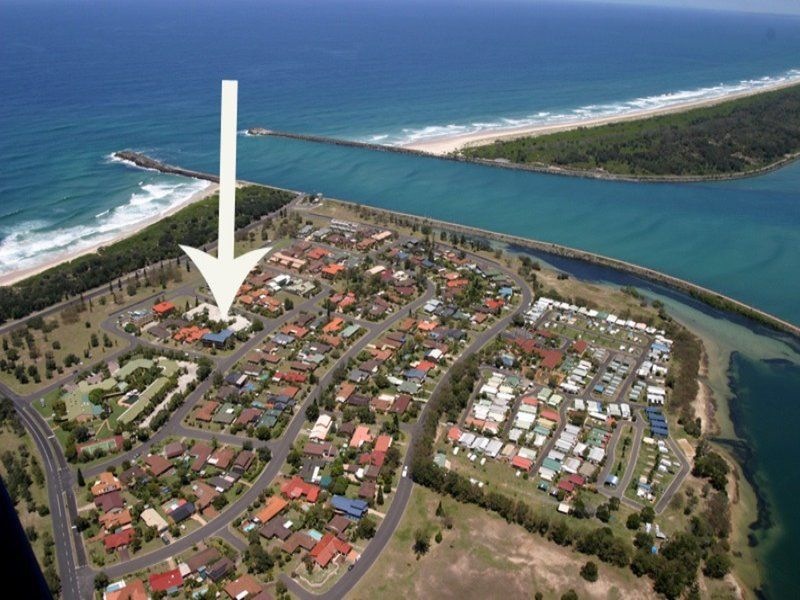
I’ve spent most of my life living in places where other people holiday. I was born and bred on the Gold Coast, moved to Noosa as a GP registrar and have lived in the Byron Bay region for the past 22 months.  If ever challenged, I would hastily defend my choice as being all about lifestyle and not a jot about status, but would also have to admit that I do like to geo-brag now and then, and achieve this by using gloat-worthy geographical descriptions.

Living at Pomona0020

Take my home in “Noosa” for example. Technically, I did live in the Noosa Shire for ten years (although the shire has been since been amalgamated) but the little country town in which I resided for much of that time, Pomona, was forty five minutes and a world away from the luxury and prestige of Noosa Heads.  While its location could be accurately described as a small inland town 37km north of Nambour (Clive Palmer’s new heartland) and 37km south of Gympie (where Clive Palmer is thought to be far too left-wing), describing it instead as “an idyllic town in the Noosa Hinterland” conjures up a more enviable picture.

Likewise, my current home: Ballina.  “Just south of Byron Bay” (31km) sounds more enticing than “east of Lismore”.

My current residence - not hard to gloat about this location

My current residence – not hard to gloat about this location

 Mind you, as soon as I mention that I live only a couple of hundred metres from a picturesque beach, and not much further from the magnificent Shaw’s Bay and the mouth of the gorgeous Richmond River, I don’t have to do much selling!


Justin also made an interesting point about the girth of the typical Byron beach goer, or rather conspicuous lack thereof.  The North Coast of NSW (as defined by Medicare Local boundaries) came in the top 10 “slimmest” regions in recently released figures, and the area around Bryon Bay (which includes hinterland towns such as Mullumbimby, Nimbin and Bangalow) would have no doubt helped to decrease the North Coast’s collective average BMI considerably.  Mind you, it also helped to decrease the region’s childhood immunisation rates. We came in the top 10 for the slimmest (aka lowest) childhood immunisation rates (by Medicare Local region) too.

Interestingly, several of the Medicare Local catchments in the bottom 10 for childhood immunisation rates, were also in the bottom 10 for obesity rates, including Eastern Sydney and the Sunshine Coast.  Probably not a chicken and egg conundrum, more a likelihood that conscientious objectors to immunisation have similar conscientious objections to eating egg McMuffins for breakfast and KFC for lunch.

My local "near-Byron" beach.

My local “near-Byron” beach.

Time for me to go for a stroll on my near-Byron beach before I prepare my chicken-and-egg-free Byron-style dinner.

To finish, I will just point out that I’m not the only one to use Byron’s name in vain. Even Ballina airport calls itself Ballina-Byron, proclaiming itself as “the gateway to beautiful Byron Bay”.  But be warned, there is a long, albeit scenic, driveway.  The taxi fare from the “gateway” to your hotel in Byron may cost you more than your airfare from Sydney!