What do GPs actually do?

In a recent discussion about the frequent shedding of tears in my consulting room (most of them not mine) and my resultant high rate of tissue box turnover, my mother said, “Having never cried nor even thought of doing same when at the doctor’s, I find that rather strange.”

It got me a-thinking. Her personal experience of what “going to the doctor” entails has shaped her view about what us docs do.  And it’s not just my Mum (who actually has a pretty good idea about the life of a GP thanks to many years of my stories) – we all make judgements in life based on limited personal experiences. I’m reminded of the cartoon showing several blind men each touching a different part of an elephant and arguing over what the animal looks like.  I’m stating the obvious, I know, but bear with me.

When I first started medical school, I had absolutely no intention of being “just a GP”.  As children, my brother and I were taken to our family doctor for immunisations and referrals but not much else. My recollections are of consults that went something like this:

“My son has a strange rash on his forehead. I’d like a referral to a dermatologist please.”

“Sure, no problem. I’ll write you one now.”

It surprised the hell out of me to learn that GPs diagnosed and treated all kinds of illnesses, and that many actually did complex procedures.  Thanks to an inspirational talk by a GP in my first year of med school and a great GP term in fifth year, I was sold on what general practice had to offer.

The message didn’t get through to everyone though.  I’ve lost count of the number of times my specialist colleagues have underestimated GPs’ capabilities. A urologist once expressed surprise that I was comfortable administering Eligard (leuprolide acetate) injections to a patient with metastatic prostate cancer. He seemed astonished that I was not only capable of mixing two pre-packaged components and giving an IM injection, but willing to do so.

I’m delighted to see the increase in positive promotion of general practice to med students and pre-vocational doctors.  Organisations like GPRA and programs such as PGPPP are doing wonders to attract the best and brightest to “the speciality which doesn’t limit”, and hopefully those who choose to pursue other paths will at least have a realistic idea of what we’re all about.

Perhaps we can also do more to enlighten the wider community as to what versatile and clever ducks we GPs are. A hip new TV show might do the trick. We haven’t been doing too well in TV-land recently.  Where once “G.P.” and “A Country Practice” appeared on Australian screens, audiences now take their medicine from TV hospitals’ dispensaries.  The morgue is the most popular place to linger – forensic pathology has been hot for years and is showing no signs of dying (sorry!).  Other than the UK’s “Doc Martin” (and that image Doc-Martin1cranky old bugger doesn’t do us any favours), there is nary a GP in sight in recent years.  I propose that we follow our Australian veterinary colleagues’ lead. They weren’t doing too badly with Dr. Harry but have gone to a whole new level of sexy with Dr. Chris on “Bondi Vet”.

On the other hand, it might be wise not to let everyone know exactly what we do. If it became universally known that crying at the doctor’s is “the done thing”, it could send my tissue bill through the roof!

First published in Good Practice magazine, June 2013

Keeping abreast of the situation

old-lady-in-bikiniLorraine and Frank Cooper were booked in for skin checks. I had previously met Frank a few times but Lorraine only once. Like many older Australians they had managed, with the assistance of unprotected fair skin and direct sunlight, to achieve decades of perfect skin-cancer-growing conditions, and their crops of lesions were maturing nicely. Frank in particular rarely escaped without donating a skin chunk or two to our friendly local pathologist.

I quickly scanned their charts then walked into the crowded waiting room.

“Frank and Lorraine please.”

Frank sauntered over from where he’d been standing. Lorraine closed the two year old New Idea, placed it back on the rack meticulously, and headed towards me. They met in the doorway. Frank beamed at Lorraine, she returned his smile with her mouth but frowned with her eyes.

“You want us to come in together?” Lorraine asked.

“Only if you’re comfortable doing so.”

“No worries, Doc!” Frank said without hesitation.

Lorraine shrugged, “I guess so.”

“So who wants to go first?” I asked after we were seated and the usual pleasantries exchanged.

“Ladies first,” Frank volunteered.

Lorraine looked mildly irritated. “It should indeed be me, but not because I’m a woman. I was booked in first.  I heard the receptionist saying that his spot was at 3:15. Mine was at 3.”

At that point, I recall wondering whether Frank had done something to really annoy her that particular morning, or whether her touchiness was simply a result of years of accumulated frustration.

Lorraine’s history-taking unfolded uneventfully, but I hit resistance when it came to her examination.  As is my habit, I asked her to undress down to her underwear behind the curtain and to cover herself with the provided sheet.

“Is he going to stay?” she inquired.

“Not if you don’t want him to,” I quickly countered, sensing her discomfort.

“It’s OK, Luv, you’re behind a curtain, and anyway, it’s not as if you’ve got anything I haven’t seen before.”

“But you haven’t seen mine!

An alarm bell rang. It didn’t seem like something a wife would say – at least not without a “for years” or “recently” tacked onto the end.

I glanced again at their charts: same surname, different phone numbers, different streets, different towns. Uh oh!

Taking a deep breath, I somewhat sheepishly inquired, “This may seem like a silly question, but you are married, aren’t you?”

“Married? I’ve never met him before in my life!”

Luckily for me, both were very understanding and forgiving, and could see the funny side.

Frank was relegated post-haste to the waiting room while Lorraine had her solar keratoses cryotherapied in private.

Later, Frank lamented, “I was hoping to get a peek at some live bosoms. It’s been a long time.”

I must have looked shocked.  He rushed to explain. “I’m no perv.  I just happen to love breasts. All of them: pancakes or melons, firm or dangly. The only complaint I’ve ever made about a pair of bosoms is that they’re too… clothed.”

When I sought their individual consent to write this column (I didn’t want to breach their privacy a second time!), Frank’s face fell when I explained that I would need to give him an alias.

“I’d quite fancy my name in print,” he lamented. “Well, at least use my ‘all breasts are beautiful’ line, OK? I want to do my bit to help all the ladies out there be proud of their assets. And hopefully, bare them more often. But not too much time in the sun, of course, Doc. There’s too much breast cancer around nowadays as it is!”

(names and identifying details have been changed)

First published in Medical Observer, 25th July 2014

Coming to terms with how little we know

computer-labAt this very moment, I’m “invigilating”  the RACGP’s KFP exam (one of the three Fellowship exams) in Brisbane.  To the uninitiated, the word “invigilate” is of British origin dating from the mid-1500s, specifically meaning “to watch examination candidates, especially to prevent cheating.”  I know this because my mother duly informed me of such in an email this morning.  I casually that mentioned to my mum, during a Skype call earlier this week,  that I was going to be invigilating on Saturday and she was curious enough about the unfamiliar (to her) word to look it up.

As I look into the sea of earnest faces as they type away (yep, the exam is computer based), all I can think of is “thank God it is them and not me.”  I may be the “teacher”  but I reckon that if I sat the exams today, I’d probably fail.

If patients want a GP with excellent theoretical knowledge, I recommend they seek out a GP registrar who is about to sit, or has just sat, the Fellowship exams.  Breadth-of-knowledge-wise at least, for most of us, it is all downhill from there.

Drs David Chessor and Suzanne Lyon - recent successful RACGP exam candidates.

Drs David Chessor and Suzanne Lyon – recent successful RACGP exam candidates.

In my medical educator and RACGP examiner roles I spend a lot of time working with GPs in the peri-exam phase of their careers.  I’m constantly impressed with how much “stuff” they know and find myself wondering where all the “stuff” I used to know has gone.  I’m not yet forty, so can’t blame age-related cognitive decline.  I did get a knock to my head which resulted in six facial fractures and temporal lobe contusions, but I passed my FRACGP OSCE exam three weeks later so it can’t have done me too much harm.

And yet here am I, constantly having to look up drug doses, item numbers, clinical guidelines and the anatomy of the facial nerve.  Sometimes I feel like I’m just an ignorant lump of carbon.  The human brain is an unfathomably complex and wondrous organ, but its data storage and retrieval capacities are beaten hands down by a $5 USB flash drive.

What I find most frustrating is that it’s not just the old facts which have slithered out of reach: it’s the newer information too.  I try to keep up.  I read.  I listen.  I discuss.  But some things just don’t stick.  I’ll read an article on the newest research findings regarding the pathophysiology of chronic kidney disease, for example, and think, “Yep, I get it.  Kidneys sometimes confuse me but this I understand.  I follow the logic from start to finish.”

It’s like a light bulb.  A light bulb which blows five minutes after I’ve closed the journal.  Nothing.  Ask me to explain a single pathological process and I would probably say something like, “Well it is to do with sodium and tubules… and umm… you know, it is a great article.  I can email you a link if you like.”

Now before you put in a concerned call to the Medical Board, let me assure you that I am a safe and competent doctor.  I’m pretty good at knowing what I don’t know, and just as importantly, knowing how to fill the gaps left by the information that sneaks out of my cranium after dark.  I can Google with the best of them and I’m adept at ‘phoning a friend’.

What’s helped me most in my quest for knowledge retention is teaching.  For me it is not a matter of “Those who can’t, teach”, but more a case of “If you don’t know it, teach it”.  I find that there is nothing as effective for memory-boosting as explaining to others, especially with the luxury of repetition.  By the third or fourth time of delivering a particular topic, the content is usually firmly cemented in my brain.

While it is all very affirming and enjoyable to teach what you know well, preparing for and then teaching things you don’t know much about is so much more valuable.  If you’re up for the challenge, combining an unfamiliar topic with a knowledgeable group is even better.  You can channel and feed off their combined wisdom, and practise your skill at deflecting or redirecting those tricky questions.

I may know less about more nowadays but I’m happier than I’ve ever been.  Perhaps ignorance is indeed bliss.

Luckily, there is a lot more to being a good GP than the instant recall of facts and figures.  For the pathophysiology of kidney disease you can always ask Dr Google, or a registrar who has just sat those dreaded exams.

I may not have been capable of passing the AKT/KFP exams if I was a candidate today, but I think I’m doing a passable job as an invigilator.  I did, at least, remember the meaning of “invigilate”.  Unlike my mother.  For the irony of her looking up and emailing me the definition of “invigilate” this morning is that 6 months ago (at the time of the last AKT/KFP exams) my mum and I had a Skype conversation about the word, during which I explained its meaning.   Perhaps “invigilate” for her is like the “pathophysiology of chronic kidney disease” for me.

This has  been adapted from a piece was first published in Portraits of General PracticeGood Practice magazine, August 2013 (Article Download)

Could I have saved my doctor?

image stethoscopeThe first thing 22-year-old Casey ever said to me was, “How is your day going, Doctor?”

While not the most unusual opening line of a first-time patient, there was something about the way she said it that rang a vague alarm bell.  Casey had complex physical and mental health needs, and over the following six months I saw her numerous times.  She had survived childhood leukaemia, but her type 1 diabetes and Crohn’s disease were making daily life difficult.

Regardless of what she was going through, Casey always spent at least a minute or two each consult enquiring about my well-being. I initially thought that her questions may just have been merely social pleasantries. I didn’t think too much about her commenting that I looked tired or asking if I was overdoing things – perhaps because my friends and family were doing likewise. I smiled sweetly when she gave me beauty tips and fashion advice. But when she started asking me particularly personal questions about my relationships, health and resilience levels, and not accepting my brush-offs, I knew things had gone too far.

Casey is certainly not the first patient who has asked me unduly personal questions. I usually find such intrusiveness quite easy to deflect, and for the boundaries between myself and an inquisitive patient to be maintained without the need for explicit definition. There was, however, something different about Casey’s approach: a desperation, a need, something raw. I did not get any sexual vibes, or even overtones of seeking friendship, just a sense that my being happy and healthy was of tremendous importance to her.  It felt like she genuinely cared about me – I just couldn’t work out why.  Something about it did not sit well, so I decided to address and gently explore this with her.

It didn’t take much probing.

“Twelve months ago our family GP killed herself.”

Casey’s face contorted with the effort of trying to hold back the floodgates of intense emotion.

“Dr Sara looked after me since the day I was born.  She found my leukaemia and my diabetes, and was there for me and my family through all of it. And then she suddenly wasn’t.”

She paused, taking the offered tissue and loudly blowing her nose.

“One day I rang the surgery and the receptionist told me she’d left the practice. I asked when was returning. The receptionist said ‘Never’. I didn’t understand. I’d only seen Dr Sara the week before and she didn’t say anything about leaving. I found out later that she’d taken an overdose.

“I had no idea she was suffering. And then I realised that I’d never asked. She cared about my health so deeply and yet I had never even considered hers.  I feel so ashamed.

“No one at the surgery ever talked about what happened. They took her name off the door and the website within days, and made out like she had never existed. My new GP said things like ‘Let’s focus on the here and now’ or ‘We are here to talk about you, not Sara’ when I tried to bring it up. Everyone knew what happened; there was no point trying to hide it. So why did they remove every trace of her?”

Casey looked to me, puzzled and angry.

“I don’t know,” I admitted. “I guess it was how they dealt with their grief.”

” I kept thinking of all the years she gave to them… and to us, her patients. All gone. I couldn’t stand it any longer. That’s why I started coming here and seeing you. .”

The depth of her grief and guilt took several consults to reveal. Over time she came to understand and accept that it was not her role or responsibility to safeguard her doctors’ health, or to worry about any emotional burden which may result from the provision of care.

Her questions of me became less personal and insistent, but she continued to ask how I was going. I thought of poor Dr Sara each time, and always answered Casey sincerely and honestly, grateful that my answers were able to provide reassurance.

(names and identifying details have been changed)

First published in Medical Observer, 25th July 2014

The Jellybean Dilemma

jelly beansAt the age of five I decided that I wanted to be a doctor when I grew up.  Having the ability to heal the sick appealed, but what clinched my decision was the jellybean jar. Our family GP had a huge bottle of brightly coloured jellybeans sitting on his desk, and I remember thinking that a job which allowed unfettered access to such delicious sugary treats was just about the best job one could ever have.  Official taster at a chocolate factory was my fallback career choice.

Fast-forward thirty odd years and I’ve achieved my childhood dream of becoming a doctor, but there is no lolly jar on my desk.  Instead of jellybeans, I offer my young patients stickers as bribes… oops, sorry… treats. For a responsible GP, this makes more sense.  While a single jellybean given at a doctor’s visit is not going to significantly increase not-so-little Johnny’s considerable girth, cause appreciable decay of Dani’s deciduous dentition or cause Tyler to throw yet another tantrum at bedtime, rewarding children with artificially coloured and flavoured confectionery sets a very bad precedent.  We should be teaching by example: promoting good health and positive parenting methods. I know this, and I practise the principle, but a small part of me wants to bring back the jellybean. After all, Mary Poppins was onto something when she sang, “A spoonful of sugar makes the medicine go down.”

Being offered a jellybean at the end of each infrequent visit to the family doctor was a childhood highlight for me.  I actually looked forward to going to the doctor. The poking, prodding and vaccinating were all tolerable, thanks to the sugar fix at the end. I would carefully carry the painstakingly chosen jellybean out to the car in my hand, lick off the coloured coating and then ever-so-slowly suck the gelatinous core, eking out the enjoyment for as long as possible.  If I’d been offered a sticker as a substitute, I would have felt cheated.  Stickers don’t taste as good as jellybeans.

I was reminded of this recently when offered some constructive feedback from a discerning young patron.

“I think you’re a very nice doctor,” she pronounced.

“Why thank you.”

“But…”

But?! I didn’t like where this was heading but I was masochistically curious.

“… I liked my old doctor better.  He had cold hands and he smelt funny and Mummy said he didn’t know what he was talking about…”

OK, now I really didn’t like where this was heading.

“… but he always gave me a frog.”

“A frog! A real frog?”

“No, Silly Billy. A lolly frog. And always a red one. They’re much better than the green ones.”

“Oh. I see. Do you like frogs better than stickers?”

“Der! Stickers are boring. Frogs are yummy.  I reckon that if you gave out frogs you’d be the best doctor ever!”

“Thanks for the feedback. I’ll take it under advisement.”

My inner child can’t help but agree with her.  A lolly-giving doctor would have definitely trumped a sticker-giving one when I was her age. Some kids love stickers and would choose the visual pleasure over the gustatory if given the choice, but many are like I was: orally fixated when it comes to treats.  I’m not about to change my paediatric protocols and I stand by my health promotion convictions, but the idea of using a spoonful of sugar or two to boost my popularity is rather tempting – almost as tempting as was the jar of brightly coloured jellybeans on my childhood GP’s desk.

(Identifying details have been changed to protect patient privacy)

First published in Portraits of General Practice, Good Practice magazine, April 2014, page 15

Perspective. It’s a fascinating concept, any way you look at it.

job_interviewThe story sounded familiar, uncannily familiar. It had been a long day of interviewing applicants for GP training and the answers being given were having an increasingly ‘I’ve-heard-this-all-before’ flavour, but I’d definitely heard this particular example earlier in the day.

Both applicants described a specific hospital-based incident in which a lack of teamwork almost resulted in patient harm. The details were identical, until it came to the story’s climax.

Each applicant clearly and convincingly described how he unilaterally saved the day, despite being hampered by his colleague’s incompetence. I have no idea whose version of events was accurate. Maybe one (or perhaps both) was deliberately trying to mislead, but I got the impression each genuinely believed what he was saying.

Perspective. It’s a fascinating concept, any way you look at it.

I’m sure we’ve all had the experience of hearing two somewhat conflicting sides of a patient’s story, usually from different family members. They’re generally not too difficult to reconcile and/or the differences are inconsequential, but occasionally they throw up a real challenge.

I had an elderly patient with advanced dementia, who was cared for full-time by her daughter. Everything seemed to be rolling along happily enough until the other daughter visited from interstate. There were the usual familial disagreements about what should happen to Mum, but in this case the second daughter came to me with some pretty serious allegations of elder abuse.

The son, with a third version of events, got involved, as did a neighbour, whose story conflicted with everyone else’s. The relevant authority dipped its toe in and then hastily withdrew it, claiming there was “no clear case”. It was right — the case was anything but clear.

As it happened, in the midst of the bickering, claims and counter-claims, the matriarch at the centre of the drama conveniently brought the matter to a close by getting pneumonia and slipping away quietly and quickly in hospital.

Blessedly, she was without any significant assets for her offspring to contest, and they were civilised enough to not involve any lawyers in the division of her crocheted tea-cosy collection.

In my own family, differences in perspective are fodder for amusement rather than Grand Canyon-scale rifts. My 92-year-old paternal grandmother has always been a stoic, capable woman with a make-the-best-of-a-bad-situation attitude.

Over the years, the rose-coloured tint in her recollections has intensified to more resemble a bright scarlet, and her remembered role in past events has her firmly ensconced in the driver’s seat. Now in her twilight years, she happily sits with her increasingly positive memories and regales her fellow aged-care residents with her achievements (over and over again!), feeling progressively surer that she has lived the best and most heroic life possible. That some of her stories bear little relation to the facts as remembered by other family members is of no consequence.

Mind you, these ‘facts’ are all a bit wobbly anyway. My father is always right (according to him), my mother remembers the emotions attached with great clarity (but not always the event specifics), and my brother claims to have forgotten almost everything that happened to him before the age of 18.

And me? Born with the Pollyanna gene, I’m probably more like my grandmother than I care to admit. I’m certainly not at the believing-black-is-white stage yet, but I would quite like to be by the time I reach my 90s.

It strikes me as quite a pleasant way to see out my days: a legend in my own lunchbox, utterly convinced that my life has been near-perfect.

First Published in Australian Doctor on 30th August, 2013 On Perspective

http://www.australiandoctor.com.au/opinions/the-last-word/the-last-word-on-perspective

Mobile Phone Etiquette

mobile phone“So what’s the verdict, Doc?  Give it to me straight.”

“It’s not good news I’m afraid.  The tests revealed…”

A particularly grating ringtone emanating from my patient’s groin cut me off.  Taking the offending phone out of his pocket, he motioned for me to pause while he took the call.

Despite a ‘Please turn off your mobile phone’ sign in reception, I’ve had patients answer phones while undergoing PAP smears, skin excisions (once as I was injecting lignocaine!), ear syringes and ECGs, but this one took the cake.

“Hi mate…  Yeah, now’s fine.  Fire away…  Sorry mate, no can do.  I’m over in Perth at the mo’…  Yeah, for work…”

Five minutes and ten seconds later he hung up and casually said, “Sorry.  Good mate.  So, where were we?”

“Before we discuss your results, I need to ask: Do you know where you are?”

He looked at me as if I’d asked whether or not he believed in Santa Claus.

“ ’Course!”

“When patients show signs of being disorientated, especially when combined with inappropriate  behaviour, I need to rule out serious causes.”

“Huh?”

“You just conducted a five-minute social phone call during a medical consultation…”

“I said I was sorry,” he interjected.

“…just as I was breaking bad news.”

“Are the results, like, really that bad?”  His brow suddenly creased.  “C’mon, you can’t keep me in suspense.”

I did.

“And during this phone call, you indicated that you were in Perth, whereas in fact, you’re on the other side of the country.”

“I was just getting out of helping Johnno move house.  Anyhow you shouldn’t listen in on private phone calls,” he replied indignantly.

“Should I have stepped out of my consulting room to give you privacy?”

“Well no, just not listen.  Look, just cut the bullshit.  I said I’m sorry.  I won’t do it again.  Now can you please tell me my results already?”

I was ready to ask for suggestions as to how I could turn my ears off on demand, but didn’t want to waste any more of my time.

“The tests have revealed that you have two sexually transmitted infections,” I said, matter-of-factly.

“What?!  She said she’d just been tested and given the all-clear.  I can’t believe she lied to me!”

I refrained from mentioning kettles and name-calling pots and proceeded to discuss the specifics.  Afterwards he said, “There is no way I’m going to let the missus find out where I’ve been.”

….

It struck me recently that, as phones become increasingly hi-tech, it’s probably going to become increasingly difficult for this bloke to get away with geographical inconsistencies.  A friend was demonstrating his new latest-and-greatest Smartphone at the time…

“… and it’s got Google Latitude so you can log on and see where I am at any moment.  This phone is absolutely wonderful,” he gushed.  “The only downside is the microphone.  If I hold the phone close to my ear, the other person can’t hear me speak, but if I move it down to my mouth, then I can’t hear.  The speaker-phone function is pretty useless too – muffles the sound terribly and neither of us can hear.  I just love the phone though.  Perfect for my needs.”

“A phone that can do anything except allow you to converse with others, eh?  In other words, it’s a perfect phone for all your non-phone needs.”

“Making calls are not what phones are about anymore,” he bounced back, without even a hint of irony.

I only hope my friend is right, and that one day soon the mobile-phone-induced consultus interruptus is also rendered obsolete.
(Identifying details have been changed to protect patient privacy)

First published in Portraits of General Practice, Good Practice magazine, June 2014, page 15

Physician Don’t Heal Thyself

One reason why I chose to do medicine was that I didn’t always trust doctors – another image stethoscopebeing access to an endless supply of jelly beans.  My mistrust stemmed from my family’s unfortunate collection of medical misadventures: Grandpa’s misdiagnosed and ultimately fatal cryptococcal meningitis, my brother’s missed L4/L5 fracture,  Dad’s iatrogenic brachial plexus injury and the stuffing-up of my radius and ulna fractures, to name a few.

I had this naïve idea that my becoming a doctor would allow me to be more in charge of the health of myself and my family. When I discovered that doctors were actively discouraged from treating themselves, their loved ones and their mothers-in-law, and that a medical degree did not come with a lifetime supply of free jelly beans, I felt cheated.   I got over the jelly bean disappointment quickly – after all, the allure of artificially coloured and flavoured gelatinous sugar lumps was far less strong at age 25 than it was at age 5 – but the Medical Board’s position regarding self-treatment took a lot longer to swallow.

Over the years I’ve come to understand why guidelines exist regarding treating oneself and one’s family, as well as close colleagues, staff and friends.  Lack of objectivity is not the only problem. Often these types of consults occur in informal settings and do not involve adequate history taking, examination or note-making.  They can start innocently enough but have the potential to run into serious ethical and legal minefields.  I’ve come to realise that, like having an affair with your boss or lending your unreliable friend thousands of dollars to buy a car, treating family, friends and staff is a pitfall best avoided.

Although we’ve all heard that “A physician who treats himself has an idiot for a doctor and a fool for a patient”, large numbers of us still self-treat.  I recently conducted a self-care session with about thirty very experienced GP supervisors whose average age was around fifty. When asked for a show of hands as to how many had his/her own doctor, about half the group confidently raised their hands. I then asked these to lower their hands if their nominated doctor was a spouse, parent, practice partner or themselves. At least half the hands went down. When asked if they’d seek medical attention if they were significantly unwell, several of the remainder said, “I don’t get sick,” and one said, “Of course I’d see a doctor – I’d look in the mirror.”

Us girls are a bit more likely to seek medical assistance than the blokes (after all, it is pretty difficult to do your own PAP smear – believe me, I’ve tried), but neither gender group can be held up as a shining example of responsible, compliant patients. It seems very much a case of “Do as I say, not do as I do”.   I wonder how much of this is due to the rigorous “breed ’em tough” campaigns we’ve been endured from the earliest days of our medical careers.  I recall when one of my fellow interns asked to finish her DEM shift twenty minutes early so that she could go to the doctor. Her supervising senior registrar refused her request and told her, “Routine appointments need to be made outside shift hours.  If you are sick enough to be off work, you should be here as a patient.”  My friend explained that this was neither routine, nor a life-threatening emergency, but that she thought she had a urinary tract infection.  She was instructed to cancel her appointment, dipstick her own urine, take some antibiotics out of the DEM supply cupboard and get back to work.  “You’re a doctor now; get your priorities right and start acting like one” was the parting message.

Through my medico-legal and medical educator work, I’ve had the opportunity to talk to several groups of junior doctors about self-care issues and the reasons for imposing boundaries on whom they treat, hopefully encouraging to them to establish good habits while they are young and impressionable.  I try to practise what I preach: I see my doctor semi-regularly and have a I’d-like-to-help-you-but-I’m-not-in-a-position-to-do-so mantra down pat.  I’ve used this speech many times to my advantage, such as when I’ve been asked to look at great-aunt Betty’s ulcerated toe at the family Christmas get-together, and to write a medical certificate and antibiotic script for a whingey boyfriend with a man-cold.

The message is usually understood but the reasons behind it aren’t always so.  My niece once announced knowledgably, “Doctors don’t treat family because it’s too hard to make them pay the proper fee.”  This young lady wants to be a doctor when she grows up, but must have different reasons than I did at her age. She doesn’t even like jelly beans! 

Adapted from an article first published in MIPS Review Autumn Edition, 2012 

Published on Meducation.net  December 2013 “Physician don’t heal thyself“,

Political Correctness Gone Mad

I suspect that there are very few of you not familiar with the way police officers in New York NYPDCity describe suspects, thanks to endless seasons and repeats of shows such as Law and Order, CSI:NY and NYPD Blue.   A description like this might be broadcast on police radio…

“White male, short blond hair, late teens/early 20s, approximately 6ft, blue jeans, black T-shirt”

According to an article in The Australian (reprinted from The Times), police officers in New York are worried that a new bill being brought city council may mean the above description will have to be changed to:

“Person, approximately 6ft, blue jeans, black T-shirt”

They are concerned because the proposed changes would allow members of the public to launch a lawsuit against the NYPD if they are wrongly apprehended and detained on the basis of race, colour, creed, age, gender, sexual orientation or disability, amongst other things. The police union have launched a campaign featuring an advertisement depicting a blindfolded policemen standing in Times Square.

I was wondering what would happen if similar politically correct measures were brought in for us, as Australian GPs.  The item numbers for Aboriginal and Torres Strait Islander health checks and assessments for those with an intellectual disability would probably be the first to go. The checks which discriminate on age, such as the Health Assessment for those ages 75 and older, and the Healthy Kids Check may well soon follow. Maybe Chronic Disease Management Plans and Mental Health Care Plans could also be deemed discriminatory.

The loss of these Medicare item numbers would not call the sky to fall in – after all, 15 years ago we didn’t have any of these at our disposal and bumbled along OK – but what if such changes affected the way we were able to manage patients? The NYPD are concerned that without being to state and act on the obvious they will be unable to do their job effectively (i.e. catch the baddies).  Imagine trying to diagnose and manage disease if constrained by similar restrictions. We’d have to forget that different racial groups have different propensities to certain diseases. We certainly wouldn’t be able to have a lower threshold for testing for things like HIV and syphilis in men who have sex with men.  Skin colour would play no part in assessing risk of skin cancer.  And everyone gets offered a PAP smear: male or female, young or old – can’t use age or gender to decide who to target.

OK, so this is clearly ridiculous, but my point is, so is not being able to target and apprehend a suspect on the basis of gender.   I shouldn’t be surprised; gender neutrality in language has been a hot issue for years. Perhaps this is the next step? I read that more than half the states in the US have moved to gender-neutral language in all official documentation.  Changing personal pronouns from “he” to “he or she” seems reasonable, despite being a little clunky in places, but changing “penmanship” to “handwriting”, and “freshmen” to “first year students” appears to me to be a little over the top.  When hearing that words like “manhole” have been changed to “utility hole” or “maintenance hole”, however, my eyes roll so far, an observer may wrongly assume I’m an oculogyric crisis. That is, if they are not a police officer from New York. I’m pretty sure identifying someone on the basis of eye position would be in the “considered potentially offensive” list.

……………………..

First published in Australian Doctor on 2nd August, 2013 On Policital Correctness Gone Mad

http://www.australiandoctor.com.au/opinions/the-last-word/the-last-word-on-political-correctness-gone-mad

I think that “closure” is for cupboards, not for people.

Whenever someone starts talking about “getting closure”, I’m suddenly overcome by an irrational urge to give closure: in the form of a door, with me on one side and the closure-seeker on the other.  

OLYMPUS DIGITAL CAMERAFortunately I have an intact and functioning frontal lobe that puts the kibosh on such impulses.

I have no issue with those wanting to work through griefs and grudges that cause them ongoing pain and suffering — I applaud it. Indeed, I encourage self-reflection and will gladly assist those seeking psychological help. My problem, petty and pedantic as it may be, is with the term ‘get closure’.

Part of this is probably my dislike of American self-help guff, but the main reason is that, to me, it suggests that deep hurt and psychological damage can be put in a box on a shelf in the mind and filed away forever: done and dusted, case closed.

My take is that closure is for cupboards, not for people. I prefer terms such as ‘acceptance’ and ‘forgiveness’, and adhere to the ‘forgiven, not forgotten’ principle.

Instead of trying to metaphorically lock out painful memories and throw away the key, I’m a proponent of working towards “taking the hurt out of all the pain”, allowing personal growth by purposely carrying such experiences and positively incorporating them into the sense of self.

I recently ranted about this to a dear friend who sprinkles “closure” into conversations far too liberally for my liking.

He firstly told me that people in glass houses shouldn’t throw self-help-guff-accusatory stones and then said, “‘Closure’ is just a word. Why should it grate? ‘Getting closure’ is exactly the same process as your ‘gaining acceptance’. A rose by any other name and all that.”

While part of me agrees with him, it cannot be denied that word choice matters. Particular synonyms of certain words can be annoying, in poor taste or even downright offensive.

Mind you, the pendulum swings. The political correctness police have attacked the vernacular with gay abandon (should I have said that?). Not even classic children’s books have escaped their reaches. The Adventures of Huckleberry Finn has been banned, bowdlerised and bleeped, and Fanny and Dick will no longer climb Enid Blyton’s Faraway Tree.

While many marginalised groups have proudly reclaimed words that the PC police have been busily exterminating, others have gone even further down the PC line.

One of my roles as a facilitator of mental health training courses is to invite a patient and a carer to attend a session to share their experiences. To that end, I recently rang a patient recommended by a local mental healthcare worker, to gauge his level of interest in contributing. After I explained the purpose and task, he said: “I’d love to help you out but I’m not a patient.”

I spluttered: “Oh I’m so sorry, I was obviously misinformed.”

He carefully explained: “I’m a ‘consumer of mental health care services’. Please never refer to us as ‘patients’.”

I used to roll my eyes at some of the more extreme examples of political correctness, but I now realise my idiosyncratic word preferences are equally as ludicrous. Arguably even more so, as the words and phrases on my rancour list do not offend but merely annoy me.

So, if my ‘consumer of mental health care services’ feels empowered by his choice of words, good on him. I have no problem with his preference and look forward to his input on the day. The only thing that may grate would be if he starts talking about “getting closure”.

(Permission was granted by the aforementioned ‘consumer of mental health care services’ to write this column. His session with the registrars was excellent and sans “getting closure”)

First published in Australian Doctor on 7th  June, 2013 On getting ‘closure’

http://www.australiandoctor.com.au/opinions/the-last-word/the-last-word-on-getting-closure

Consulting with wet pants… but it could have been much worse.

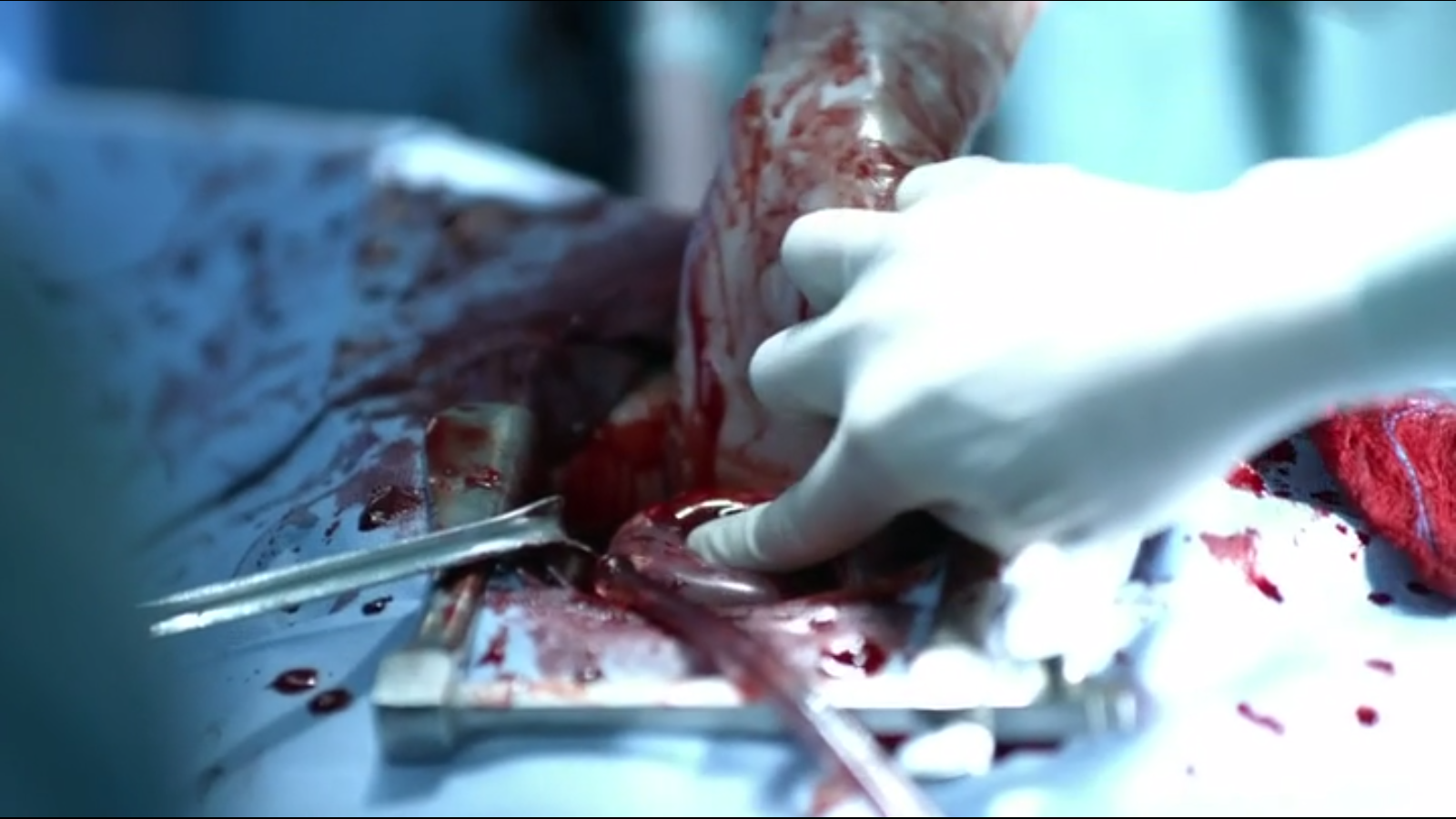
You know you’re in trouble when, during a routine skin excision, you start wishing you’d ordered cross-matched blood. Okay, so maybe that’s a slight exaggeration, but as the pulsing deep temporal artery spurted like a Yellowstone geyser, I started wishing that the infiltrative BCC had chosen to infiltrate somewhere else.

Bleeding in surgeryI summoned my colleague for help, calmly mentioning that I was “having a slight problem with haemostasis” in an attempt not to alarm the patient — the statement being reminiscent of Monty Python’s Black Knight saying “It’s just a flesh wound” after his arms were amputated. Several artery clips and ligatures later, we managed to tie off all three of the arterial branches that had been transected as they traversed the tumour excision margins.

The specimen was removed, the defect repaired uneventfully and the patient left the surgery happy enough. Those of us left behind (including the nurse facing the mess, the backlogged patients and my now-running-late colleague) were not as chipper, but the only real casualty was my outfit.

My new blouse and favourite trousers had been sprayed, liberally and repeatedly, with scarlet. I felt like a living piece of modern art. After rinsing out these offending items, I was suddenly faced with a teenaged-girl-like “I have nothing to wear” crisis, but fortunately was able to scrape over the respectability line by putting my dark-coloured trousers back on and borrowing a cardigan to go over my undershirt.

Having wet pants is not pleasant but, according to the Medical Board, it’s preferable to consulting with no pants at all. I wished I’d worn a gown, but it’s not standard procedure and I didn’t expect to be Jackson Pollocked.

I try to live life by the six Ps (Prior Planning Prevents Piss Poor Performance), but the truth of the matter is that surgical challenges, like everything else in medicine, can catch you unaware. Our medical training teaches us to respond coolly and logically under pressure, but the fight or flight response can result in unwise decision-making, particularly in the inexperienced.

I recall a story I was once told of a GP registrar who got into trouble excising a skin cancer, when, unable to close the defect, he panicked and decided to reattach the lesion. Yes, you read correctly. He took the specimen out of the jar and started to sew it back onto the patient’s leg.

I’m not sure how he planned to explain his actions to the patient, or whether he even realised that the hole he was digging for himself was far bigger than the one he was filling with formalin-soaked tissue.

Personally, I’d much rather get timely help to save my skin than struggle on alone in an attempt to save face. Anyway, the story goes, the practice nurse had the nous to alert another of the practice’s GPs, who swept in and saved the day.

Thanks to my colleague’s skilled assistance, my surgical “uh-oh” experience also had a happy ending. The histopathology came back with clear margins, the patient’s post-op course was smooth, his wound healed beautifully and the blood washed out of my clothes without staining.

I’ve been left with a much better appreciation of the anatomy of the deep temporal artery and some good hands-on practice at clipping and tying off its branches, although I’m going to try to steer well clear of that particular artery in future.

It could have been a lot worse: I could have been wearing white.

(The involved patient has consented to having this published)

First published in Australian Doctor on 7th September, 2012:  On getting help

http://www.australiandoctor.com.au/opinions/the-last-word/the-last-word-on-getting-help

Telling a cabbie where to go.

“178 Darley Road*, Randwick, please.” The meter started and the taxi pulled out onto the congested Sydney CBD street.

“What street is that off?” The cabbie’s inquiry was barely audible over the blare of talkback radio.

“I don’t know. I’ve never been there before.”image taxi

“So it’s not your house?”

“You’ve just picked me and my luggage up from a hotel. Do you think it’s likely that I’m a local?”

“It’s possible.”

“That’s true, but no, it’s not my house. I’m not in the habit of paying for a hotel room a few kilometres from where I reside.”

“But you know how to get there, right?”

“No. Isn’t that your job? I tell you where I want to go and you take me there?”

“But you don’t know where you want to go.”

“I know exactly where: 178 Darley Road, Randwick.”

“Well, I don’t know it.”

“Well then, why don’t you use your sat nav?”

“Don’t have one.”

“Your smartphone?”

“Nope.”

“Street directory of any kind?”

“Nothing. I use my memory.”

“But you don’t remember Darley Road.”

“There are a lot of streets in Sydney. I can’t know them all.”

“Hence the need for a sat nav or at least a street directory.”

“Most passengers know where they want to go.”

“As do I, 178 Darley …”

He brusquely cut me off. “You know what I mean. Can you ring someone and ask for directions?”

“You want me to ‘phone a friend’ to tell you where to go?”

I wish I’d said something witty about where I thought he could go at this point but I was too busy being incredulous.

“Yes,” he replied, sans irony.

“I don’t think that’s my responsibility.”

“Then I can’t take you there. You’ll have to get out.”

After being unceremoniously dumped on the side of the road, he charged me $6.05 to cover the booking fee, the flag fall and the 50m we’d travelled while arguing. I was speechless — a somewhat uncharted territory for me.

I reckon a GP consultation equivalent would be something like:

“What can I do for you?”

“My throat really hurts. I’d like something to ease the pain.”

“Have you got tonsillitis?”

“I don’t know.”

“Does it feel like tonsillitis?”

“I’ve never had tonsillitis.”

“Did you look in your mouth with a torch?”

“No, I thought that was your job.”

“I haven’t got a torch, an otoscope, or any other light source. I believe it’s the patients’ responsibility to diagnose, or at least examine, themselves. If they don’t know what’s wrong, how am I supposed to treat them?”

“Will you give me something for my throat?”

“Not without examination findings. Perhaps you’d like to ask a friend to take a look.”

“I’ll find another doctor, thanks.”

“That will be $60. You were booked for a standard consultation and I’m entitled to be compensated for my time.”

The first thing I asked the next cabbie was: “Have you got a sat nav?”

“Yes, but I don’t tend to need it.”

I beg to differ, given that halfway through the journey he pulled over, meter running, scrounged around under his seat for his battered street directory and spent a good five minutes looking up the address; and then on arriving at Darley Road slowed to a crawl, reading every house number aloud as we passed: 10, 12, 14 … right up to 178.

I arrived 20 minutes late and $36.05 poorer. So much for my decision to splurge on fast, hassle-free conveyance instead of public transport.

*street number changed to protect privacy.

First published in Australian Doctor on 9th May, 2013.

http://www.australiandoctor.com.au/opinions/the-last-word/the-last-word-on-cabbies-and-gps

Painful sports talk.

When the following column was published in Australian Doctor, I received considerable backlash from readers.  I was accused of being catty, socially inept and un-Australian amongst other things.  One reader said I should be ashamed of myself and another called for Australian Doctor to “do the right thing and let this column fade into obscurity.”

While this certainly was not the first time my light-hearted tongue-in-cheek columns have been misinterpreted, I was a little surprised at the vitriol generated over what was intended as a self-deprecatory fluff piece.

As for being un-Australian, I would have thought that my “taking the piss” was very Australian!

So what was the fuss about?  Read on and make up your own mind, and I’ll get back to watching the Winter Olympics….

………………………………………..

I’m not a big fan of inane chit-chat. I’ve absolutely no objection it if fulfils a purpose such as putting a nervous patient at ease, but there are times when talking about the weather, the price of petrol, Paris Hilton’s latest furry handbag accessory or Auntie Mildred’s stamp collection drives me up the wall. Sitting around the patio on a Sunday afternoon “shooting the breeze” with my in-laws used to be a regular torture. Thank goodness for divorce. 😉

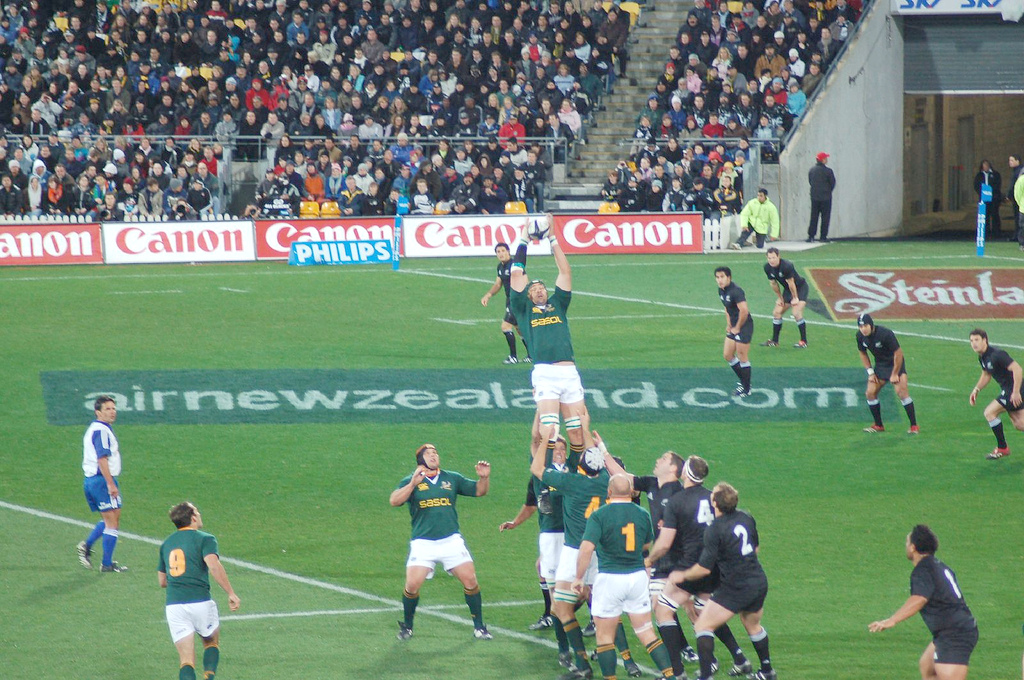
image rubgy unionThere is only one type of conversation I find more painful than small talk, and that is sports talk. Rugby in particular.  I’ve never understood the fervour of armchair sports fans.  If watching testosterone-laden men thump each other in their attempts to grab an egg-shaped piece of air-filled leather toots your horn, I’m not going to criticise. Just don’t feel offended if my eyes glaze over and I start looking for an escape route if the conversation turns to ladders that aren’t the type you use when painting a house.

I still have nightmares about the time I was trapped in the operating theatre listening to an orthopaedic surgeon blabber on about rugby union matches. Oblivious to my distress, he drilled and hammered away as he plated the radius (forearm bone), pushing and pulling the fractured limb with the confident and carefree brusqueness at which orthopods excel.

It was painful, terribly painful, but I couldn’t object. Paralysed and powerless, I lay there, a terrified nine-year-old, insufficiently anaesthetised.  After what seemed like an hour, but was probably only a few minutes (all football-related conversations seem to drag on interminably to me), the anaesthetist woke up to the fact that I was awake, presumably by lifting his eyes from the sports pages for a moment to notice that my pulse had skyrocketed. The last thing I recall was his saying, “Hold that thought. She’s a bit light – time for a top-up.”

It was traumatic at the time.  The first night post-op I slept only fitfully, alone in a strange hospital room. The frightening shadows and noises of the orthopaedic ward mingled with my nightmares, nausea and pain. I vividly recall the particular dream I had that night; variations of it have haunted my dream-life for years.  It involved finding myself hanging from goalposts during a massive televised football match, attached to the metal cylinders by big screws through my forearms, crucifix style. The crowd were jeering and laughing at my attire – a hospital gown with only air on my derrière.

In my lucid moments, I begged for my parents, only to be told to be quiet and go back to sleep. None of the nurses believed my story of being aware during the procedure.

The following day the orthopaedic surgeon was likewise sceptical – until I relayed snippets of his conversation.  I do not recall if his face betrayed even a hint of embarrassment or concern, but I was probably too young and traumatised to have noticed. All I remember was that he made some off-hand rugby-related jovial comment and moved onto the next patient as quickly as possible.

Perhaps that particular childhood experience could be used to justify a dislike of rugby, having bones broken, night duty nurses and orthopaedic surgeons, but the truth is that none of these are on my list of favourite things for far less significant reasons.

It could be said that for someone who claims to abhor meaningless chat, I sure do a lot of it, in both verbal and written forms – this column being a case-in-point. A fair comment, I admit.

We should have a pointless conversation about it. Maybe after next week’s game.

……………………

First published in Australian Doctor on 5th July, 2013  On Sports Talk

http://www.australiandoctor.com.au/opinions/the-last-word/the-last-word-on-sports-talk

What it means to be an Australian – Part 2

Last Sunday, on our national day,  I blogged about the staggering costs of US healthcare as I reflected on what it meant to be an Australian.

Here is the story of my own personal encounter with the US health system last year….

Playing it Safe

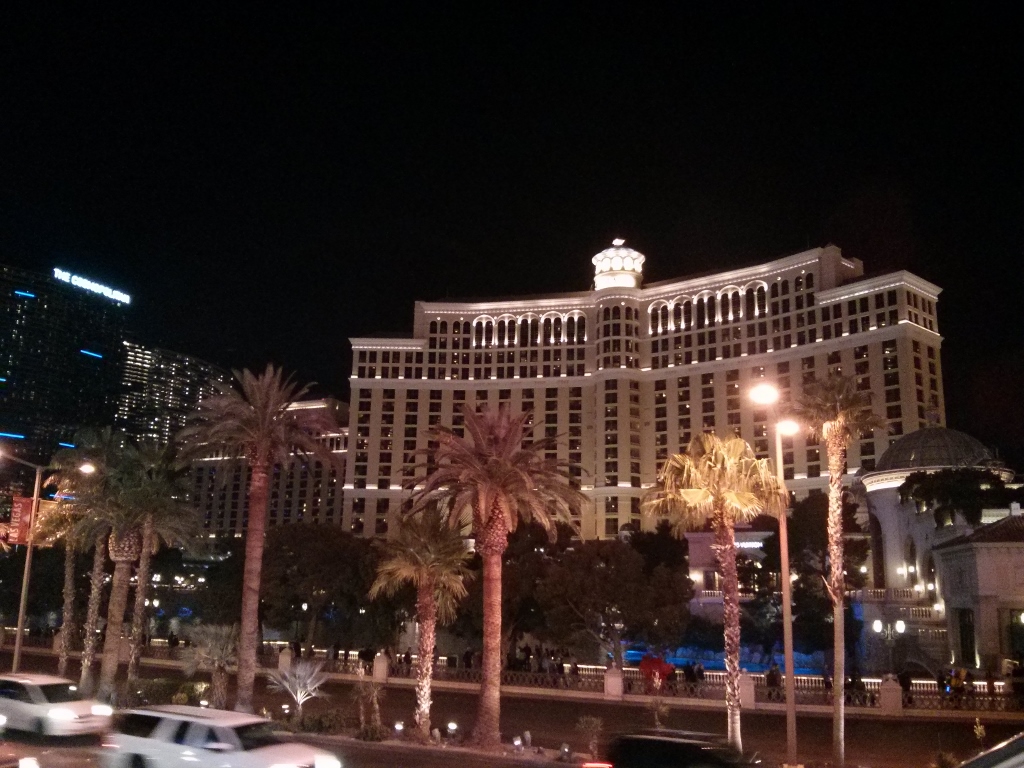
While in Las Vegas recently, I spent more than $5000 in six hours. Now, before you Bellagio Hotel in Las Vegascastigate me for reckless spending, I rush to tell you that I forked out because I’m not a gambler — I was playing it safe. The hefty bill came from a hospital, not a casino.

En route to visiting my family in Canada, I was enjoying a quiet stopover in not-so-quiet Sin City. I first felt some pain in my right calf while running up the hotel fire-escape stairs (I know, I’m crazy), making me think muscle sprain, but within 24 hours the swelling became quite marked while the pain wasn’t particularly severe.

Given that I’d just endured a long-haul flight sitting in a cramped, cattle-class seat, I decided I couldn’t take the gamble that it wasn’t a DVT. Hoping for an ultrasound, I limped into a walk-in medical clinic, where the consulting doctor thought it highly likely to be a DVT and sent me to the nearest ER.

I grew up on US TV medical dramas, ER being my favourite. The series began in my second year of med school and I soon convinced myself it was a useful and legitimate study resource — a view reinforced when an obscure case in my fifth-year internal medicine viva was identical to the fictional one in a recent episode, allowing me to answer correctly and with confidence.

When I turned up to my first real-life American ER and discovered my treating doctor’s name was Mark Green (the name of my favourite character on the show), I have to admit I felt a frisson of excitement. It didn’t hurt that the real Mark Green MD was attractive, attentive and charming.

Disappointingly, this is where the similarities with the TV show ended. There were no patients miraculously brought back to life from asystole with CPR and a few jolts from a defibrillator, no complex surgical procedures performed by underqualified staff, no doctors and nurses embroiled in interpersonal dramas at patients’ bedsides, and not even a token lovable but disruptive patient with an entertaining form of psychosis. At least, not that I got to see.

It was, well, like an Australian ED, except that everything was bigger: the patients (the average BMI was probably over 30), the chairs, beds, artwork — and the bill.

My ultrasound was equivocal and the D-dimer negative, so an MRI was ordered. It seemed like a bit of overkill but, from what I could gather, MRIs are ordered for practically everything in the US: tension headaches, osteoarthritis, acute back pain, toothache, a broken fingernail.

Okay, perhaps not all of these, all of the time. It did the trick for me though, producing a lovely image of a second-degree soleus muscle tear without a thrombus in sight.

It looked a lot worse than it felt. I kept declining the analgesics the nurse tried to give me, unwittingly reinforcing her perception of the Australian stereotype. “I always thought you Aussie sheilas would be tough. All those snakes you have to kill and jellyfish that bite you. And the sharks.”

She paused, looking proud of herself. “Sheila is Australian for ‘woman’, isn’t it? I learned that on HBO. I just love learning different languages.”

I know the US health system has deep-seated problems, but my brief stint as a patient was a memorable and positive one. The staff were friendly, efficient and professional, and the facilities top notch. The only hurt was the bill. I’m not the first person to lose a fortune in Las Vegas but at least I was insured against the loss!

…………………..

First published in Australian Doctor on 12th April, 2013 about my trip to the US/ Canada in Feb/March 2013.

http://www.australiandoctor.com.au/opinions/the-last-word/the-last-word-on-playing-it-safe

What it means to be an Australian – with skin cancer

Each year on the 26th of January, Australia Day, Australians of all shapes, sizes and political persuasions are encouraged to reflect on what it means to be living in this big, brown, sunny land of ours.  It is a time to acknowledge past wrongs, honour outstanding Australians, welcome new citizens, and perhaps toss a lamb chop on the barbie (barbecue), enjoying the great Australian summer.  It is also a time to count our blessings.

We whinge a lot about our health system.  While I am certainly not suggesting the model we have is anywhere near perfect, it could be a whole lot worse.

Dr Justin Coleman recently shared this NY times article via Twitter @drjustincoleman

It talks about the astronomical and ever-rising health care costs in the US and suggests that this, at least sometimes, involves a lack of informed consent (re: costs and alternative treatment options).  The US is certainly not the “land of the free” when it comes to health care.

There are many factors involved, not least being the trend in the US to provide specialised care for conditions that are competently and cost-effectively dealt with in primary care (by GPs) in Australia.

The article gives examples such as a five minute consult conducted by a dermatologist, during which liquid nitrogen was applied to a wart, costing the patient $500.  In Australia, (if bulk billed by a GP) it would have cost the patient nothing and the taxpayer $16.60 (slightly higher if the patient was a pensioner).

It describes a benign mole shaved off by a nurse practitioner (with a scalpel, no stitches) costing the patient $914.56.  In Australia, it could be done for under $50.

The most staggering example of all was the description of the treatment of a small facial Basal Cell Carcinoma (BCC) which cost over $25000 (no, that is not a typo – twenty five THOUSAND dollars). In Australia, it would probably have cost the taxpayer less than $200 for its removal (depending on exact size, location and method of closure).  The patient interviewed for the article was sent for Mohs surgery (and claims she was not given a choice in the matter).

Mohs  (pronounced “Moe’s” as in Moe’s Tavern from The Simpsons) is a highly effective technique for treating skin cancer and minimises the loss of non-cancerous tissue (in traditional skin cancer surgery you deliberately remove some of the surrounding normal skin to ensure you’ve excised all of the cancerous cells) . Wikipedia entry on Mohs  This can be of great benefit in a small minority of cancers.  However, this super-specialised technique is very expensive and time/ labour intensive. Perhaps unsurprisingly, it has become extremely popular in the US.  ”Moh’s for everything” seems to be the new catch cry when it comes to skin cancer treatment in the US.

In the past two years, working very part time in skin cancer medicine in Australia, I have diagnosed literally hundreds of BCCs (Basal Cell Carcinomas).  The vast majority of these I successfully treated (ie cured) in our practice without needing any specialist help. A handful were referred to general or plastic surgeons and one, only one, was referred for Mohs surgery. The nearest Mohs surgeon being 200 kilometres away from our clinic may have something to do with the low referral rate, but the fact remains, most BCCs (facial or otherwise), can be cured and have a good cosmetic outcome, without the need for Mohs surgery.

To my mind, using Mohs on garden variety BCCs is like employing a team of chefs to come into your kitchen each morning to place bread in your toaster and then butter it for you. Overkill.

Those soaking up some fine Aussie sunshine on the beach or at a backyard barbie with friends this Australia Day, gifting their skin with perfect skin-cancer-growing conditions, may wish to give thanks that when their BCCs bloom, affordable (relative to costs in the US, at least) treatment is right under their cancerous noses.

Being the skin cancer capital of the world is perhaps not a title of which Australians should be proud, but the way we can treat them effectively, without breaking the bank, should be.

Happy Australia Day!