Don’t just sign on the dotted line: assessing fitness to drive

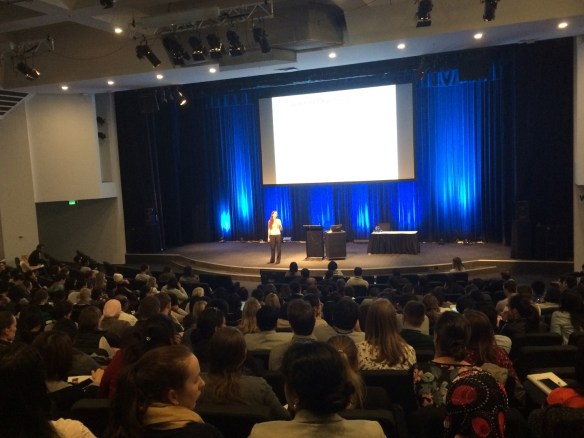
Assessing Fitness to Drive teaching session Sydney June 2017

Since my partner died in July 2015, I’ve been trying to find things that are positive and helpful to make a very horrible situation feel a little less senseless. One of these is raising awareness of the dangers of unfit drivers on the road.

The RACGP 15 conference was on in Melbourne in September and as part of the focus on social media, members of the Facebook group, GPs Down Under, were encouraged to prepare a Pecha Kucha talk on a topic about which we felt passionate.  A Pecha Kucha is a 6min 40sec talk comprising of 20 slides, each lasting 20 seconds.

put together a talk to try to raise awareness of the importance of the doctor’s role in assessing our patients’ fitness to drive. I also talk about the valuable “virtual” support that can come from online communities.

While it was not easy to do (had to do a few practice runs before I could do it without bursting into tears), I hope that by sharing my personal story in this way, it will help
encourage other doctors to be more mindful.  This might just result, indirectly at least, in someone’s husband, wife or child being spared. Of course, I have no way of knowing if it will, but the thought of this being a possibility gives me comfort.

If you have a spare 400 secs, I would really appreciate you watching the talk, and sharing it with your friends and colleagues if you feel this is appropriate, to help me spread this important (to me at least) message.

For further information, the September 2015 edition of the Victorian Institute of Forensic Medicine Clinical Communique is devoted to Fitness to Drive. It goes through 3 Coronial cases and is an interesting and informative read.

http://www.vifmcommuniques.org/wp-content/uploads/2015/09/Clinical-Communique-Vol2-Issue-3-September-2015.pdf

And Avant published a great article with a cautionary tale in August 2015

http://www.avant.org.au/news/20150810-fit-to-drive-make-sure-your-patient-meets-the-criteria/

My video was featured on the KevinMD blog

http://www.kevinmd.com/blog/2015/10/a-courageous-physicians-video-after-her-partner-is-killed-by-an-unfit-driver.html

On doctorportal:

http://www.doctorportal.com.au/dont-just-sign-on-the-dotted-line-assessing-fitness-to-drive/

On Meducation:

https://meducation.net/resources/1698658

And on the official Pecha Kucha website:

http://www.pechakucha.org/cities/brisbane/presentations/don-t-just-sign-on-the-dotted-line-assessing-fitness-to-drive

I was a guest on the GP Show speaking about Assessing Fitness to Drive in March 2018, on which I shared practical tips for GPs on how to approach driving fitness

http://thegpshow.libsyn.com/assessing-fitness-to-drive-with-dr-genevieve-yates-gp


Facilitation Tips for Medical Educators, July 2015

bored studentsSo my group teaching session didn’t go so well – what do I do now?

When planning a workshop session, there are many things that can cause worry:  “Will anyone come?”, “Will I remember what to say?”, “Will the IT work?”, “Will the room set-up be suitable?”, “Will the group be responsive and engaged?”, “Will they realise how little I actually know about this topic and turn on me?”  (maybe this last one is just relevant to me?) and on the list goes.

While adequate preparation can help minimise mishaps (try to remember the 6 P’s – “Prior Preparation Prevents Piss-Poor Performance”), it is not always enough.

Things can and do go wrong for a variety of reasons, and the longer you’re in this game, the more “failures” you’ll accumulate. I use the term “failure” loosely, not limited to completely disastrous sessions in which lives are lost or spirits are broken, but to include those “sub-optimal” workshops – the sessions which, afterwards, as a facilitator, you don’t experience a mixture of relief, pride and joy, but instead feel disappointed and/or inadequate.

So what can you do with those feelings?  How can you make failure work for you?

I was recently contacted by Dr Rob Park, a Queensland-based medical educator who was co-facilitating a workshop session on social media.  The session was being run twice, on two consecutive days.

He called me on the Saturday night after the first session had he felt there were things that could have been done differently to improve the session. Luckily, I don’t have a social life, so talking to Rob was not an imposition. On the contrary, it was the highlight of my evening (I’m such a ME nerd!).

Rob explained that the group was challenging because of a general lack of engagement and interaction, combined with some adversarial comments and questions towards the end of the session.  Not uncommon problems, especially when speaking on a topic like social media, in which levels of knowledge of interest and experience vary so widely, and on which strong opinions are often held.   Rob and his co-presenters have excellent knowledge, experience and oodles of street cred on this topic, and had presented sessions on this topic before, which is a huge advantage. The trick was going to be in finding effective ways to encourage audience engagement and manage the naysayers.

It is a relatively uncommon, but fantastic learning experience, to have the chance to re-run such a session within a day or so.

In my opinion, Rob approached this learning opportunity in exactly the right way, and, having obtained his permission, I’d like to share what he did with you….

  • He recognised that the approach and/or content hadn’t worked well for the particular group.
  • He considered that it may have just been a really difficult group to engage and inspire (there are “dud” groups with which, no matter how experienced or talented you are, you cannot make a session sparkle) and therefore did not take it too personally.
  • While not over-personalising, he did, however, realise that a different approach/es might have resulted in a more positive outcome, and might be worth trying when he re-ran the session the following day.
  • He actively sought advice as to what these different approaches might be by discussing with an experienced colleague (in this case, by phoning me). We talked through what had happened and brainstormed alternative strategies.
  • He then put thought into how he could integrate some of these different techniques into the session.
  • He put these changes into practice the next day.
  • After the second session went very well, he reflected on why this was so.
  • He acknowledged that it was a different group and so the difference in outcome couldn’t entirely be attributed to the new facilitation techniques, while realising that, chances were, they made a significant difference.
  • He intends to keep this experience in mind when planning future teaching sessions.

Of course, there is no formula which will work every time (and how boring would that be!), and different techniques will lend themselves to different topics, audiences, group sizes etc.

The tips that Rob and I discussed to try manage the kind of challenges he faced are outlined below:

For groups who you are concerned might be quiet/ disengaged:

Get everyone talking at the beginning – either in pairs/ small groups or going around the large group if the groups is not too big/ time permits (“everyone talks once before anyone talks twice”).  Usually best for the discussion to be on something relevant to the topic such as their experiences and/or what they want to get out of the session.

For groups who are likely to have different levels of experience/ learning needs, especially when you have some flexibility in content:

Ask participants the one thing they want to get out of the session at the start, and consider whiteboarding the list.  Address each one either:

1) with an immediate answer (if quick and easy, and not covered later) or,

2) by saying it will be coming up in the workshop or,

3) by acknowledging that it is outside the scope of the session (preferably with information as to where to go to get more information and/or offering to talk to the person at the end of the session about it).

If the list has been whiteboarded, refer to it as you go – I like ticking the items off as they are covered, and checking that each has been covered adequately with the person who brought up the item (if I can remember who said what!).

For topics/ groups in which you expect to get resistance/ challenge/ negativity:

Try to get this out at the start and acknowledge/address head on, rather than wait until participants start making disparaging remarks/ adversarial questions later on.

Try to neutralise with (appropriate) humour when you can (I find self-deprecatory humour works best in such situations)

Recruit other audience members to pull the negative audience members into line if you can – the message is usually much more powerful if it comes from their peers.

For example, if I get a particular negative/ unhelpful question/ anecdote, I’ll often ask the rest of the group – “So what do others think?” or “Have others had experiences like this, or have yours been different?”

While this can work well, you do need to be a bit careful with this approach. I have run into trouble a couple of times. Once, two participants nearly ended up in fisticuffs. Another time, a participant ran off in tears and hid in a supply closet after a response from another participant. Mostly, however, it works well, and when it doesn’t – see it as another valuable lesson to be learned.

In summary:

When a session falls flat, it is natural to feel disheartened. Luckily, unlike in our clinical work, bad outcomes as a facilitator are rarely serious in the scheme of things.  However, just like in our clinical work, when things go wrong, engaging in root cause analysis, debriefing, feedback and formulation of specific actions for improvement, can be incredibly useful strategies.

I’ve learned so much more from my failures than my successes, and I now love nothing more than a “challenging” group so I can pull out a few extra tools from my facilitator’s toolbox.  Failure is never fun, but it can be your educational friend.

Thanks to Rob for approaching me for advice on this in the first place and for encouraging me to share these tips as a blog post.

I would love to hear your thoughts, experiences and tips – please comment below.


Going the extra mile.

Today I’m a very good doctor.  Not that I’m ever a bad doctor.  Mostly I really care, but there are times, I confess, when I just go though the motions.  Conversely, on days like today, I take my usual care factor up a notch or two.  I take thorough social histories, address all of those important preventative health issues, explore my patient’s concerns deeply and end up running an hour or more late, to the chagrin of the receptionists.

Madison is next on my list; the usually sullen teenager whose last HbA1c was nearly the same as her age. First impressions are surprisingly favourable. Her skin’s glowing and she’s actually smiling at me! Not only has she brought in her recent blood sugar readings, but they’re actually pretty good.  She admits to having had purposely taken her insulin incorrectly in the past but proudly tells me that she’s been taking it perfectly for several weeks now, and that she’s never felt better.

insulin pen“So what made you change your mind about taking your insulin?”

“I don’t know. Just happened I ‘spose.”

“Please try to think carefully about possible factors. I’d really like to know.”

I’m very interested in finding out which of my warnings carried the most sway. I don’t ask for self congratulatory purposes; seeing her looking so well and happy fulfils this already.  It is for intellectual interest and self improvement.  I want to use the feedback from Madison to help me with future non-compliant teenage diabetics; to make me a better doctor.  It is one of my “very good doctor day” quests; on a less engaging day I would just be grateful that Madison was looking after herself at last and not feel the need to delve deeply into the reasons.

As Madison ponders, I mentally try to predict what she will say. I often play this game when seeing patients.  In Madison’s case, I reckon my emphasis on the short term results of skipping insulin last visit would have been the trigger for change.  The prospect of long term risks, such as developing kidney failure in middle age, does little to scare most teenagers.

“Come to think of it, there was something that, like, changed my mind.   Do you watch (name of badly acted Aussie soap)?”

“No, I don’t get much time to watch TV.”

“It has lots of medical stuff in it. You’d like it.”

Not likely.  I smile at Madison indulgently. I wonder where she is going with this.  A doctor character who reminds her of me?

“There was this epileptic girl on the show. She didn’t take her medication properly and she ended up having a fit when she was out surfing and she, like, died.”

“That’s sad.  And?”

“And what?”

“I’m a little confused. How does this story relate to your diabetes?”

“It made me see that if you don’t, like, take your medication properly, it can be really dangerous. So I started back on my proper insulin doses.”

“It had nothing to do with what I told you last visit? Nothing at all?”

It is Madison’s turn to smile indulgently.  “I know you tried to help me but, to be honest, all I heard was, like, ‘blah blah blah’.”

Going the extra mile today suddenly seems overrated.  I think I’ll take the usual route to lunch.   The receptionists will be pleased.

(names and identifying details have been changed to protect patient privacy)

The importance of rituals in the grieving process

Last century, while at medical school, I studied the various models of grief.  There was a 5 stage model, a 7 stage model, the Kübler-Ross Grief Cycle and a couple of others, the details of which didn’t deposit firmly enough in my memory bank to now recall.

Being young and eager to know “the answers”, I asked “But which model is right – which one most accurately describes the grief process?”

Grief is messy. There is no right or wrong.  There is no neat stepwise process or clear signposts along the road.  Everyone does it differently.

I learned about Grief’s complexities and idiosyncrasies firsthand, very soon after medical school.  In the November of my intern year, my partner, Adam, died of testicular cancer.

I continued to get better acquainted with Grief over the next 15 years, thanks to multiple personal losses, including five miscarriages.  So when I lost my infant daughter, Amalie in December 2014, I thought I knew what to expect.  But as it so often does, Grief threw me a few curved balls.  I discovered that not only do different people grieve differently, but that individuals grieve differently at different times.

Previously, I hadn’t found ceremonies around loss particularly helpful. While respecting the cultural importance and religious significance of grieving rituals, I hadn’t experienced their healing power. Until now. On reflection, I think the key for me was in the timing.

Within a couple of months of losing Amalie, life around me had ostensibly gone back to normal. Most people were treating me as if nothing had ever happened. In a way that was good, as I didn’t want to be wrapped in cotton wool, but on the other hand, it accentuated how far from normal I felt. I often felt quite isolated, cut off from the world as if I was trapped in a Perspex container watching everyone go about their daily lives but not being able to connect with them. The colour had been washed out of my life. I felt flat and empty.

Then three months after Amalie died, my colleagues organised a tree planting and memorial service.  After getting council approval, we planted a coastal banksia tree in parkland near where I live.

Planting a tree for Amalie

Planting a tree for Amalie

It was a really beautiful service. A few people talked and many people cried.  The skies cried too (a few brief showers which gave way to sunshine) and the birds sang.  I scattered some of Amalie’s ashes in the roots of the tree as it was planted.

It was an exhausting day but the ceremony was exactly what I needed at the time.  As well as the symbolic value, it reminded me that people really do care – the love and support by those present (in person and in spirit) was palpable, and it meant the world to me.

After feeling increasingly disconnected, the emotional distance between me and those around me was all but obliterated.  Connection is a powerful healer indeed.

I’ve been visiting Amalie’s tree daily since the service. Visualising her ashes being incorporated into the root system of the tree as it grows and strengthens is comforting and meaningful beyond words.

I’ve woken up each morning since the service feeling that little bit lighter and more positive about the future.  I know there are still hard times ahead, but I’m ready to face them, knowing my family, friends and colleagues are there to help me through them and to catch me if I fall.

I still don’t have any answers for my past-medical-student self, but I feel I’ve got to know and understand a new facet of the complex creature that is Grief, and for that I am grateful.

……….

First Published by Sands Australia on 30th April, 2015.

http://sandsaustralia.blogspot.com.au/2015/04/the-importance-of-rituals.html

Below is a copy of the letter I wrote to my daughter (read aloud as we planted the tree in her memory)

My darling daughter Amalie,

Thank you.  Thank you for coming into my life and bringing me more joy, peace and fulfilment than I thought possible, albeit only for six short months.

I felt you move inside me, and part of me wished I could kept you there, protected, forever.  I would have done anything, anything at all if it meant harm did not befall you.

But alas your life journey was tragically short, nipped in the bud.  I was lucky. We spent several months together. The rest of the world only knew you for a few short days.  But the ripples from your arrival and departure are still being felt, by so very many people.

There have been trees and flowers planted in your name all over Australia and beyond. Like this one. They will grow and flower, celebrating your life. And my hope is that as they are tended, they will not induce sadness in those gardening, but instead, gratitude and wonder at the blessings your short life has reminded us we have.

You Dad, Nanna, Granddad and I will feel pain too, that is inevitable. Pain that we will never get to see your first steps, your first day at school, your first love, your first heartbreak. Pain that you will never know much love you can feel for a child growing inside you.

But pain is not only inevitable but invaluable for a full and fulfilling life.  The lows give life contrast and context.  They help breed resilience, empathy and humility, and these are some of life’s most important skills. So much comes down to attitude.

I won’t complain because roses have thorns, but instead rejoice because thorns have roses.

You are my rose, Amalie. My perfect little daughter. You made me feel whole… complete… for the first time in my life.  You were the piece of the puzzle I didn’t fully understand how much I was missing having – the piece that rendered almost everything else in my life insignificant in comparison.

I understand so much more now- about myself, about motherhood, about the world.

And for this, I will be eternally grateful.

All my love,

Mummy.

The other side of the fence

pregnancy testThis column was written in October 2014…

Countless consultations start with the words “I’m pregnant.”

I quickly learned not to jump in with an enthusiastic “Oh congratulations, I’m delighted for you!” Make no assumptions.  Sensitively ascertain the patient’s state of mind before celebrating or condoling.  A new pregnancy can generate a range of emotions in the mother-to-be, from despair to ecstasy, but in my experience indifference is rarely, if ever, predominant.

Likewise, I imagine that for many GPs the news of a patient’s pregnancy also triggers an emotional response in them.  The emotions felt may be simply a case of transference, they might be an inherent sense of wonderment at the creation of a new life, or they may be complex, perhaps intertwined with feelings surrounding the GP’s own reproductive history.

Barring the occasional faux pas as a result of an incorrect assumption, I think we GPs are, on the whole, very good at managing both our own and our patient’s emotions surrounding a desired pregnancy, and mostly pretty good at handling those surrounding an undesired one.  From what I’ve observed, however, many of us are far less comfortable handling those involved with a lost or non-pregnancy.

Admittedly, it is very hard to know how to respond to a desperate patient who wants nothing more than parenthood, but for whom this dream has remained elusive.  While the drive to procreate differs between individuals, for many of us, myself included, it can be an overpowering one.  The primal reproductive instinct is at the core of many people’s sense of identity and life purpose, as well as having cultural, social, spiritual, financial and familial implications.

After nine years and five miscarriages, I’m sitting here typing this as my 23 week daughter moves around in my distended abdomen, reassuringly.  On my joyful and life-changing journey through this so far remarkably straightforward pregnancy, I’ve had many new experiences.  I’ve relished discovering that my clothes are too tight.  I’ve been relieved beyond words to get the “all clear” on the 18 week morphology scan.  I’ve discovered that, despite my best efforts, I have become one of those annoying super-gushy types of pregnant women.

The most surprising aspect to me, however, has been the reactions of friends and colleagues.  Without exception their responses have been overwhelmingly positive and supportive, for which I’ve been immensely grateful.  What has intrigued me though is that many have started to treat me more inclusively, seemingly because I’m now “one of them”, a member of the “parenthood club”.  When I’ve gently explored this with a few, they’ve reflected that it has been difficult for them to juggle their desire to talk freely about their kids while being sensitive to my situation, and that at times it has been easier not to engage at all.  I know I’ve played a part in this too.

In my experience, both as a patient and as a medical educator observing doctors-in-training, many GPs face a similar struggle when interacting with patients with infertility and/or miscarriage.  Either resorting to platitudes or avoiding the heart-of-the-matter can leave vulnerable patients even more isolated and unsupported.  Unlike disorders like cancer, disclosing and discussing infertility and miscarriage publically is somewhat of a social taboo, and this, I believe, is part of the problem.

While we are told, for good reason, that it is important to leave your personal baggage at the door of your consulting room, it’s not always that easy.  We all have things in our past (and/or present) that can potentially influence how we feel about, and interact with, certain patients.  Being aware of these factors and their effects is vital, but is it always necessary to neutralise them?  Not only is complete objectivity impossible in the kind of work we do, but judicious and thoughtful use of our life experiences can make us better clinicians – and better teachers.

I hope that I can use my experience to help support both patients and other doctors in managing the complex emotions surrounding fertility issues, and also encourage more open discussion in the general community.

While immensely thankful and blessed to now be on the green side of the reproductive fence, I will never forget how painful and isolating it can be on the other side.

First published in Medical Observer, 17th April 2015

The ending to my pregnancy story was not a happy one. You can read about what happened here

https://genevieveyates.com/2015/04/27/lived-experience/


Lived Experience

“The problem with young doctors,” a GP supervisor of mine used to say, “is not that they don’t know enough or even that haven’t doctored enough – it’s that they haven’t lived enough.”

By “lived”, he wasn’t referring to going bungy jumping in New Zealand – unless of course that particular experience had resulted in being in traction with multiple fractures. He preferred to employ doctors with lived experience of being ill or injured, of having children and, preferably, of caring for a beloved parent or grandparent in an aged care facility as well.   He wanted doctors who really understood what it was like to be a patient and/or the loved one of a patient. To him, a personal health record was far more important than a professional one.

The transformation of doctors by personal illness or tragedy is not an uncommon narrative. Hollywood has used variations of this plot numerous times in films like The Doctor (1991).  On the small screen, many a Grey’s Anatomy, House or Chicago Hope doc has been forever changed by a personal brush with cancer/trauma/addiction/leprosy.

Albeit without the glamour of a Dr McDreamy standing by, I too have been profoundly shaped professionally by personal illness and the loss of loved ones.  These experiences have taught me things that years of medical training did not.

Physical illness has taught me why patients need patience. Experiencing days when it feels like I’m trying to walk up the down escalator has brought home to me why people with chronic illness can get so drained doing “routine” things.

My most valuable lessons though, have come from seeing my loved ones suffer, and from being the one left behind and thus coming to the realisation that a patient’s death is not the end of the story.

As an intern, in 2000, I lost my then partner, Adam, to testicular cancer.  At such an early stage in my career, as a medical student and then a very junior doctor, watching a loved one struggle with and ultimately lose his battle against an incurable disease was particularly influential in my development as physician.

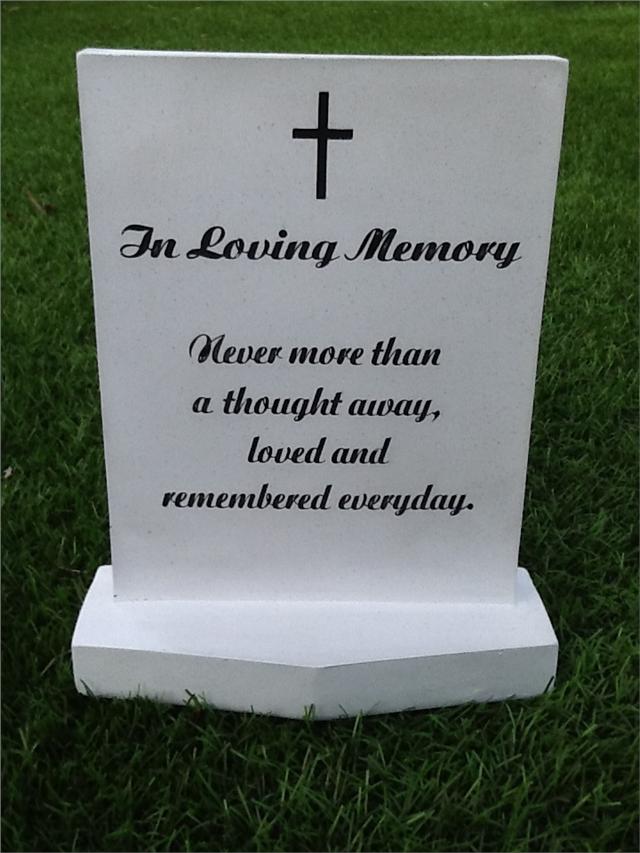
loving memory tombstoneI learned firsthand that treating cancer is so much more than trying to cure. That it’s more than trying to alleviate symptoms when cure is not possible.  I discovered that it is about how whatever life left is lived, and ultimately, how one dies.  This philosophy sat comfortably with me and helped me help countless patients over the years.

Much as I loved and respected Adam’s mother, I didn’t really understand her response at the time. She was in the “chance of cure at any cost” camp, wanting any treatment which had even the remotest possibility of success. This drive persisted even when it became painfully obvious to me and to Adam’s treating doctors that cure was impossible, and that Adam’s aggressive treatment regimens were causing terrible suffering.

But now I get it.  I understand now how maternal love can be so powerful that it overwhelms intellect, logic and fiscal responsibility.  For I too became a mother… and lost a child.

In December 2014, my only child, Amalie, died of neonatal sepsis. It had taken me 9 years and 5 miscarriages to meet her, and our time together was tragically short but will be forever treasured.

When she was in the NICU, fighting for her life, I would have given anything to see her pull through. In those frightening moments, no treatment would have been too extreme, no cost too great.

I thought I understood intellectually why the death of a child is so devastating for a parent.  Now I understand it viscerally, and realise that I had no idea what it is really like.

It is too recent and the emotions are too raw for me to incorporate this “lived experience” into my clinical practice in a meaningful way right now. But I will.  As I have done before.

Adam and Amalie have made me a better doctor.  They’ve made me a better person. I owe them so much.  I can’t pay them back but I am, and will be, paying it forwards.

I think my old GP supervisor would be proud.

First published in Medical Observer, 24th April 2015


A potentially life-saving Tweet

twitter_This is an old column (late 2013) that has been loitering in my drafts’ folder for ages. 

I was planning to post it when I had finally mastered the intricacies of Twitter… but I don’t think that is going to happen in the foreseeable future. Much as I can appreciate Twitter’s value, I’m still very much an occasional spectator.  

I owe my Twitter fumblings a debt though… they may have just saved my mother’s life….

November, 2013

I used to think Twitter was for twits – twits with short attention spans, an inability to construct proper sentences and the misguided impression that everyone else is interested in their mundane lives.

Despite my reservations, I tentatively dipped my toe into the Twitterverse earlier this year, and discovered, to my surprise, that there is no shortage of relevant and interesting tweets relating to medicine and medical education.  It’s just a matter of knowing where to look and whom to follow.

Twitter has also added whole new educational and networking dimensions to the conferences I’ve attended this year.  Where once I would’ve deliberately left my electronic devices behind to avoid distraction, I now not only carry my iPad and phone with me, but actively interact with them during presentations.

I’m still very much a novice tweeter, though.  I’m not yet quick or deft enough to always operate unobtrusively. I feel guilty about this, for as a presenter myself, I know how annoying it can be to have your audience seemingly so distracted.

And I confess to being distracted myself by incoming emails, like the one from my father in Canada, received while I was sending a tweet relating to the handy HANDI (Handbook of Non-Drug Interventions) being introduced by Professor Paul Glasziou at GP13.

My dad’s email was titled “Mum’s health”. It gave a detailed description of a very acute and severe systemic illness following a viral respiratory tract infection.  After describing a typical pneumonia +/- sepsis, Dad then went on to say that he’d given her a cold and flu tablet, and did I have “any further suggestions?”

Any further suggestions?!  I emailed back immediately with my provisional diagnosis and told him to get her to hospital ASAP, and to ignore any protests.  45 minutes later, when the session ended, I rang to check that he’d received my email.  “Yes,” he confirmed, “but your mother says she’s too sick to go anywhere.”

Despite her not wanting to talk to me (which was a worrying sign in itself), I got Dad to put me on speaker phone and I got very bossy with my seriously ill mother.   She could barely talk, which made it easier for me to ride roughshod over her objections.

And it was just as well I did.  She was admitted and treated immediately.  Hypoxic, tachycardic, febrile and dehydrated, with intractable hypotension (60/35!), altered mental state, elevated serum lactate and rip-roaring consolidation on chest X-ray, she had lobar pneumonia with sepsis, just as I’d predicted.

I can just imagine the scene in the Canadian ER that night.  An older Australian woman in septic shock is dragged in by her husband, the couple apologising for disturbing the staff after-hours and potentially wasting their time, saying the only reason they were there was that they have a bossy doctor-daughter who bullied them into coming.  On the plus side, my parents did their bit for perpetuating the “Tough Aussie” legend!

Mind you, this is not atypical for our family.  “Breed ’em tough” was my parents’ preferred parenting style.  Severe abdominal pain (appendicitis) was not enough of an excuse to get out of cleaning a bedroom; a swollen and deformed wrist (fractured radius and ulna) not a reason to cry. We were never short of love and attention, but whinging never got us kids far.

There is a time and a place for seeking help though, and very luckily, thanks to being inspired to tweet about a handbook of non-drug interventions (HANDI), I was able to step in to ensure that my mother got the lifesaving drug interventions she didn’t know she needed.

First published in Australian Doctor on 15th November, 2013 On Twitter

http://www.australiandoctor.com.au/opinions/the-last-word/the-last-word-on-twitter

Came too early, gone too soon

2008-06-20 006 Sunset over the PacificAfter nine years and five miscarriages, I finally had a joyful and life-changing journey through a remarkably straightforward pregnancy last year. I had many new experiences.  I relished discovering that my clothes are too tight.  I was relieved beyond words to get the “all clear” on the 18 week morphology scan.  I discovered that, despite my best efforts, I became one of those annoying super-gushy types of pregnant women.

The most surprising aspect to me, however, was the reactions of friends and colleagues.  Without exception their responses were overwhelmingly positive and supportive, for which I was immensely grateful.  What intrigued me though is that many started to treat me more inclusively, seemingly because I was now “one of them”, a member of the “parenthood club”.  When I gently explored this with a few, they reflected that it has been difficult for them to juggle their desire to talk freely about their kids while being sensitive to my situation, and that at times it has been easier not to engage at all.  I know I’ve played a part in this too.

While the drive to procreate differs between individuals, for many of us, myself included, it can be an overpowering one.  The primal reproductive instinct is at the core of many people’s sense of identity and life purpose, as well as having cultural, social, spiritual, financial and familial implications.

The second half of 2014 was the happiest time of my life.  I was in the “club” and on track to fulfilling my lifelong dream.

But everything changed on 1st December, when a simple urinary tract infection developed into a serious kidney infection (pyelonephritis) and started spreading to my blood (early sepsis).  It triggered a premature labour and a mad rush to the nearest hospital (we were out in the desert at the time, hours from civilisation). I didn’t quite make it and ending up delivering my own baby, just metres away from the hospital entrance.  That was certainly not part of my birth plan!

Considering her dramatic and premature entrance, baby Amalie did remarkably well at first.  Her birth weight was over the magic 1000g line and her vital signs were excellent.  We were cautiously optimistic.

Alas, four days later things took a turn for the worse and, tragically, Amalie’s tiny system was overpowered by E. Coli, just as my body was starting to win its fight against the same bug.

Suddenly and cruelly, I was ejected from the green side of the reproductive fence.

I’ve received amazing support from friends and colleagues, but, understandably, many struggle, not knowing what to say or what to do.  Some either resort to platitudes or avoid the topic completely which can leave me feeling even more isolated.  I’ve found that focusing on the intention rather than the words is the only way to shield my heart from unintentionally insensitive remarks.

After all, rarely can a response make things better. What matters is the connection.   Parenthood club member or not, I know I need to maintain the connection with my family and friends to get through this terrible time.  And to remember Winston Churchill’s advice: “When you’re going through hell, keep going.”

RIP Amalie Ella.  Came too early, gone too soon.

I waited so long for you and had you with me so briefly, but every moment we spent together will be treasured forever. My heart is in pieces right now, but I will use the strength of my love for you to try to focus on being immensely grateful for your life rather than being devastated by your death.

You’ll travel with me forever, my darling daughter.

…………….

First Published by Sands Australia on 12th March, 2015.

http://sandsaustralia.blogspot.com.au/2015/03/came-to-early-gone-too-soon.html

Alternative treatments and cancer sufferers – hope-giving or exploitation of the vulnerable?

There has been recent media attention on the issue of “alternative” cancer treatments, following the death of high-profile ‘Wellness Warrior’ Jess Ainscough.  There have been some thoughtful and well-written commentary, such as this column by oncologist and writer Dr Ranjana Srivastava in The Guardian.

It is a topic close to my heart, having had a family member and many of my patients choosing to pursue expensive and unproven treatments for their cancers, often with tragic consequences.  One of the saddest stories I came across I’ve fictionalised and outlined below. It took place many years ago and case details have been changed to protect patient confidentiality.

The House Call

The call came as I was sitting down to dinner. My tuna casserole was never going to win any culinary prizes and there was no ‘plating up’ involved, but the food was hot and I was hungry. I put my fork down with a sigh.

“Can you come and see me Doctor? My breathing’s really bad.”

It was after 8 and I’d had a long and dispiriting day. You know the kind… filled with the worried well (“I’m still feeling dizzy at times, perhaps it’s a brain tumour?”), and the unworried unwell (“Strewth, Doc, it’s only a touch of sugar. Stoppin’ me tablets won’t kill me.”). I wasn’t officially on call. Should I get someone else to deal with this? No, this one had my name on it.

I’d first met 58 year old Peter ten weeks earlier, and had seen him a dozen or so times since. Diagnosed with malignant mesothelioma the previous year, he had opted for the most aggressive treatment possible: surgery, chemotherapy and radiotherapy. Stubbornly determined to beat the disease, he’d sought other options when his specialists had run out of theirs.

His quest had led him to an ‘holistic healer’ who ran an ‘exclusive private health retreat’ on a tucked away acreage property about 25 minutes from the rural town in which I worked. Without qualifications of any kind nor recognition from any professional body, the healer peddled hope, and it came with a hefty price tag. The ‘scientifically proven, powerful, herbal remedies’ were ‘imported directly from the USA’ and did not come cheap. Client’s bank accounts often became emptier than their colonic-irrigated bowels.

The potion used in Peter’s residential programme was particularly pricey. For his treatment he paid about $30,000 a month, with the expectation that it would last between two and three months and give him a 95% chance of total cure. For this desperate man, such odds could not be ignored. He liquidated all his assets, including his house and car, paid the $20,000 up front fee and moved 1,500 km north into the ‘health retreat’.

Two weeks into his regimen, Peter ended up in my consulting room for the first time, brought in by the healer’s assistant.   He was dehydrated and had significant electrolyte disturbances from the brutal starvation and purging regime to which he had been subjected. After IV rehydration, he insisted on returning to the retreat for continued holistic treatment, against my strong advice.

A week later, I saw him for the drainage of a pleural effusion which was significantly interfering with his breathing. He flatly refused to go to hospital, and so I performed the procedure under the supervision of my supervisor (being as I was a GP registrar at the time).

The pleural tap needed repeating several times over the next few weeks, as his chest cavity continued to steadily fill with fluid. He looked worse each time he came and was losing weight rapidly, yet he remained optimistic, fervently believing that his ill health was evidence that the treatment was working.

“You get sicker before you get better because the herbs draw out all the toxins from your cells and they go into your blood. Once they’re in the blood, you can flush them out of your body but it takes time. My healer says that my cellular toxin levels are now really low and that the cancer cells are almost functionally normally. It’ll only be a few more weeks and I’ll be better,” he explained.

Unfortunately for Peter, his toxins outlasted his ability to pay for their removal. When his monetary funds dried up, so did the healer’s hospitality. The dying man was ‘discharged’ from the retreat and left to fend for himself. Too sick to travel, he stayed in the local area and moved into a dilapidated caravan.Old caravan

At first he was devastated and disbelieving, coming to see me three times in as many days to debrief. “He told me that if I’d had enough money for another month’s treatment I would be cured. I begged him to treat me and let me to pay him back later but he refused. How can a healer, of all people, be so heartless?”

Peter’s shock soon gave way to anger, resentment and self pity, which became all-consuming and indiscriminate. He wanted nothing to do with anyone even resembling a health care worker: hospital staff, doctors, palliative care nurses, alternative therapists and even meals-on-wheels volunteers. When I’d tentatively knocked on his door a week earlier, he had yelled out, “Leave me the hell alone!”

I’d slipped a note under his door with my mobile phone number and a message encouraging him to call me whenever he needed help.

The phone call came that Wednesday evening and the consumption of my tuna casserole was postponed.

Peter was in a bad way. His abdomen was grossly distended by ascites, making his matchstick limbs appear even more insubstantial. Lying in urine, faeces and vomitus, the stench was almost overpowering.

He was clearly in great discomfort and I felt out of my depth. I urged him to allow me call an ambulance, but he vehemently refused. Rifling through my doctor’s bag, I offered an assortment of medicinal substances including analgesics, diuretics and tranquilisers, but he turned them all down. Even my attempts to remove his expelled body fluids and change his clothes and bedding were met with resistance.

“I can’t help you if you won’t let me,” I exclaimed, frustrated. “Why did you call me?”

“I… don’t want… to die… alone. Please… stay.”

Each word required tremendous effort, leaving him breathless and exhausted. His pleural effusions had constricted his fragile lungs, reducing them to a fraction of their original volume.

“Is there someone I can call for you?”

“No… yes… my son. Tell him… I’m… sorry.”

Peter had previously told me of the falling out he’d had with his only child, David, over his decision to seek expensive alternative therapies. Believing David was only concerned about the spending of his inheritance, he’d cut off contact. Too proud to “go crawling back penniless and have him tell me ‘I told you so’,” the rift had not been repaired.

This was my chance to do something meaningful and I grabbed it gratefully. I needed it as much, if not more, than Peter did. I found his address book easily and called his son, hoping for a heart-warming reconciliation…but this was real life, not a made-for-TV movie. The phone rang out; no one was home. I spent the next hour ringing around trying to locate David, to no avail.

Frustrated, I sat holding Peter’s hand as he drifted in and out of consciousness. I knew what I had to do.

“David says he’s sorry too, and that he loves you very much.”

Peter’s face relaxed, a hint of a smile evident on his lips. He squeezed my hand.

“Thank… you… for… caring.”

I stayed with him until he died later that evening. No one should have to die alone and unloved.

I couldn’t give him the hope of a cure, at any price, and he’d refused my offer of help to ease his physical suffering, but what I was able to give Peter was priceless. I was able to restore a dying man’s faith in humanity, at least a little.

Counting our blessings

US dollarsAustralian general practice has been pummelled over the past year. With its proposed co-payment plans, prolongation of the rebate freeze, defunding of Medicare Locals and shake up of Vocational Training among others, the Abbott government has delivered punch after punch.

Understandably, many of us have become disillusioned, angry and distrustful. Some are fantasising about a career change or considering early retirement. Meanwhile, there are unprecedented numbers of medical students and prevocational doctors asking, “Should I even consider a career in general practice?”

When under attack counting one’s blessings does not come naturally, but this is exactly what’s needed. I don’t want to sound like the kind of doctor who tells his patient “Cheer up, it could be worse”, but will briefly reflect on a medical system more broken than ours, despite multiple resuscitation attempts.

According to statistics from the World Health Organisation, in 2012 the US spent more than twice as much on health per capita than did Australia ($8,895 US cf. $4,058 US)(1). Much of this was private expenditure, but even so, government spending on health in the US is higher than in Australia (in 2012, 8.3% of GDP cf. 6.1% of GDP)(2). And what do they have to show for it? Lower life expectancies, higher rates of premature death, unhappy doctors and patients financially crippled by medical bills.

At times of life-threatening illness, having to worry about accumulating massive medical bills is a significant extra burden. I speak from personal experience.

Last December, while on vacation in the US, I developed pyelonephritis and became pretty ill, very quickly. To complicate matters, the infection brought on premature labour. My newborn daughter, Amalie, was rushed to the NICU, and I found myself in a high dependency unit with early sepsis. Three days later, my beloved daughter’s system was overpowered by the E. coli infection, while my body, with the help of modern medicine, was well on its way to recovering from it.

There are no words to describe the pain felt. While the medical and nursing staff did everything they could to comfort, those working in the finance department were not so empathetic. Within hours of losing Amalie, I was presented with hospital bills (not including physician fees or other charges) for over $70,000 US, and told “We expect payment at the time of service.” Salt was rubbed into my already almost unbearable wound.

I couldn’t get back to Australia fast enough.

Many of our current woes are because Australian general practice is so directly and largely dependent on government funding. We GPs are tremendously vulnerable to the whims of politicians whose motives are often self-serving rather than altruistic and whose promises are meaningless. On the flip side, when done well, there are big benefits for patients and doctors alike in government playing such an active role in healthcare funding and regulation. Keeping private health insurers, drug companies and other health-related corporates on a leash helps limit overall health expenditure, and therefore the downstream financial and emotional consequences for vulnerable patients.

I’m not for a moment suggesting that we lie down and take the ongoing beating that’s thumping our profession, or that the proposed changes are not ill thought out and unfair. Quite the opposite. Individually and collectively we need to take stock, remind ourselves of all that is good about Australian general practice, and then use this to further ignite our passion and do whatever we can to defend and strengthen our great profession. Let’s help make it something we can enthusiastically recommend as a rewarding career choice for our best and brightest, without crossing our fingers behind our backs as we do so.

References


First published in Good Practice magazine, March 2015

Going undercover at the bus shelter

‘Can you get treated for brain cancer in Australia or do you need to come here?” Randy asked earnestly, as his wife, Britney, affectionately adjusted his beanie to cover his scars.

“We’re so lucky to be American,” she piped up, “with the best doctors in the world. Randy would certainly be dead if we lived somewhere else.”

Some background…

Bus-stop-009At 5.06pm, I’d arrived at a deserted suburban bus stop to catch the scheduled 5.07 bus. At 5.08, an overweight middle-aged woman rushed up, panting. Betsy reminded me of a stereotypical loud brash American tourist — but this was in America and I was the tourist.

An excessively long exchange about bus timetables ensued, involving detailed speculation as to whether the bus had come early or was running late. Just as the logorrhoeic discourse was blessedly winding down, Randy and Britney arrived, eager for bus-related news. Betsy was only too happy to oblige.

She was one of those kind-hearted yet strongly opinionated women who have no qualms about asking personal questions and giving unsolicited advice. To be fair, she was equally unfazed about sharing her most intimate details with strangers: financial, health-related and romantic.

To my surprise, Randy’s response to Betsy’s “So, what’s wrong with your head?” was a frank and detailed description of his 13-month journey with cerebral malignancy.

As an undercover doctor, I found this all very intriguing. I’m used to hearing strangers spill their guts, but it is usually within the safe confines of a consultation room, where trust is given freely and confidentiality is assured.

It is an honour and a privilege with which I’m comfortable but I don’t take it lightly.

But Betsy, Randy and Britney did not establish my credentials. I could have been a criminal mastermind, who would use such intimate details for self-serving purposes. Or a writer, who would pounce on their confidences and write about them for self-serving purposes … hang on.

The point is, I could have been anyone — an axe murderer, a doctor, both, neither — and as such, I felt unworthy of their trust.

The conversation turned from the glories of US tertiary healthcare to its personal cost. Randy’s five neurosurgeries, radiotherapy and ongoing chemotherapy at Mt Sinai Hospital had not come cheap. His boss had kept him on unpaid sick leave so that his employer-paid medical insurance could continue, but after 12 months Randy was forced to resign. No insurance company would cover his “pre-existing condition”, leaving Randy uninsured and facing financial ruin.

It made me, once again, realise how lucky we are in Australia.  In recent times there has been outcry over rising out-of-pocket health expenses and the proposed GP co-payment. While these are of legitimate concern to Australian patients and doctors, our system is pretty darn good. A 24-year-old Australian with cerebral malignancy doesn’t have to go into debt to receive quality medical care.

However, my pointing this out to the now-crying couple was not going to help, and for once in my life I didn’t quite know what to say.

Luckily, Betsy did. Having had a two-decade-long battle with Medicare, Medicaid and other social services as a result of her chronic back pain and fibromyalgia, she knew all the tricks of the trade. She told Randy where to go, to whom to speak and to what he was entitled, as well as providing her phone number to call if he needed help. Randy and Britney were really touched, and when the next bus came there were hugs all round.

It was the most meaningful hour I’ve ever spent at a bus stop. I’m glad I missed the bus.

All names have been changed.

First Published in Australian Doctor on 20th  September, 2013

The Black Dog Wears Many Hats

PNDA story about postnatal depression…

Nadia finally realised she had a problem when she killed off the Wiggles.  Overwhelmed, she left three-year-old Alice and four-month-old Matthew with her husband and impetuously drove three hours north, turning up on my doorstep in tears.

“Yesterday I told Alice the Wiggles were dead.  She keeps begging to watch her Wiggles’ DVDs over and over and over.  They drive me crazy with their stupid grins, annoying songs and silly coloured shirts… always so bloody cheerful and moralising.  I tried hiding the DVD but that didn’t work so I made up some story about how they were driving in their big red car and that they were hit by an even bigger red truck and all killed.  I did it to buy myself some Wiggles-free time but the thing is that deep down I really, truly, wanted them dead.  What the hell’s wrong with me?

Her shoulders drooped and her body curled itself into the shape of a dejected question mark, mirroring her internal uncertainty.  It was as if someone had stuck a pin in her usual tall, erect, striking frame and deflated her.

What had happened to the proud, exuberant, compassionate Nadia I knew and loved; the woman who’d lit up every room she entered?  What had extinguished her flame?

As if to answer my thoughts, her fire unexpectedly rekindled.  She clutched my arm with an iron grip and looked me straight in the eye, her face a contorted mix of fear and desperation.  “I can’t go back home.  I can’t be alone with my kids right now.  I love them both with all my heart but there are times when I actually hate them, and I’m terrified that at one of those times I’m going to hurt myself or even, God forbid, one of them.”

A wave of panic rose inside me.  I didn’t want to hear this.  I didn’t want to know.  I felt it wasn’t fair of her to dump all this on me, especially considering what I’d been through, but I knew it was something I couldn’t ignore.  I also knew that her predicament was going to need far more than a cup of coffee and a reassuring chat with an old friend.

Nadia and I had been close friends at university but our lives diverged in more ways than just geographically.  Our frequency of contact dwindled slowly and then took a nose dive when her first child was born.  She’d entered the “baby zone” before me and her life revolved around nappies and naps.  Even when we managed a chat on the phone, our worlds were now worlds apart and we seemed to be going through only the obligatory motions.  “Buy milk – tick, wash towels – tick, phone old friend – tick”.

The disconnection was partly due to jealousy on my part, I’m ashamed to admit.  As two ambitious, intelligent, capable and confident women, our friendship had always had an undertone of competitiveness.  Being high achievers in different fields, there was no overt rivalry or envious feelings… until our reproductive discrepancies were revealed.

Nadia sailed through her first pregnancy, popped out a perfect infant without so much as a perineal stitch and took to motherhood like a duck to water.  Little Alice was angelic: sleeping, feeding and poo-ing like clockwork, with barely a cry to be heard.  Nadia attributed her good luck to good management, which added fuel to my already blazing resentment.

While she was gliding effortlessly through the motherhood pool, I was still at the starting blocks after a series of false starts.  By the time she became pregnant for the second time (exactly as she’d planned – when Alice was two), I’d had three miscarriages and was pregnant for the fourth time.  Our due dates were three days apart and for three joyous months Nadia and I were back in sync, our orbits having realigned in a most positive way.

At fourteen weeks of pregnancy my world was thrown off course with a fourth miscarriage, and Nadia was the last person on earth I wanted to see.  I heard second-hand that she’d had another trouble-free pregnancy and delivery and that, as hoped, had been blessed with a healthy baby boy.

I managed to send an e-card.

I had not spoken to her for over six months when she turned up out of the blue that summer’s day.

“I hate my life.  I shouldn’t hate it… I have two healthy kids, a loving husband, a comfortable home, no money worries… everything a girl is supposed to want out of life.  I don’t deserve to be bitter.”

I have to admit, part of me was thinking the same thing.  I was the one who had earned the right to be miserable, not her.  She had everything I wanted in life and I would have swapped my life for hers in a heartbeat.  However, as she continued to bare her soul, overwhelming feelings of sympathy and empathy pushed aside my complex set of emotions and washed away the tiny kernel of shameful schadenfreude  I knew I had to help.

I first phoned her worried husband and arranged for Nadia to have some “time out” with me for a few days.  When I’d asked her what she wanted to do about feeding Matthew, she merely shrugged and said, “I don’t care.  Chris can sort something out..”

From the breastfeeding zealot who’d fed her daughter for eighteen months, this spoke volumes.  Luckily I was able to get her an urgent appointment with my GP for the following day.  In the interim, we turned to the Internet.

An IT-savvy woman, Nadia had already consulted “Dr. Google” but found the experience disheartening.  “When I discovered that there were tons of risk factors for postnatal depression and that I haven’t got any of them, I felt more alone and that my feelings were even less legitimate.”

I tried to reassure her with platitudes but I was quite obviously out of my depth.

She ploughed on.  “I did just fine with Alice, better than fine, I positively thrived.  Why has it hit me this time?  Matthew’s a good baby, I have plenty of support… there’s just no reason for it.”

We came across two excellent websites: http://www.blackdoginstitute.org.au and http://www.beyondblue.org.au .  The most helpful part for her was taking the self-test on the Black Dog website.  Returning a score of 27, the worst possible, she looked at me and said, “I really have a problem, don’t I?”

Trying to lighten the mood I replied, “That’s you all over – when you do something, you do it properly.  No half-assed attempts at anything for our Nadia.”

She didn’t smile.

Over the following 24 hours, she didn’t talk much either.  She didn’t do much of anything actually – didn’t eat, didn’t sleep, didn’t cry.  It was as if she’d expended all of her energy getting to where she felt safe and had nothing left in the tank.  I watched on helplessly as, like a wind-up toy that needed re-winding, she slowed almost to a standstill.

The following day Nadia was hospitalised, as there were grave concerns about her risk of self-harm.  I have to admit that I felt a huge sense of relief to have the responsibility for her care lifted from my shoulders.

After two weeks of antidepressants she started to improve in leaps and bounds and was discharged, although it took at least another month before she started to regain her maternal confidence.

After that there was no stopping her.  The exuberant, capable Nadia was back.  Two years later and off medication for six months, her glass has remained very much half full.

She’s been strengthened by the experience, as a woman and as a mother, and yet still feels a sense of shame.

“I would rather have had breast cancer,” she admits.  “At least then I might get sympathy without judgement.  When people hear I had postnatal depression I get comments like, “‘But you’re a great mother,’ and ‘I’m surprised – you don’t seem like the type.’”

If I hadn’t been personally involved, I might have made similar comments.  Instead, thanks to my encounter with Nadia and some self-education, I came to realise that I too was suffering PND after my miscarriages.  The black dog wears many hats.

Just as there are many different manifestations of PND, a one-size-fits-all treatment approach doesn’t work.  For Nadia, the key to recovery was high-dose antidepressant medication.  She didn’t find psychological therapies or self-help strategies particularly helpful.  The opposite was true for me.

I think it would have helped each of us had we known earlier that postnatal depression is not indicative of bad parenting or a sign of failure; knowing that while there are risk factors, it can happen to anyone who’s had a pregnancy.  It can be unpredictable and has the ability to cripple even the most confident, capable and resilient.

It happened to Nadia.  It happened to me.  It could happen to any of us.

(This story is fictional)


The best haters are the worst spellers

letter to editor

(In response to Dr Justin Coleman’s Medical Observer column “Irritating my whole profession”)

Dr Justin Coleman may be irritating to many, but to me he remains a hero. I’ve long admired his talents as a writer, speaker, physician and musician. Much as I wish it was otherwise, I have no chance of ever matching his self-deprecating, satirical wit or deft word-play. Likewise, I have neither the passion nor the stomach for being pugilistic for a cause, but I’m ever so grateful that the Justins of the world are willing to do so.

Unlike many university students, I never went through the marching-in-the-streets, burning-my-bra phase, partly because I didn’t fancy sunburn or unsupported breasts, but mostly because I was too busy working to support myself through med school.   I’m somewhat ashamed to admit that wasn’t able to summon up the necessary drive or single-mindedness to become an activist, then or subsequently, but I sympathise with and admire those who do.  Especially those who cop a heap of flack doing so – the “seasoned warriors” amongst us.

In his recent post, “Irritating my whole profession”, Justin gives us a taste of the feedback he’s received in response to the “No Advertising Please” campaign. From “poopy cock” to “unresponsible”, the vitriol again reinforces my observation that the best haters tend to be the worst spellers. I’ve never understood why the outraged will happily criticise others for their choice of words, but don’t seem to hold their own up to the same level of scrutiny.

During my tenure as a Last Word columnist for Australian Doctor, I received a surprising amount of hate mail.  Surprising to me at least, not because I thought I was above criticism, but because I was writing a light-hearted fluff column. The erroneous assumption I made was that as I didn’t take myself seriously, neither would others.  I once had someone write a three page rant about how offended she was about a particular column (which was, incidentally, about my dislike of dogma and black-and-white thinking). She was obviously quite crazy (concerning in itself given that she is, presumably, a practising doctor).

Mind you, I was also criticised for being trite. Some people went to the trouble of writing unsigned letters to say that reading my column wasted their precious time.   I never could comprehend why they wasted more time by bothering to complain I’d wasted their time. When you find something boring or offensive, isn’t it just easier to stop reading or watching it?

I’m all for constructive criticism, and like a good whinge as much as the next person, but I can’t see why being petty and mean is anything but… petty and mean.  Free speech is an important right, but does it really need to be exercised quite so pointlessly?

They say that unlike sticks and stones, words will never hurt you, but that is a load of poppycock and balderdash, or, as Justin’s detractor would say, “poopy-cock and bolder-dash”.  Much as I tried to ignore the more extreme character assignations, they did cause the occasional flesh wound. I hope that Justin has thicker skin than I and has thus dodged any bruises from misspelled threats to hurtle tomatoes or otherwise.

It certainly helps to laugh at the situation though, and Justin wields his comedic pen with aplomb to do just that. I dips me lid to you, Justin. You have my admiration and moral support, but for now at least, I’ll do so from the sidelines, sitting safely, and some would say cowardly, on the fence.


Medical Collegiality

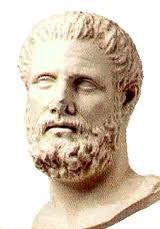
HippocratesAs a medical educator, I not uncommonly have doctors, who, eager to share their wisdom and experience, approach me with tricks of the trade they think might be useful to those I teach.  I really appreciate such gestures and have picked up some wonderful insights over the years in this way. Doctors’ willingness to share knowledge and experience with others is in stark contrast to those in professions such as law and in the world of corporate business. I’m proud to belong to a profession that values collegiality over the relentless pursuit of the competitive edge.

The preparedness to teach and share medical wisdom has long been a valued part of the medical culture, stretching right back to Hippocrates. Included in his 3rd Century BC oath is “to teach them this art … without fee and covenant.”  Mind you, I’ve been told that ol’ Hippocrates was not so keen on teaching the art of medicine to women, slaves or surgeons, but as with any ancient philosopher, it is useful to quote the pieces of wisdom that suit one’s purpose and ignore those that don’t.

The FOAM movement is a shining example of medical collegiality. For the uninitiated, FOAM stands for Free Open Access Meducation – medical education for anyone, anywhere, anytime. Medicine is a rapidly expanding and ever-changing field, and ongoing learning is a constant and career-long responsibility for physicians. Proponents of FOAM want to “make the world a better place” by making access to up-to-date medical information and educational resources readily available, easily accessible, and free to all.

FOAM is independent of any country, specialty, organization, platform or media. In addition to distributing information via traditional websites, podcasts and online videos, FOAM uses social media platforms such as Twitter and Facebook to enable physicians all over the world to collaborate, discuss and share their ideas and experiences. This effective professional use of social media has demonstrated conclusively that Twitter is not just for twits, and that there is more interesting information to be found on Facebook than what some “friend” whom you haven’t seen since primary school had for dinner last night.

Emergency and Critical Care physicians have led the way in this, but many Australian GPs have also embraced FOAM. You may like to check out http://foam4gp.com/ and make Hippocrates proud.

Of course, old school face-to-face, peer-to-peer learning is still alive, well and wonderful. Corridor and tearoom chats, small group tutorials and conferences are all fabulous opportunities to hunt and gather clinical gems.

I was facilitating a multi-specialty workshop recently at which an orthopaedic surgeon, Dr X, asked to share his revolutionary tips for communicating with patients.  With genuine pride, he recommended “his” techniques:

“It makes the patients feel more comfortable if you sit on the same side of the desk as they do.”

“It is better to start a consult with “How can I help you today?” rather than “What’s your problem?”

“Patients like it if you let them dress and undress in private by getting a curtain or screen for your room, or by leaving the room while they change.”

Ground-breaking insights!

Mind you, he had a few less conventional ones such as recommending examining patients from a one metre distance when possible, but again, as with Hippocrates’ views, if helps to focus on the agreeable components.  Despite Dr X being a surgeon, I think Hippocrates would have applauded his willingness to share his wisdom with others.

As did I.


First published in Good Practice magazine, November 2014