
For many years, I rallied against Valentine’s Day. I saw it as crass commercialism of love.
If I’m honest, I think that underlying my objection were memories of teenage angst. Unlike all of the “popular” girls at school, I didn’t receive a single Valentine’s Day card or gift. In the typical heightened emotional mindset of an adolescent, I saw Valentine’s Day as an annual reminder of how unloved and unlovable I was.
I learned the truth at seventeen
That love was meant for beauty queens
And high school girls with clear skinned smiles
Who married young and then retired
The valentines I never knew
The Friday night charades of youth
Were spent on one more beautiful
At seventeen I learned the truth
Janis Ian “At Seventeen”
Fast forward a couple of decades and I found myself with a man who loved Valentine’s Day. Growing up in America, for him it was a much hyped event. According to Wikipedia, “in the United States, about 190 million Valentine’s Day cards are sent each year, not including the hundreds of millions of cards school children exchange”, and “the average Valentine’s spending has increased every year, from $108 a person in 2010 to $131 in 2013”.
For my partner and his family however, Valentine’s Day was not about sending cards or gifts, it was about showing friends and family how much you appreciated them.
In some Latin American countries, Valentine’s Day is known as “Día del Amor y la Amistad” (Day of Love and Friendship). Part of this is about performing “acts of appreciation” for friends and colleagues: acts like a kind word, helping someone out with a chore, expressing gratitude, and telling colleagues, friends and family how much they mean to you.
You could argue that we should be doing this every day of the year, and you would be absolutely right, but it can help to have a day to remind us to focus our efforts on nurturing our various relationships, personal and professional.
Extending this further, it may be a timely reminder to check in on the most important person in our lives: ourselves. How are you travelling? Are you nurturing your body and mind? Showing yourself a little self love? As we are all aware, we need to look after ourselves properly in order to help others.
My Valentine’s Day-loving partner is no longer with us, may he rest in peace. However, I would love his non-commercial passion for Valentine’s Day to live on and be shared with others. So I’m asking you all to consider reaching out to those in your life this Valentine’s Day, and bestowing upon them “acts of appreciation”. And, if you feel so inclined, put aside five minutes to take stock of your own state of happiness and well-being, hopefully showing yourself a little bit of self-compassion and kindness as you do so.


 I don’t often give unsolicited plugs for FOAMed resources but felt I needed to share my delight at having recently discovered the IMReasoning podcast. It is the creation of two internal medicine physicians, Dr. Art Nahill and Dr. Nic Szecket, working in Auckland and is described as “Conversations to inspire critical thinking in clinical medicine and education”. I have binge listened my way through most of the episodes and thoroughly enjoyed them all. They have found the sweet spot – demonstrating a near perfect balance between the informative and authoritative, and the entertaining and self-deprecating.
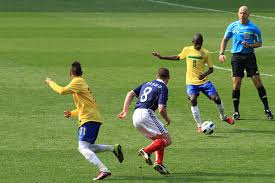 In soccer, research shows that the way to maximize wins is to improve the worst players. Success typically comes to those teams who have better 9th, 10th, and 11th players rather than those who have the best player. It is argued that this is due to the nature of the sport, being that one player typically cannot create opportunities alone. Thus it makes sense to invest in making the least talented players better. Soccer is a weak-link sport for this reason.
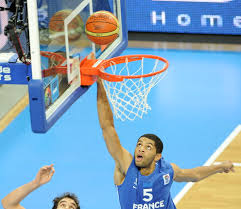 Alternatively, basketball is a strong-link sport. Typically, the team with the best player wins. It’s a star-driven sport because one player can have an outsized impact on the game despite also having the worst player on the floor as a teammate. It is nearly impossible to prevent a great player from getting the ball, and/or helping his/her team score.

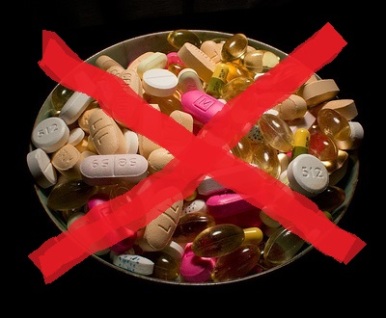 What’s old is new again. Hipster beards are so in, they’re out, and where we used to simply cease medications—we now deprescribe them.
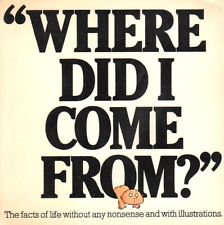 I was asked recently, “So where do OSCE cases come from? Who writes them and how do they get chosen for use in an exam?”
 Dr Genevieve Yates