The other side of the fence

pregnancy testThis column was written in October 2014…

Countless consultations start with the words “I’m pregnant.”

I quickly learned not to jump in with an enthusiastic “Oh congratulations, I’m delighted for you!” Make no assumptions.  Sensitively ascertain the patient’s state of mind before celebrating or condoling.  A new pregnancy can generate a range of emotions in the mother-to-be, from despair to ecstasy, but in my experience indifference is rarely, if ever, predominant.

Likewise, I imagine that for many GPs the news of a patient’s pregnancy also triggers an emotional response in them.  The emotions felt may be simply a case of transference, they might be an inherent sense of wonderment at the creation of a new life, or they may be complex, perhaps intertwined with feelings surrounding the GP’s own reproductive history.

Barring the occasional faux pas as a result of an incorrect assumption, I think we GPs are, on the whole, very good at managing both our own and our patient’s emotions surrounding a desired pregnancy, and mostly pretty good at handling those surrounding an undesired one.  From what I’ve observed, however, many of us are far less comfortable handling those involved with a lost or non-pregnancy.

Admittedly, it is very hard to know how to respond to a desperate patient who wants nothing more than parenthood, but for whom this dream has remained elusive.  While the drive to procreate differs between individuals, for many of us, myself included, it can be an overpowering one.  The primal reproductive instinct is at the core of many people’s sense of identity and life purpose, as well as having cultural, social, spiritual, financial and familial implications.

After nine years and five miscarriages, I’m sitting here typing this as my 23 week daughter moves around in my distended abdomen, reassuringly.  On my joyful and life-changing journey through this so far remarkably straightforward pregnancy, I’ve had many new experiences.  I’ve relished discovering that my clothes are too tight.  I’ve been relieved beyond words to get the “all clear” on the 18 week morphology scan.  I’ve discovered that, despite my best efforts, I have become one of those annoying super-gushy types of pregnant women.

The most surprising aspect to me, however, has been the reactions of friends and colleagues.  Without exception their responses have been overwhelmingly positive and supportive, for which I’ve been immensely grateful.  What has intrigued me though is that many have started to treat me more inclusively, seemingly because I’m now “one of them”, a member of the “parenthood club”.  When I’ve gently explored this with a few, they’ve reflected that it has been difficult for them to juggle their desire to talk freely about their kids while being sensitive to my situation, and that at times it has been easier not to engage at all.  I know I’ve played a part in this too.

In my experience, both as a patient and as a medical educator observing doctors-in-training, many GPs face a similar struggle when interacting with patients with infertility and/or miscarriage.  Either resorting to platitudes or avoiding the heart-of-the-matter can leave vulnerable patients even more isolated and unsupported.  Unlike disorders like cancer, disclosing and discussing infertility and miscarriage publically is somewhat of a social taboo, and this, I believe, is part of the problem.

While we are told, for good reason, that it is important to leave your personal baggage at the door of your consulting room, it’s not always that easy.  We all have things in our past (and/or present) that can potentially influence how we feel about, and interact with, certain patients.  Being aware of these factors and their effects is vital, but is it always necessary to neutralise them?  Not only is complete objectivity impossible in the kind of work we do, but judicious and thoughtful use of our life experiences can make us better clinicians – and better teachers.

I hope that I can use my experience to help support both patients and other doctors in managing the complex emotions surrounding fertility issues, and also encourage more open discussion in the general community.

While immensely thankful and blessed to now be on the green side of the reproductive fence, I will never forget how painful and isolating it can be on the other side.

First published in Medical Observer, 17th April 2015

The ending to my pregnancy story was not a happy one. You can read about what happened here

https://genevieveyates.com/2015/04/27/lived-experience/
 

Lived Experience

“The problem with young doctors,” a GP supervisor of mine used to say, “is not that they don’t know enough or even that haven’t doctored enough – it’s that they haven’t lived enough.”

By “lived”, he wasn’t referring to going bungy jumping in New Zealand – unless of course that particular experience had resulted in being in traction with multiple fractures. He preferred to employ doctors with lived experience of being ill or injured, of having children and, preferably, of caring for a beloved parent or grandparent in an aged care facility as well.   He wanted doctors who really understood what it was like to be a patient and/or the loved one of a patient. To him, a personal health record was far more important than a professional one.

The transformation of doctors by personal illness or tragedy is not an uncommon narrative. Hollywood has used variations of this plot numerous times in films like The Doctor (1991).  On the small screen, many a Grey’s Anatomy, House or Chicago Hope doc has been forever changed by a personal brush with cancer/trauma/addiction/leprosy.

Albeit without the glamour of a Dr McDreamy standing by, I too have been profoundly shaped professionally by personal illness and the loss of loved ones.  These experiences have taught me things that years of medical training did not.

Physical illness has taught me why patients need patience. Experiencing days when it feels like I’m trying to walk up the down escalator has brought home to me why people with chronic illness can get so drained doing “routine” things.

My most valuable lessons though, have come from seeing my loved ones suffer, and from being the one left behind and thus coming to the realisation that a patient’s death is not the end of the story.

As an intern, in 2000, I lost my then partner, Adam, to testicular cancer.  At such an early stage in my career, as a medical student and then a very junior doctor, watching a loved one struggle with and ultimately lose his battle against an incurable disease was particularly influential in my development as physician.

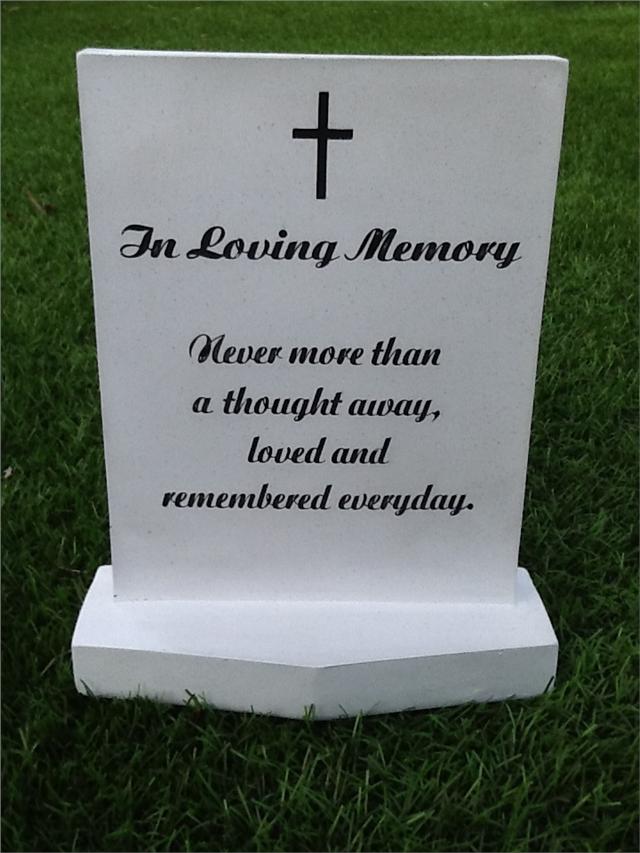
loving memory tombstoneI learned firsthand that treating cancer is so much more than trying to cure. That it’s more than trying to alleviate symptoms when cure is not possible.  I discovered that it is about how whatever life left is lived, and ultimately, how one dies.  This philosophy sat comfortably with me and helped me help countless patients over the years.

Much as I loved and respected Adam’s mother, I didn’t really understand her response at the time. She was in the “chance of cure at any cost” camp, wanting any treatment which had even the remotest possibility of success. This drive persisted even when it became painfully obvious to me and to Adam’s treating doctors that cure was impossible, and that Adam’s aggressive treatment regimens were causing terrible suffering.

But now I get it.  I understand now how maternal love can be so powerful that it overwhelms intellect, logic and fiscal responsibility.  For I too became a mother… and lost a child.

In December 2014, my only child, Amalie, died of neonatal sepsis. It had taken me 9 years and 5 miscarriages to meet her, and our time together was tragically short but will be forever treasured.

When she was in the NICU, fighting for her life, I would have given anything to see her pull through. In those frightening moments, no treatment would have been too extreme, no cost too great.

I thought I understood intellectually why the death of a child is so devastating for a parent.  Now I understand it viscerally, and realise that I had no idea what it is really like.

It is too recent and the emotions are too raw for me to incorporate this “lived experience” into my clinical practice in a meaningful way right now. But I will.  As I have done before.

Adam and Amalie have made me a better doctor.  They’ve made me a better person. I owe them so much.  I can’t pay them back but I am, and will be, paying it forwards.

I think my old GP supervisor would be proud.

First published in Medical Observer, 24th April 2015


A potentially life-saving Tweet

twitter_This is an old column (late 2013) that has been loitering in my drafts’ folder for ages. 

I was planning to post it when I had finally mastered the intricacies of Twitter… but I don’t think that is going to happen in the foreseeable future. Much as I can appreciate Twitter’s value, I’m still very much an occasional spectator.  

I owe my Twitter fumblings a debt though… they may have just saved my mother’s life….

November, 2013

I used to think Twitter was for twits – twits with short attention spans, an inability to construct proper sentences and the misguided impression that everyone else is interested in their mundane lives.

Despite my reservations, I tentatively dipped my toe into the Twitterverse earlier this year, and discovered, to my surprise, that there is no shortage of relevant and interesting tweets relating to medicine and medical education.  It’s just a matter of knowing where to look and whom to follow.

Twitter has also added whole new educational and networking dimensions to the conferences I’ve attended this year.  Where once I would’ve deliberately left my electronic devices behind to avoid distraction, I now not only carry my iPad and phone with me, but actively interact with them during presentations.

I’m still very much a novice tweeter, though.  I’m not yet quick or deft enough to always operate unobtrusively. I feel guilty about this, for as a presenter myself, I know how annoying it can be to have your audience seemingly so distracted.

And I confess to being distracted myself by incoming emails, like the one from my father in Canada, received while I was sending a tweet relating to the handy HANDI (Handbook of Non-Drug Interventions) being introduced by Professor Paul Glasziou at GP13.

My dad’s email was titled “Mum’s health”. It gave a detailed description of a very acute and severe systemic illness following a viral respiratory tract infection.  After describing a typical pneumonia +/- sepsis, Dad then went on to say that he’d given her a cold and flu tablet, and did I have “any further suggestions?”

Any further suggestions?!  I emailed back immediately with my provisional diagnosis and told him to get her to hospital ASAP, and to ignore any protests.  45 minutes later, when the session ended, I rang to check that he’d received my email.  “Yes,” he confirmed, “but your mother says she’s too sick to go anywhere.”

Despite her not wanting to talk to me (which was a worrying sign in itself), I got Dad to put me on speaker phone and I got very bossy with my seriously ill mother.   She could barely talk, which made it easier for me to ride roughshod over her objections.

And it was just as well I did.  She was admitted and treated immediately.  Hypoxic, tachycardic, febrile and dehydrated, with intractable hypotension (60/35!), altered mental state, elevated serum lactate and rip-roaring consolidation on chest X-ray, she had lobar pneumonia with sepsis, just as I’d predicted.

I can just imagine the scene in the Canadian ER that night.  An older Australian woman in septic shock is dragged in by her husband, the couple apologising for disturbing the staff after-hours and potentially wasting their time, saying the only reason they were there was that they have a bossy doctor-daughter who bullied them into coming.  On the plus side, my parents did their bit for perpetuating the “Tough Aussie” legend!

Mind you, this is not atypical for our family.  “Breed ’em tough” was my parents’ preferred parenting style.  Severe abdominal pain (appendicitis) was not enough of an excuse to get out of cleaning a bedroom; a swollen and deformed wrist (fractured radius and ulna) not a reason to cry. We were never short of love and attention, but whinging never got us kids far.

There is a time and a place for seeking help though, and very luckily, thanks to being inspired to tweet about a handbook of non-drug interventions (HANDI), I was able to step in to ensure that my mother got the lifesaving drug interventions she didn’t know she needed.

First published in Australian Doctor on 15th November, 2013 On Twitter

http://www.australiandoctor.com.au/opinions/the-last-word/the-last-word-on-twitter