Telling a cabbie where to go.

“178 Darley Road*, Randwick, please.” The meter started and the taxi pulled out onto the congested Sydney CBD street.

“What street is that off?” The cabbie’s inquiry was barely audible over the blare of talkback radio.

“I don’t know. I’ve never been there before.”image taxi

“So it’s not your house?”

“You’ve just picked me and my luggage up from a hotel. Do you think it’s likely that I’m a local?”

“It’s possible.”

“That’s true, but no, it’s not my house. I’m not in the habit of paying for a hotel room a few kilometres from where I reside.”

“But you know how to get there, right?”

“No. Isn’t that your job? I tell you where I want to go and you take me there?”

“But you don’t know where you want to go.”

“I know exactly where: 178 Darley Road, Randwick.”

“Well, I don’t know it.”

“Well then, why don’t you use your sat nav?”

“Don’t have one.”

“Your smartphone?”

“Nope.”

“Street directory of any kind?”

“Nothing. I use my memory.”

“But you don’t remember Darley Road.”

“There are a lot of streets in Sydney. I can’t know them all.”

“Hence the need for a sat nav or at least a street directory.”

“Most passengers know where they want to go.”

“As do I, 178 Darley …”

He brusquely cut me off. “You know what I mean. Can you ring someone and ask for directions?”

“You want me to ‘phone a friend’ to tell you where to go?”

I wish I’d said something witty about where I thought he could go at this point but I was too busy being incredulous.

“Yes,” he replied, sans irony.

“I don’t think that’s my responsibility.”

“Then I can’t take you there. You’ll have to get out.”

After being unceremoniously dumped on the side of the road, he charged me $6.05 to cover the booking fee, the flag fall and the 50m we’d travelled while arguing. I was speechless — a somewhat uncharted territory for me.

I reckon a GP consultation equivalent would be something like:

“What can I do for you?”

“My throat really hurts. I’d like something to ease the pain.”

“Have you got tonsillitis?”

“I don’t know.”

“Does it feel like tonsillitis?”

“I’ve never had tonsillitis.”

“Did you look in your mouth with a torch?”

“No, I thought that was your job.”

“I haven’t got a torch, an otoscope, or any other light source. I believe it’s the patients’ responsibility to diagnose, or at least examine, themselves. If they don’t know what’s wrong, how am I supposed to treat them?”

“Will you give me something for my throat?”

“Not without examination findings. Perhaps you’d like to ask a friend to take a look.”

“I’ll find another doctor, thanks.”

“That will be $60. You were booked for a standard consultation and I’m entitled to be compensated for my time.”

The first thing I asked the next cabbie was: “Have you got a sat nav?”

“Yes, but I don’t tend to need it.”

I beg to differ, given that halfway through the journey he pulled over, meter running, scrounged around under his seat for his battered street directory and spent a good five minutes looking up the address; and then on arriving at Darley Road slowed to a crawl, reading every house number aloud as we passed: 10, 12, 14 … right up to 178.

I arrived 20 minutes late and $36.05 poorer. So much for my decision to splurge on fast, hassle-free conveyance instead of public transport.

*street number changed to protect privacy.

First published in Australian Doctor on 9th May, 2013.

http://www.australiandoctor.com.au/opinions/the-last-word/the-last-word-on-cabbies-and-gps
Painful sports talk.

When the following column was published in Australian Doctor, I received considerable backlash from readers.  I was accused of being catty, socially inept and un-Australian amongst other things.  One reader said I should be ashamed of myself and another called for Australian Doctor to “do the right thing and let this column fade into obscurity.”

While this certainly was not the first time my light-hearted tongue-in-cheek columns have been misinterpreted, I was a little surprised at the vitriol generated over what was intended as a self-deprecatory fluff piece.

As for being un-Australian, I would have thought that my “taking the piss” was very Australian!

So what was the fuss about?  Read on and make up your own mind, and I’ll get back to watching the Winter Olympics….

………………………………………..

I’m not a big fan of inane chit-chat. I’ve absolutely no objection it if fulfils a purpose such as putting a nervous patient at ease, but there are times when talking about the weather, the price of petrol, Paris Hilton’s latest furry handbag accessory or Auntie Mildred’s stamp collection drives me up the wall. Sitting around the patio on a Sunday afternoon “shooting the breeze” with my in-laws used to be a regular torture. Thank goodness for divorce. 😉

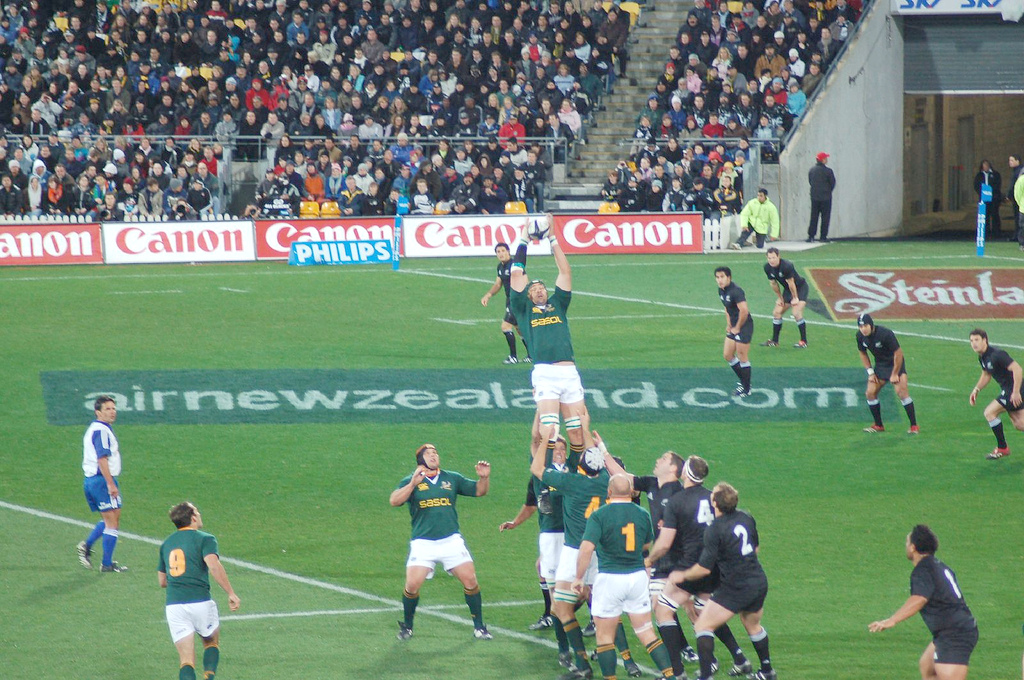
image rubgy unionThere is only one type of conversation I find more painful than small talk, and that is sports talk. Rugby in particular.  I’ve never understood the fervour of armchair sports fans.  If watching testosterone-laden men thump each other in their attempts to grab an egg-shaped piece of air-filled leather toots your horn, I’m not going to criticise. Just don’t feel offended if my eyes glaze over and I start looking for an escape route if the conversation turns to ladders that aren’t the type you use when painting a house.

I still have nightmares about the time I was trapped in the operating theatre listening to an orthopaedic surgeon blabber on about rugby union matches. Oblivious to my distress, he drilled and hammered away as he plated the radius (forearm bone), pushing and pulling the fractured limb with the confident and carefree brusqueness at which orthopods excel.

It was painful, terribly painful, but I couldn’t object. Paralysed and powerless, I lay there, a terrified nine-year-old, insufficiently anaesthetised.  After what seemed like an hour, but was probably only a few minutes (all football-related conversations seem to drag on interminably to me), the anaesthetist woke up to the fact that I was awake, presumably by lifting his eyes from the sports pages for a moment to notice that my pulse had skyrocketed. The last thing I recall was his saying, “Hold that thought. She’s a bit light – time for a top-up.”

It was traumatic at the time.  The first night post-op I slept only fitfully, alone in a strange hospital room. The frightening shadows and noises of the orthopaedic ward mingled with my nightmares, nausea and pain. I vividly recall the particular dream I had that night; variations of it have haunted my dream-life for years.  It involved finding myself hanging from goalposts during a massive televised football match, attached to the metal cylinders by big screws through my forearms, crucifix style. The crowd were jeering and laughing at my attire – a hospital gown with only air on my derrière.

In my lucid moments, I begged for my parents, only to be told to be quiet and go back to sleep. None of the nurses believed my story of being aware during the procedure.

The following day the orthopaedic surgeon was likewise sceptical – until I relayed snippets of his conversation.  I do not recall if his face betrayed even a hint of embarrassment or concern, but I was probably too young and traumatised to have noticed. All I remember was that he made some off-hand rugby-related jovial comment and moved onto the next patient as quickly as possible.

Perhaps that particular childhood experience could be used to justify a dislike of rugby, having bones broken, night duty nurses and orthopaedic surgeons, but the truth is that none of these are on my list of favourite things for far less significant reasons.

It could be said that for someone who claims to abhor meaningless chat, I sure do a lot of it, in both verbal and written forms – this column being a case-in-point. A fair comment, I admit.

We should have a pointless conversation about it. Maybe after next week’s game.

……………………

First published in Australian Doctor on 5th July, 2013  On Sports Talk

http://www.australiandoctor.com.au/opinions/the-last-word/the-last-word-on-sports-talk

What it means to be an Australian – Part 2

Last Sunday, on our national day,  I blogged about the staggering costs of US healthcare as I reflected on what it meant to be an Australian.

Here is the story of my own personal encounter with the US health system last year….

Playing it Safe

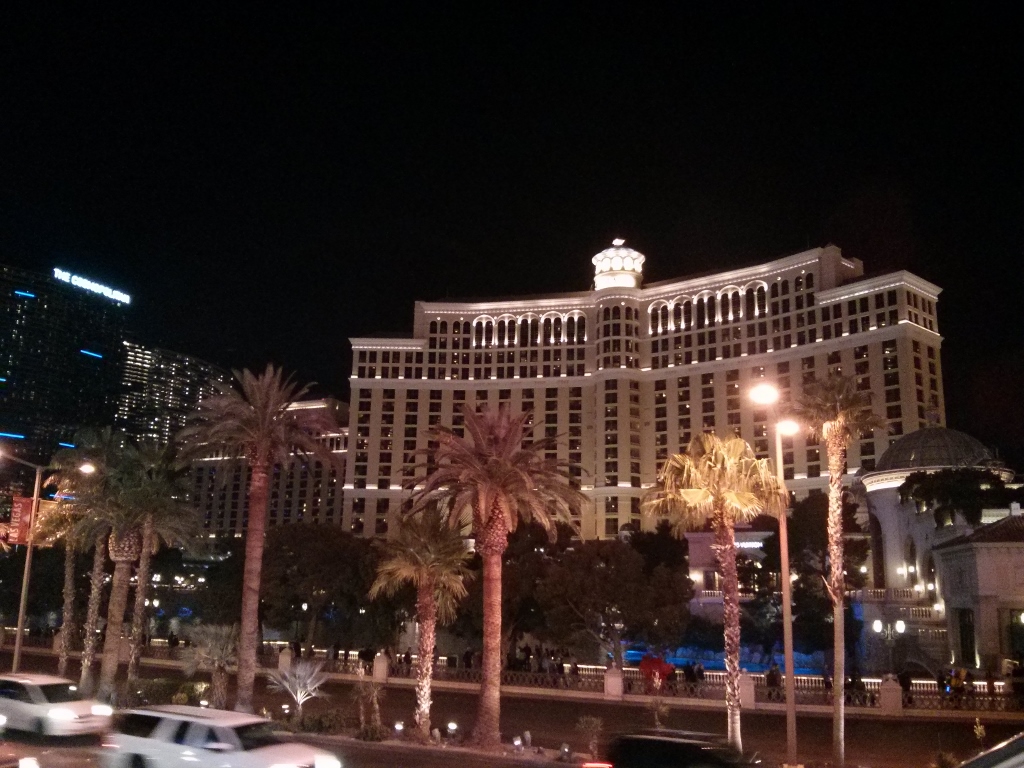
While in Las Vegas recently, I spent more than $5000 in six hours. Now, before you Bellagio Hotel in Las Vegascastigate me for reckless spending, I rush to tell you that I forked out because I’m not a gambler — I was playing it safe. The hefty bill came from a hospital, not a casino.

En route to visiting my family in Canada, I was enjoying a quiet stopover in not-so-quiet Sin City. I first felt some pain in my right calf while running up the hotel fire-escape stairs (I know, I’m crazy), making me think muscle sprain, but within 24 hours the swelling became quite marked while the pain wasn’t particularly severe.

Given that I’d just endured a long-haul flight sitting in a cramped, cattle-class seat, I decided I couldn’t take the gamble that it wasn’t a DVT. Hoping for an ultrasound, I limped into a walk-in medical clinic, where the consulting doctor thought it highly likely to be a DVT and sent me to the nearest ER.

I grew up on US TV medical dramas, ER being my favourite. The series began in my second year of med school and I soon convinced myself it was a useful and legitimate study resource — a view reinforced when an obscure case in my fifth-year internal medicine viva was identical to the fictional one in a recent episode, allowing me to answer correctly and with confidence.

When I turned up to my first real-life American ER and discovered my treating doctor’s name was Mark Green (the name of my favourite character on the show), I have to admit I felt a frisson of excitement. It didn’t hurt that the real Mark Green MD was attractive, attentive and charming.

Disappointingly, this is where the similarities with the TV show ended. There were no patients miraculously brought back to life from asystole with CPR and a few jolts from a defibrillator, no complex surgical procedures performed by underqualified staff, no doctors and nurses embroiled in interpersonal dramas at patients’ bedsides, and not even a token lovable but disruptive patient with an entertaining form of psychosis. At least, not that I got to see.

It was, well, like an Australian ED, except that everything was bigger: the patients (the average BMI was probably over 30), the chairs, beds, artwork — and the bill.

My ultrasound was equivocal and the D-dimer negative, so an MRI was ordered. It seemed like a bit of overkill but, from what I could gather, MRIs are ordered for practically everything in the US: tension headaches, osteoarthritis, acute back pain, toothache, a broken fingernail.

Okay, perhaps not all of these, all of the time. It did the trick for me though, producing a lovely image of a second-degree soleus muscle tear without a thrombus in sight.

It looked a lot worse than it felt. I kept declining the analgesics the nurse tried to give me, unwittingly reinforcing her perception of the Australian stereotype. “I always thought you Aussie sheilas would be tough. All those snakes you have to kill and jellyfish that bite you. And the sharks.”

She paused, looking proud of herself. “Sheila is Australian for ‘woman’, isn’t it? I learned that on HBO. I just love learning different languages.”

I know the US health system has deep-seated problems, but my brief stint as a patient was a memorable and positive one. The staff were friendly, efficient and professional, and the facilities top notch. The only hurt was the bill. I’m not the first person to lose a fortune in Las Vegas but at least I was insured against the loss!

…………………..

First published in Australian Doctor on 12th April, 2013 about my trip to the US/ Canada in Feb/March 2013.

http://www.australiandoctor.com.au/opinions/the-last-word/the-last-word-on-playing-it-safe